Notice

Livestock farming: source of biodiversity - Q/A
- document 1 document 2 document 3
- niveau 1 niveau 2 niveau 3
Descriptif
INRAE, Agreenium, GIS avenir élevages, PEPR Agroécologie et numérique and Institut Agro Rennes-Angers have organized an event to update knowledge and feedback on the trajectories of agroecological livestock farms that make the most of wild and domestic biodiversity and the interactions between them.
Development of agro-ecological practices is essential to adapt agri-food systems to climate change and its hazards, and to mitigate their environmental impact. Biodiversity has been identified as a key factor in the sustainability of farming systems in their environmental ecosystems, combining the genetic diversity of domestic species with that of wild species. This Carrefour de l'Innovation presents results on domestic biodiversity in herbivore farming and the environmental biodiversity impacted and mobilized, from the scale of soils to that of territories.
Intervention / Responsable scientifique


Dans la même collection
-
[Grazing livestock] Obstacles and levers for changing practices. Round table
Aubin-HouzelsteinGenevièveBaumontRenéFaure-CohadesJustinePeyratMarie-BénédicteSignoretFrédéric[Grazing livestock] Sequence 23
-
-
-
Biodiversity and animal health: Q-A
CouvreurSébastienGuéganJean-FrançoisMachNuria[Grazing livestock] Sequence 22. Biodiversity and animal health
-
Gut microbiota resilience in grazing horses
MachNuria[Grazing livestock] Sequence 21. Biodiversity and animal health
-
[Grazing livestock] Biodiversity and emerging diseases
GuéganJean-François[Grazing livestock] Sequence 20. Biodiversity and animal health
-
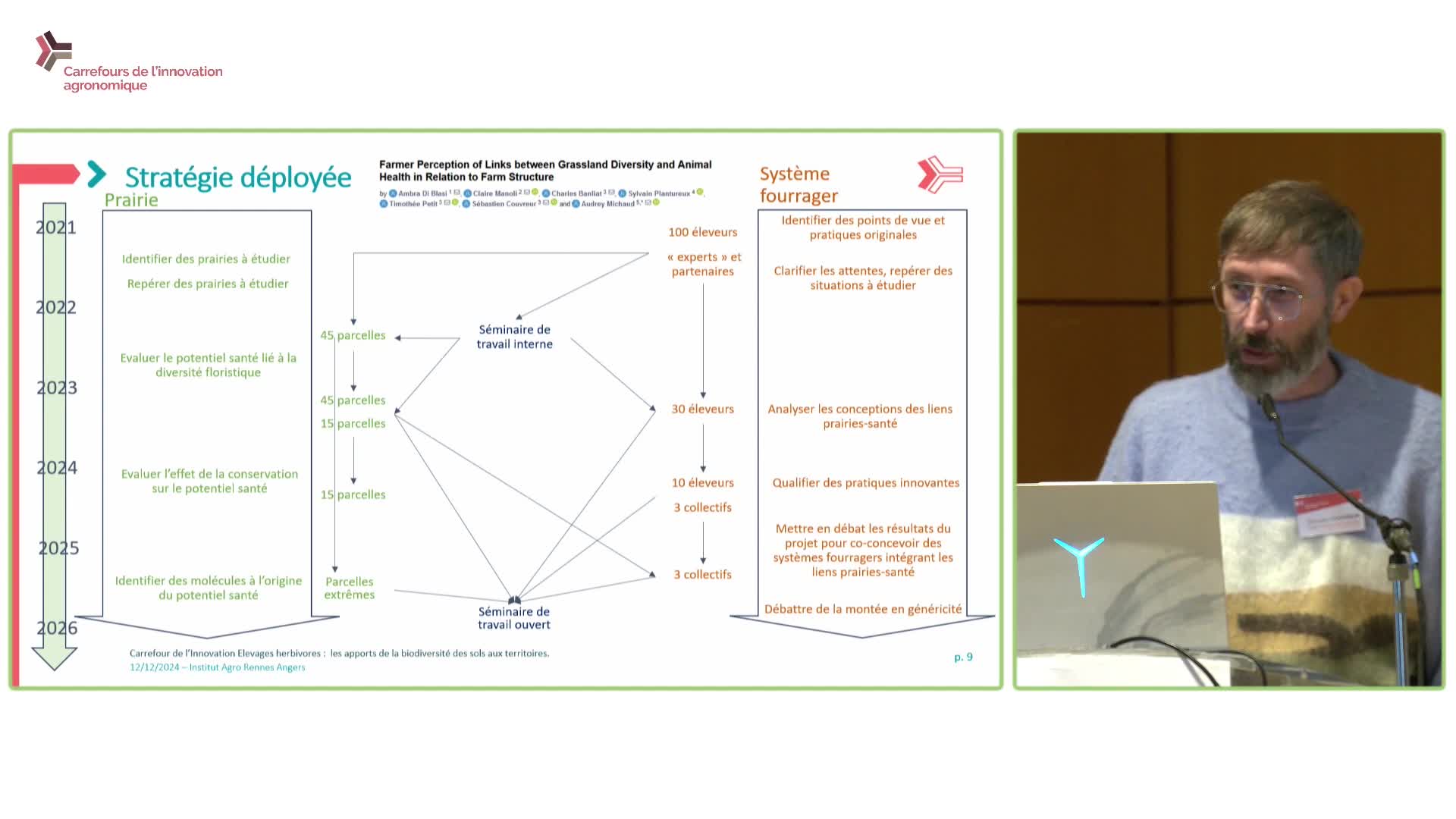
Praidiv: producing new references on the health potential of grasslands for animals and practices f…
CouvreurSébastien[Grazing livestock] Sequence 19. Biodiversity and animal health
-
Designing and evaluating livestock farming systems that promote biodiversity: example of a student …
Faure-CohadesJustine[Grazing livestock] Sequence 18
-
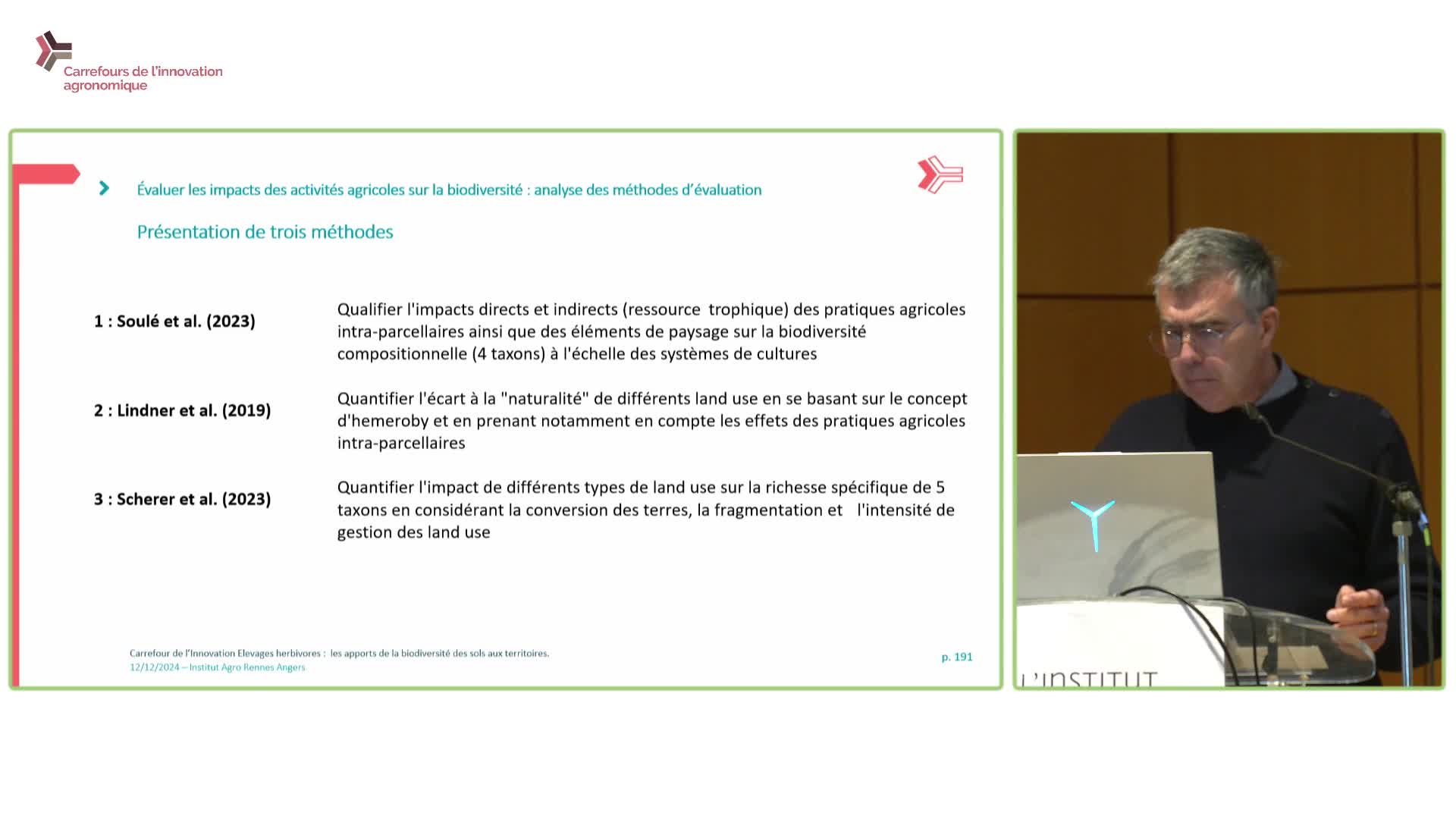
Gis "Avenir élevages et Grandes cultures": study on biodiversity assessment
AubinJoël[Grazing livestock] Sequence 17. Evaluation and measurement of livestock performance according to biodiversity levels
-
Environmental performance of livestock farms promoting biodiversity
Van der WerfHayo[Grazing livestock] Sequence 16. Evaluation and measurement of livestock performance according to biodiversity levels
-
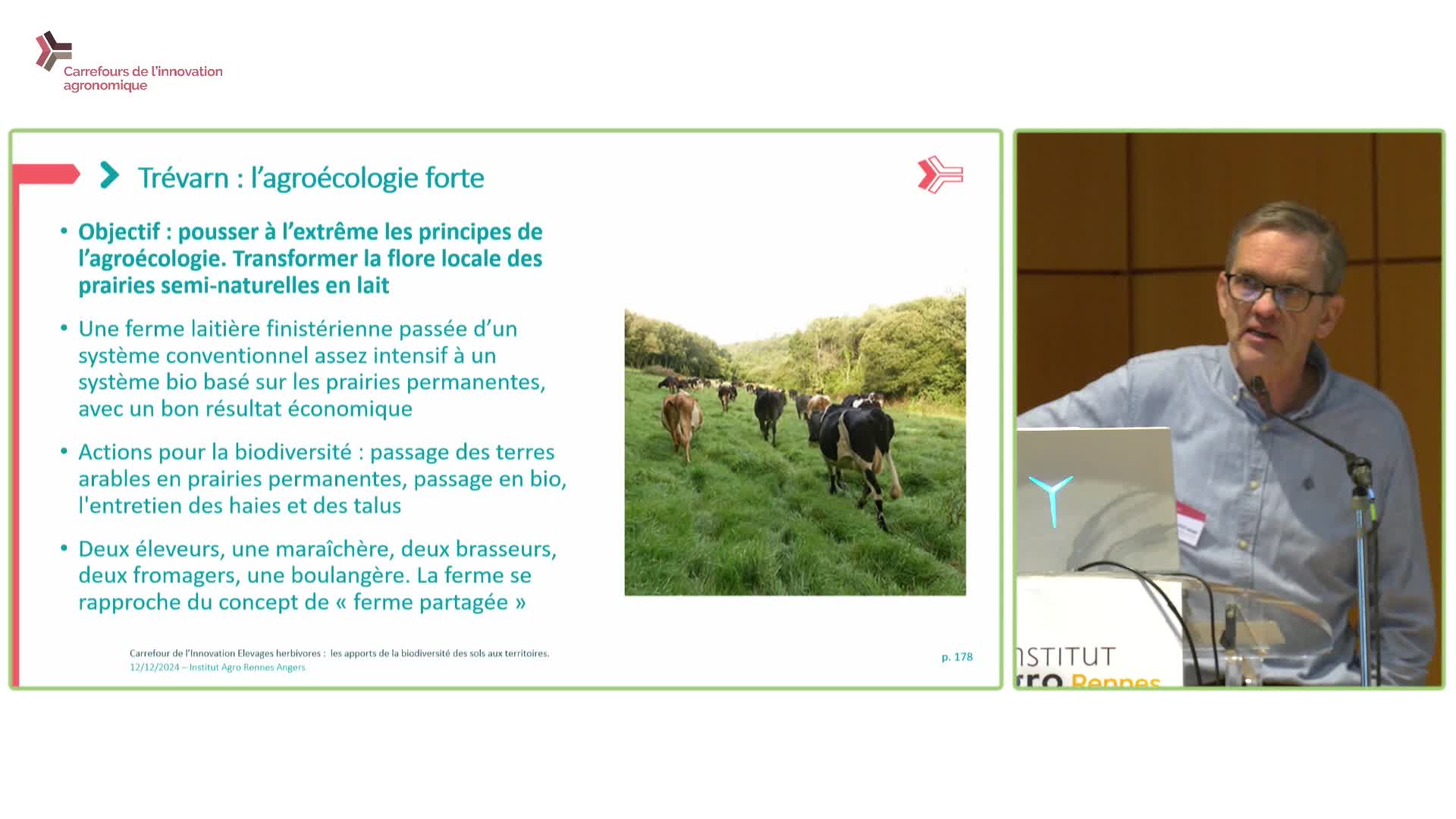
Livestock systems and biodiversity: from antagonisms to synergies
MartelGilles[Grazing livestock] Sequence 14. Livestock farming: source of biodiversity
-
Meadows of the Brouage marsh: a resource for livestock farming and biodiversity
KerneisEric[Grazing livestock] Sequence 13. Livestock farming: source of biodiversity

Avec les mêmes intervenants et intervenantes
-
Livestock systems and biodiversity: from antagonisms to synergies
MartelGilles[Grazing livestock] Sequence 14. Livestock farming: source of biodiversity
-
Marshlands, the role of grazing in maintaining them and their upkeep
Lemauviel-LavenantServane[Grazing livestock] Sequence 12. Livestock farming: source of biodiversity
-
Grazing and biodiversity in Massif Central PDO areas
DumontBertrand[Grazing livestock] Sequence 10. Livestock farming: source of biodiversity
-
[Ecophyto 2024] Analyse transversale de 4 jeux sérieux issus des projets
CasagrandeMarionGouyVéroniqueMartelGillesNavarreteMireilleRobertCorinneVoltzMarc[Ecophyto 2024] Séquence 6. Stratégies collectives pour le déploiement et l’adoption de leviers
-
L'élevage source de biodiversité : questions-réponses
DumontBertrandLemauviel-LavenantServaneMartelGilles[Elevages herbivores] Séquence 15. L'élevage source de biodiversité
-
-
Zones de marais, rôle de l'élevage dans leur maintien
Lemauviel-LavenantServane[Elevages herbivores] Séquence 12. L'élevage source de biodiversité
-
Pâturage et biodiversité dans les zones AOP du Massif Central
DumontBertrand[Elevages herbivores] Séquence 10. L'élevage source de biodiversité
Sur le même thème
-
Une année au Muséum national d'histoire naturelle de Paris : retour d'expérience sur une résidence …
DodartGustaveGustave Dodart a été wikimédien en résidence au Muséum d'Histoire Naturelle de Paris durant un an. Il présente dans cette vidéo son travail et ses réalisations.
-
La conversion écologique des Français : Quelles attitudes pour quelles pratiques ?
CoulangeonPhilippePhilippe Coulangeon est directeur de recherche CNRS en Sociologie au Centre de recherche en économie et statistique (CREST). Il a été le coordinateur du projet de recherche 'Les ressorts sociaux de la
-
Est-on trop critique sur la gestion de la biodiversité forestière en France ?
SergentArnaudLa gestion forestière française est de plus en plus critiquée et on lui reproche notamment de ne pas suffisamment prendre en compte la biodiversité. Pourtant les indicateurs technico-scientifiques
-
Des valeurs de la biodiversité à la justice environnementale : un regard philosophique sur la trans…
BeauRémiAprès avoir proposé un état de l’art des recherches sur les valeurs de la biodiversité en éthique environnementale, Rémi Beau mettra ces différentes approches en dialogue avec leurs possibles
-
L'océan : de la surface aux abysses
DavidBrunoCe webinaire porte sur ce que l'on connaît de l'océan et sur les perspectives d'exploitation des ressources qui s'y trouvent.
-
La forêt française est-elle un puits de carbone ?
CiaisPhilippeCe webinaire porte sur la contribution des forêts européennes et notamment françaises à l'atténuation du changement climatique.
-
Designing agroecological systems: principles and applications, from the field to the landscape
Petit-MichautSandrineDesigning agroecological systems: principles and applications, from the field to the landscape
-
Regards croisés sur les transitions agroécologiques et alimentaires
VialatteAudeFerhoutHichamChâteau TerrissePascaleGibertCarolineCoulonFrédéricRegards croisés sur les transitions agroécologiques et alimentaires
-
Présentation générale du portail InDoRES
Cette vidéo vous explique comment s'organise le projet InDoRES, son site et les outils mis à disposition de la communauté scientifique.
-
Interview de Bernard Hubert (Écologue à l'INRAE)
HubertBernardInterview de Bernard Hubert (Écologue à l'INRAE)
-
L'Anthropocène et l'effondrement du vivant
AmblardChristianHerbetteStéphane[20 ans MSH] - Stéphane Herbette (UCA) et Christian Amblard (CNRS) explorent la notion de biodiversité, les bouleversement liés aux activités humaines et des pistes pour faire face à l'effondrement du
-
Diversity and limits of life (1/2)
López-GarcíaPurificaciónLes Rencontres Exobiologiques pour Doctorants (RED) sont une école de formation sur les « bases de l'astrobiologie ». L’édition 2026 s’est tenue du 15 au 20 mars au Parc Ornithologique du Teich.