Notice

The European project Grazing4Agroecologie (G4AE)
- document 1 document 2 document 3
- niveau 1 niveau 2 niveau 3
Descriptif
INRAE, Agreenium, GIS avenir élevages, PEPR Agroécologie et numérique and Institut Agro Rennes-Angers have organized en event to update knowledge and feedback on the trajectories of agroecological livestock farms that make the most of wild and domestic biodiversity and the interactions between them.
Development of agro-ecological practices is essential to adapt agri-food systems to climate change and its hazards, and to mitigate their environmental impact. Biodiversity has been identified as a key factor in the sustainability of farming systems in their environmental ecosystems, combining the genetic diversity of domestic species with that of wild species. This Carrefour de l'Innovation presents results on domestic biodiversity in herbivore farming and the environmental biodiversity impacted and mobilized, from the scale of soils to that of territories.
Dans la même collection
-
[Grazing livestock] Obstacles and levers for changing practices. Round table
Aubin-HouzelsteinGenevièveBaumontRenéFaure-CohadesJustinePeyratMarie-BénédicteSignoretFrédéric[Grazing livestock] Sequence 23
-
-
Biodiversity and animal health: Q-A
CouvreurSébastienGuéganJean-FrançoisMachNuria[Grazing livestock] Sequence 22. Biodiversity and animal health
-
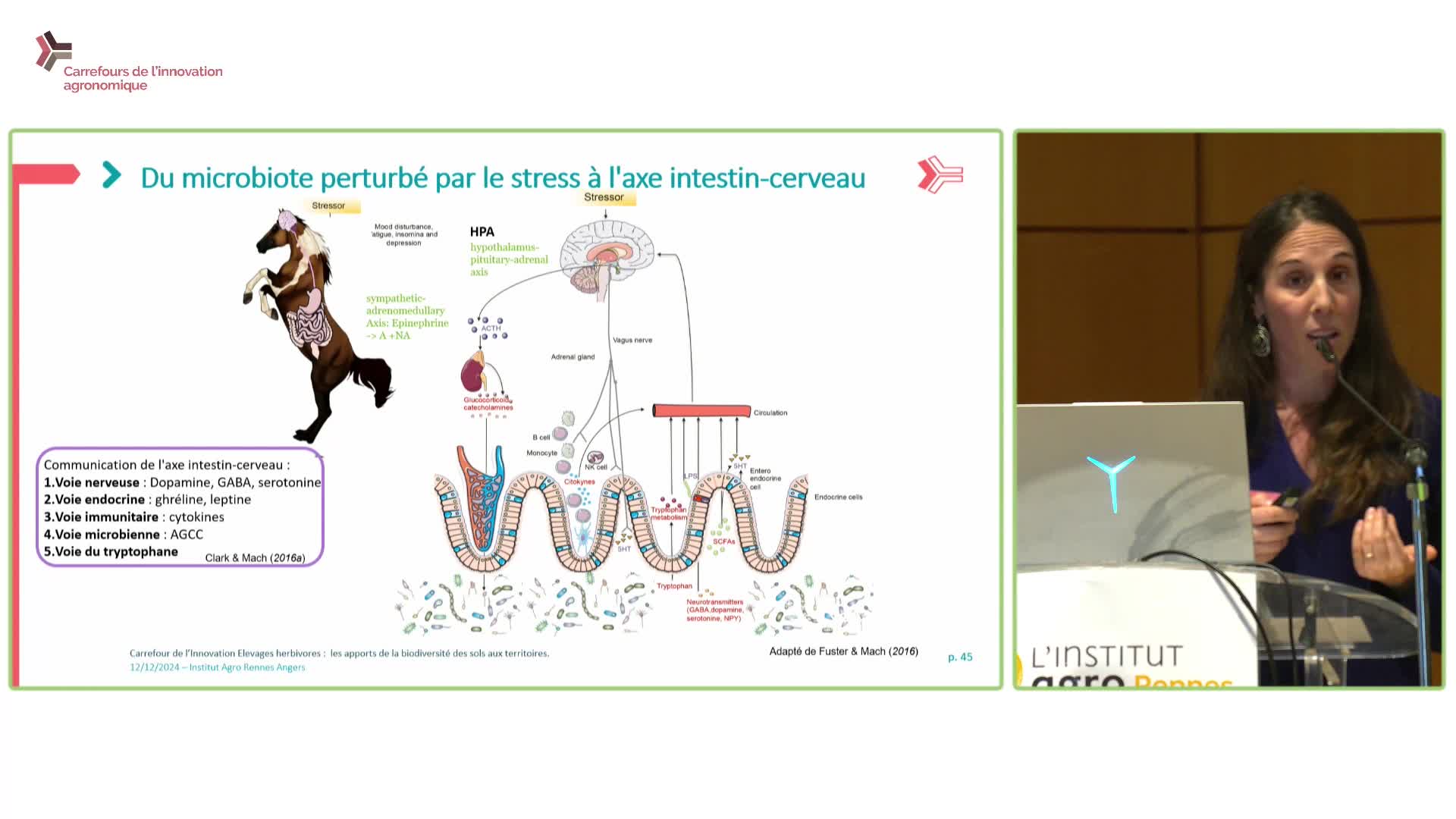
Gut microbiota resilience in grazing horses
MachNuria[Grazing livestock] Sequence 21. Biodiversity and animal health
-
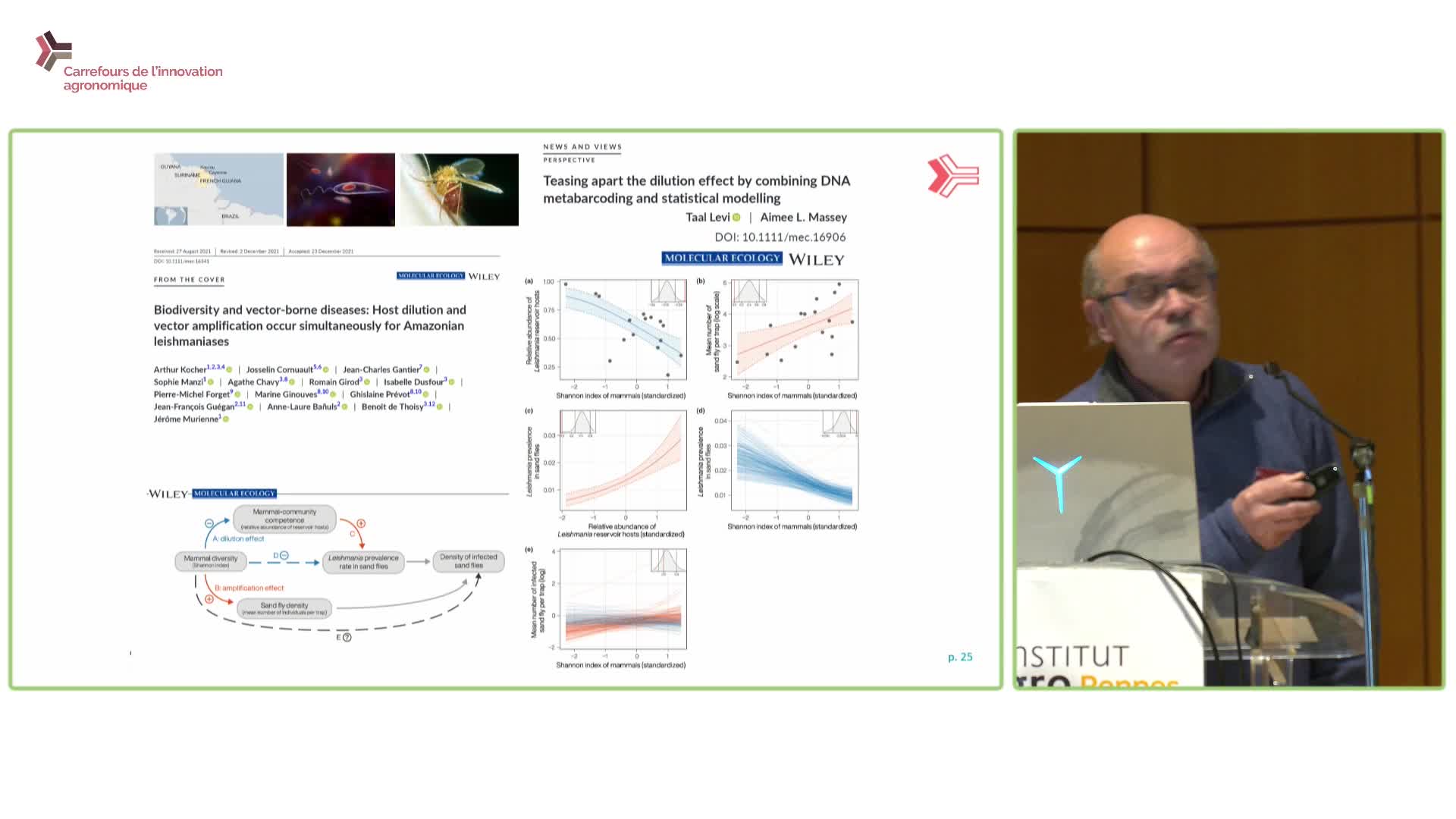
[Grazing livestock] Biodiversity and emerging diseases
GuéganJean-François[Grazing livestock] Sequence 20. Biodiversity and animal health
-
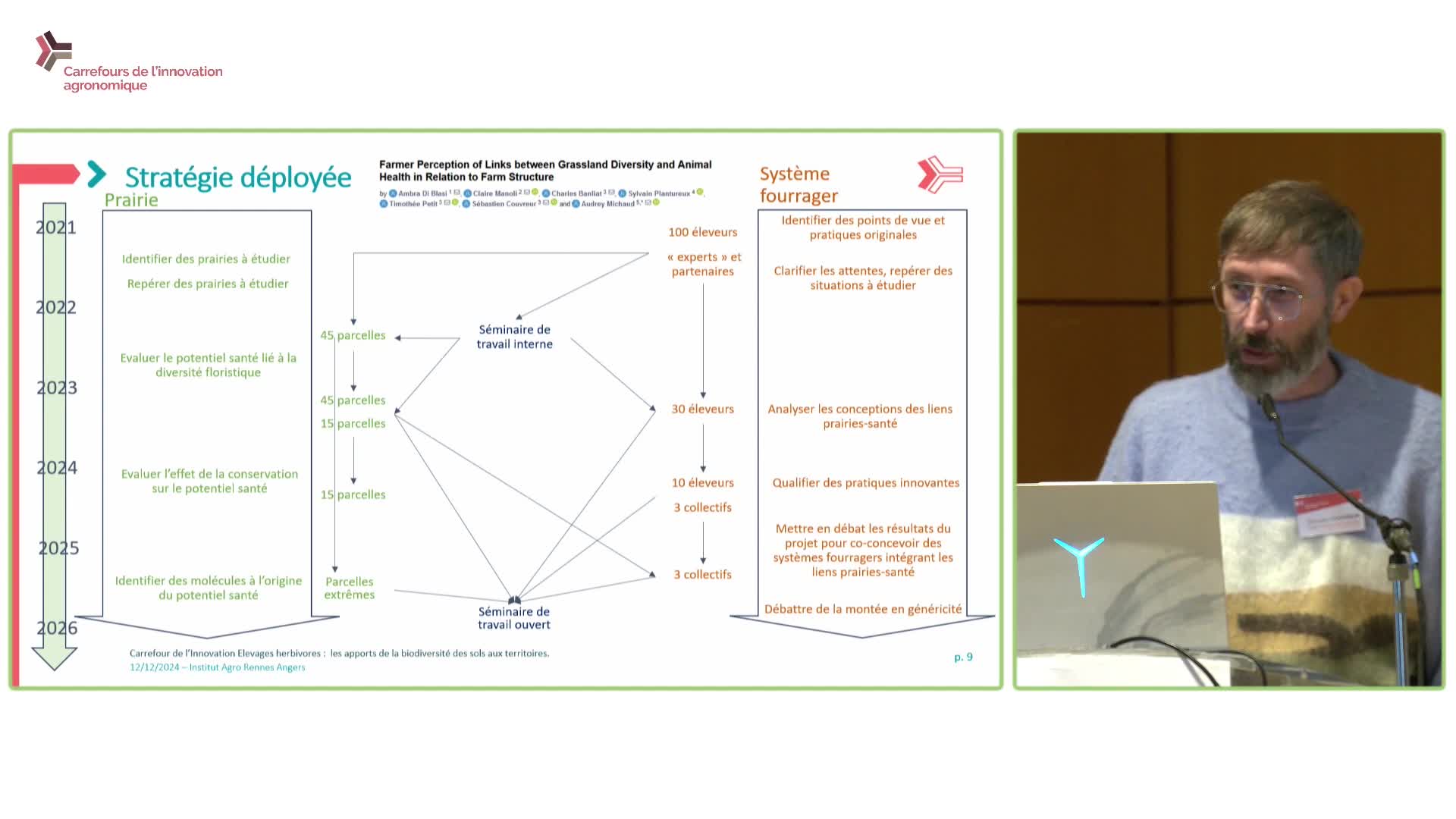
Praidiv: producing new references on the health potential of grasslands for animals and practices f…
CouvreurSébastien[Grazing livestock] Sequence 19. Biodiversity and animal health
-
Designing and evaluating livestock farming systems that promote biodiversity: example of a student …
Faure-CohadesJustine[Grazing livestock] Sequence 18
-
Gis "Avenir élevages et Grandes cultures": study on biodiversity assessment
AubinJoël[Grazing livestock] Sequence 17. Evaluation and measurement of livestock performance according to biodiversity levels
-
Environmental performance of livestock farms promoting biodiversity
Van der WerfHayo[Grazing livestock] Sequence 16. Evaluation and measurement of livestock performance according to biodiversity levels
-
Livestock farming: source of biodiversity - Q/A
DumontBertrandLemauviel-LavenantServaneMartelGilles[Grazing livestock] Sequence 15. Livestock farming: source of biodiversity
-
Livestock systems and biodiversity: from antagonisms to synergies
MartelGilles[Grazing livestock] Sequence 14. Livestock farming: source of biodiversity
-
Meadows of the Brouage marsh: a resource for livestock farming and biodiversity
KerneisEric[Grazing livestock] Sequence 13. Livestock farming: source of biodiversity

Avec les mêmes intervenants et intervenantes
-
[Elevages herbivores] Le projet européen Grazing4Agroecologie
KrauseArno[Elevages herbivores] Séquence 24
Sur le même thème
-
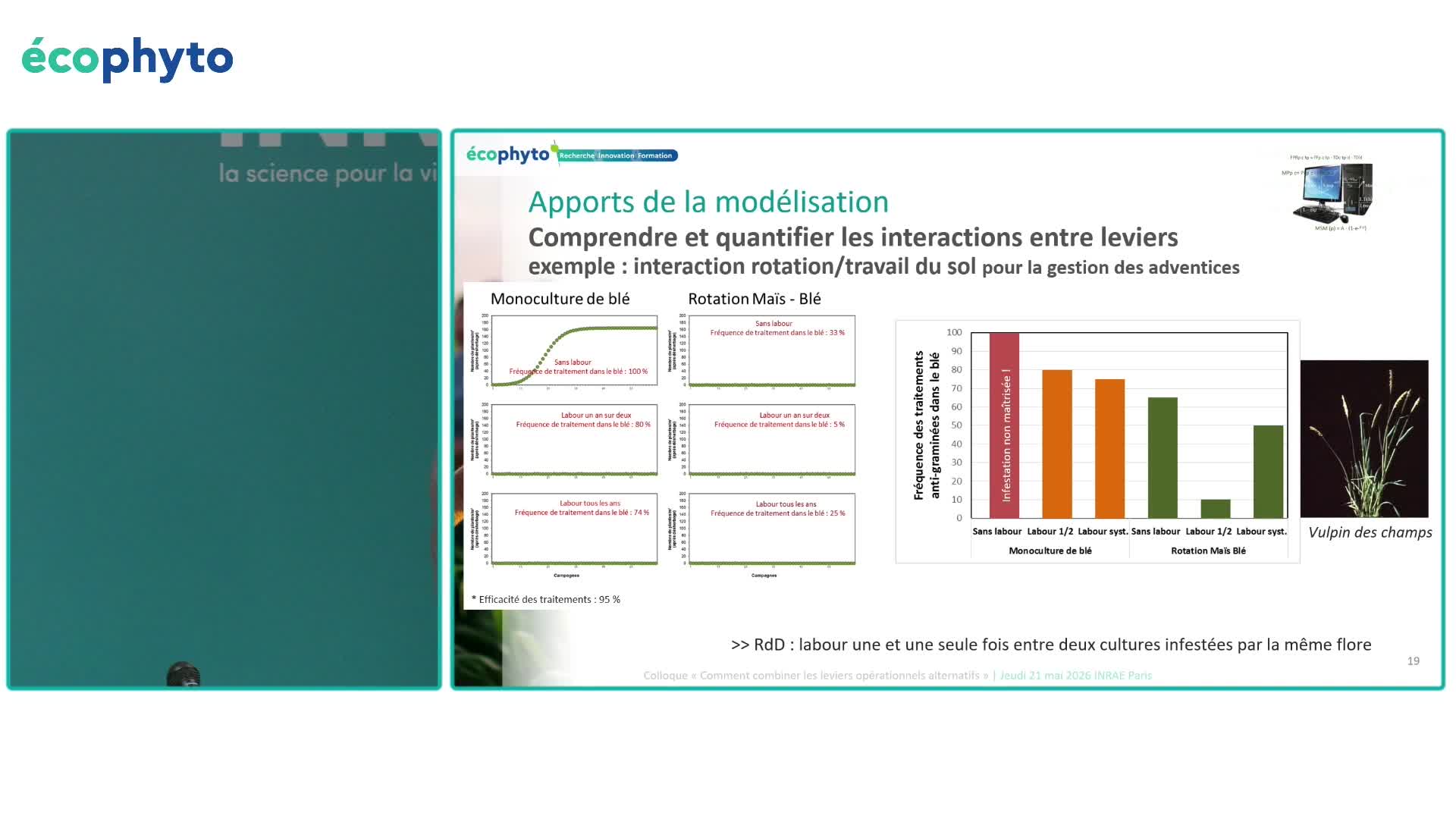
Approches systémiques pour l’agroécologie : le cas de la combinaison de leviers de gestion de la fl…
Munier-JolainNicolasColloque Ecophyto : Comment combiner les leviers opérationnels alternatifs pour une protection intégrée des cultures ? Séquence 6
-
[Biosolutions] Comment s'y retrouver parmi le nombre de produits disponibles et pour quelle appropr…
SexeMathias[Biosolutions] Séquence 8.3. Quelles synergies entre filières et territoires pour accélérer le développement des innovations avec les biosolutions en agriculture ?
-
Retour d'expérience sur la croissance du marché des biofertilisants
RichardRomain[Biosolutions] Séquence 8.2. Quelles synergies entre filières et territoires pour accélérer le développement des innovations avec les biosolutions en agriculture ?
-
Le droit économique au service de la transition écologique
EpsteinAude-Solveig[Innovations organisationnelles] Séquence 4.2. Regards croisés sur les conditions d’émergence et de diffusion des innovations organisationnelles pour des systèmes alimentaires durables
-
Comment déterminer la taille d’une population avec des données citoyennes ?
CoronCamilleQu’est-ce qu’une population ? Qu’est-ce que la taille d’une population ? Pourquoi veut-on la mesurer ?
-
[DEPHY EXPE 2] Projet MiniPEST
PottiezBruno[DEPHY EXPE 2 - 2024] Séquence 9.4. Apprentissage, freins et leviers pour mettre en œuvre et diffuser des pratiques et des systèmes de culture très économes en pesticides
-
[DEPHY EXPE 2] Projet ABC
DeytieuxViolaine[DEPHY EXPE 2 - 2024] Séquence 8.3. Contribution aux services écosystémiques de régulation, de support et d’approvisionnement
-
[DEPHY EXPE 2] Projet SEFerSol
LangardElie[DEPHY EXPE 2 - 2024] Séquence 8.1. Contribution aux services écosystémiques de régulation, de support et d’approvisionnement
-
[DEPHY EXPE 2] Projet HORTIPOT 2
DeogratiasJean-Marc[DEPHY EXPE 2 - 2024] Séquence 6.3. Combiner des leviers de substitution aux produits phytosanitaires
-
[DEPHY EXPE 2] Projet ALTO
SimonSylvaine[DEPHY EXPE 2 - 2024] Séquence 5.4. Reconcevoir l'agro écosystème pour favoriser sa résilience face aux bioagressions
-
[DEPHY EXPE 2] Projet SYNO'PHYT
PouriasJeanne[DEPHY EXPE 2 - 2024] Séquence 5.3. Reconcevoir l'agro écosystème pour favoriser sa résilience face aux bioagressions
-
Les innovations dans la réduction de l’empreinte carbone par les intrants agricoles et agroalimenta…
BarraultOlivierBoudesCédricRouaudOlivier[Empreinte carbone] Séquence 6.4. Les innovations dans la réduction de l’empreinte carbone par les intrants agricoles et agroalimentaires. Table ronde