Notice

A fragmentary labour history of lift (elevator) workers in Johannesburg, South Africa
- document 1 document 2 document 3
- niveau 1 niveau 2 niveau 3
Descriptif
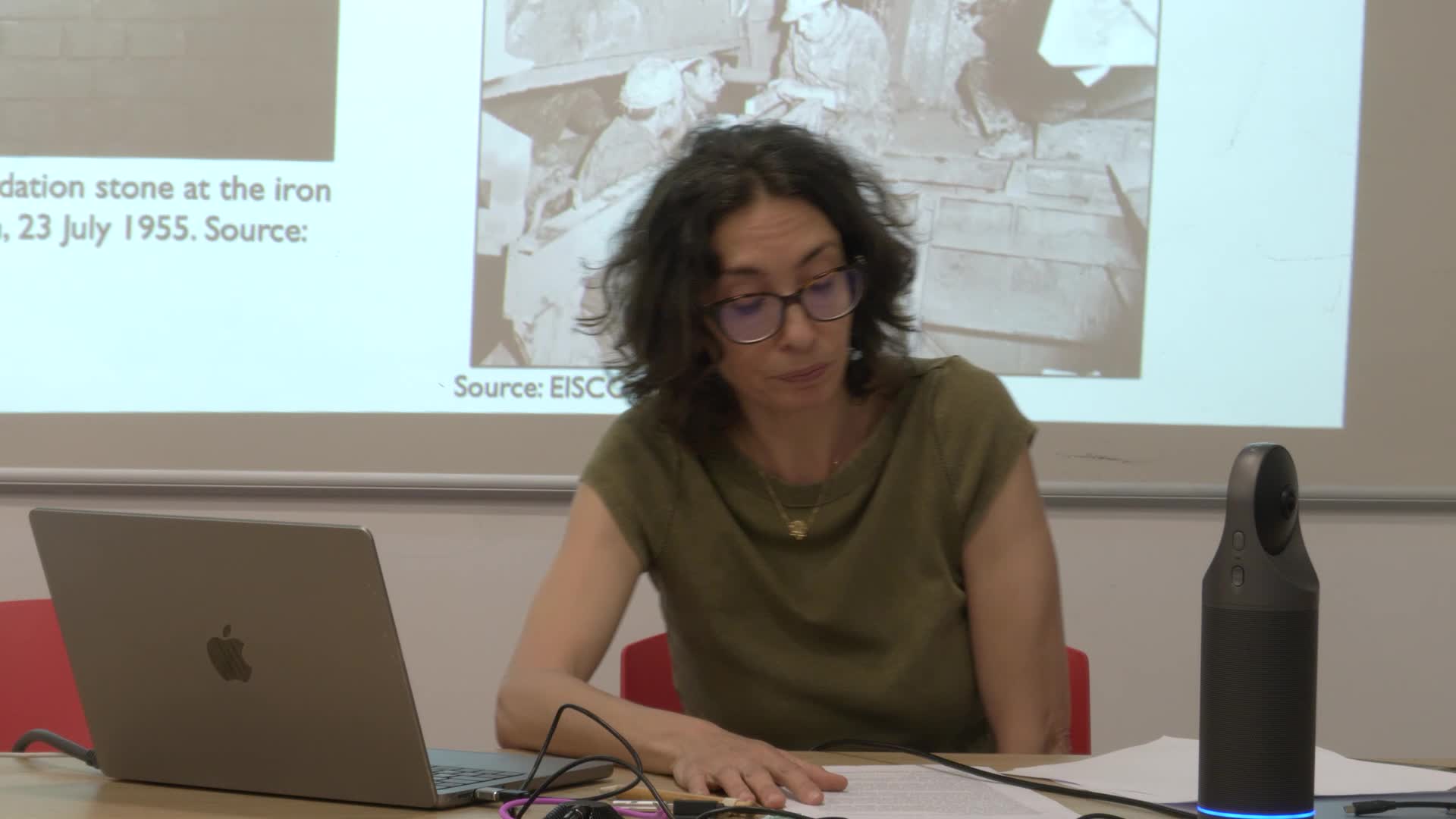
Bridget KENNY, University of the Witwatersand
A fragmentary labour history of lift (elevator) workers in Johannesburg,
South Africa
South Africa offers a deep and rich tradition of labour history (Freund 1984;
Freund 2013). In particular, there has been extensive work done on its mining
economy and the migrant labour system which explained both the formation of
South Africa’s racist coercive labour regime and its particular development of
capitalism. Secondly, much research has been dedicated to histories of trade
union organising: craft unions organising white immigrants, industrial unions
organising both black and white workers through the 1940s, and, independent
black trade unions organising black workers from the 1970s. These traditions
used well-documented trade union archives, state archives, oral histories and
the engaged histories of the labour activist-scholars themselves, who were often
involved within the trade union movements. This paper discusses my current
project about lifts (elevators) as affective urban infrastructure in Johannesburg.
I consider the sources I have used to document various forms of lift labour that
ensured that the technology was installed, maintained, repaired and driven.
Unlike much previous labour history, this work does not have a single trade
union archive or even state location from which to source information. I have
had to glean what I can about the nature of the work from fragments from
multiple archives and interviews. This presentation thinks about the strengths
and weaknesses of a fragmentary labour history focusing on categories of
workers not often examined.
Dans la même collection
-
From State Expertise to Factory Struggles : Rethinking the History of Industrial Labor in Postcolon…
From State Expertise to Factory Struggles : Rethinking the History of Industrial Labor in Postcolonial Egypt. Malak LABIB.
-
Crossing sources and methods to write a history of work in colonised Algeria (1900s-1950s)
Crossing sources and methods to write a history of work in colonised Algeria (1900s-1950s). Annick LACROIX.
-
Shifts and continuities in female labour relations in British East Africa (1800-1950)
Shifts and continuities in female labour relations in British East Africa (1800-1950). Karin PALLAVER.
Sur le même thème
-
Ciné-dialogues Afrique 2025-2026 – Séance 8/8 – L’Indomptable feu du printemps (2019) de Lemohang J…
BruzzoneAnnaMoseseLemohang JeremiahLe PoullennecAnnaelCiné-dialogues Afrique 2025-2026 – Séance 8/8 – L’Indomptable feu du printemps (2019) de Lemohang Jeremiah Mosese. Trialogue entre le réalisateur, Annael Le Poullennec et Anna Bruzzone.
-
Crossing sources and methods to write a history of work in colonised Algeria (1900s-1950s)
Crossing sources and methods to write a history of work in colonised Algeria (1900s-1950s). Annick LACROIX.
-
Shifts and continuities in female labour relations in British East Africa (1800-1950)
Shifts and continuities in female labour relations in British East Africa (1800-1950). Karin PALLAVER.
-
From State Expertise to Factory Struggles : Rethinking the History of Industrial Labor in Postcolon…
From State Expertise to Factory Struggles : Rethinking the History of Industrial Labor in Postcolonial Egypt. Malak LABIB.
-
Ciné-dialogues Afrique 2025-2026 – Séance 7/8 – Les Filles du Nil (2024) de Nada Riyadh et Ayman El…
BruzzoneAnnaEl AmirAymanCiné-dialogues Afrique 2025-2026 – Séance 7/8 – Les Filles du Nil (2024) de Nada Riyadh et Ayman El Amir. Dialogue entre Anna Bruzzone et Ayman El Amir
-
Ciné-dialogues Afrique 2025-2026 – Séance 5/8 – Le Djassa a pris feu (2012) de Lonesome Solo. Dialo…
BruzzoneAnnaJaquetDelphineCiné-dialogues Afrique 2025-2026 – Séance 5/8 – Le Djassa a pris feu (2012) de Lonesome Solo. Dialogue entre Delphine Jaquet et Anna Bruzzone
-
Entretien avec Mathilde Ferrer
FerrerMathildeLaksDéborahEntretien avec Mathilde Ferrer, directrice du Centre d’information et de documentation de l’École des Beaux-Arts de Paris, cheffe d’atelier, ancienne élève de l’École des Beaux-Arts de Paris.
-
Entretien avec Sylvie Fanchon
FanchonSylvieLaksDéborahEntretien avec Sylvie Fanchon, artiste peintre, cheffe d’atelier à l’École des Beaux-Arts de Paris de 2000 à 2019.
-
Entretien avec Barbara M. Cooper
CooperBarbara MacGowanBarbara M. Cooper est professeur d’histoire africaine à Rutgers, the State University of New Jersey, aux États-Unis. Ses recherches portent sur le genre, la vie familiale, la religion, la santé
-
Entretien avec Abdourahamane Idrissa Abdoulaye
IdrissaRahmaneRahmane Idrissa est un politiste et historien basé conjointement au Centre des études africaines de l’université de Leyde (Pays-Bas) et à l’Africa Institute de Sharjah (Émirats Arabes Unies). Son
-
Colloque | Warmikuna (femmes) – oralité, mémoire et autochtonie
ItierCésarRomero BarriosTaniaHerreraMorganaCe colloque propose ainsi d’analyser la participation des femmes autochtones et des locutrices de langues autochtones, dans leur diversité de genre et sexuelle, aux processus sociopolitiques sur la
-
02. Faire de son mieux (Avec Nathalie Vallet-Renart)
Vallet-RenartNathaliePodcast animé par Romain Poncet, ingénieur de recherche en sociologie.