Notice

Definition and lesson learned from the past crisis
- document 1 document 2 document 3
- niveau 1 niveau 2 niveau 3
Descriptif
In this first part, discover what are the biodiversity, its origins 3,8 billion years ago, and its evolution mechanisms, especially the extinction crisis of the main species. You will better understand the current state of the biodiversity, and why it is important to preserve its dynamics.

Dans la même collection
-
EN-11. Nature and progress
GouyonPierre-HenriPierre-Henri Gouyon relies on an example - Dedale - to show the effects and the risks of a progress understanding which is only based on the technology.
-
EN-2. Biodiversity: state or dynamics ?
GouyonPierre-HenriPierre-Henri Gouyon proposes a definition of the biodiversity. He relies on the diagram that Darwin published in 1859, in The Origin of Species. He insists on the dynamic balances of this biodiversity
-
EN-10. Why should we worry about biodiversity ?
BoeufGillesIn relation to the erosion of biodiversity, Gilles Boeuf presents arguments in favor of the upholding of this biodiversity: human health, technology innovation, bio-inspiration, or economy.
-
EN-5. The history of biodiversity
BoeufGillesGilles Boeuf comes back to the main stages of the history of life. He begins with the oceans, where life appeared over 3,5 billion years ago, mentions the lands conquest, and ends with the appearance
-
EN-8. Current state of the planet and of the biodiversity
BoeufGillesGilles Boeuf reports the erosion of biodiversity and presents the four main factors which can be associated to this dynamics: destruction and pollution, resources overexploitation, species
-
EN-3. Origins of life: the context
MaurelMarie-ChristineMarie-Christine Maurel explores the origins of life on earth. She highlights the main conditions 3 billion years ago, as well as the emergence of the first forms of life, which gave birth to the tree
-
EN-6. The main crisis of biodiversity
DavidBrunoBruno David comes back to the main biodiversity crisis. He takes an inventory of the crisis for hundreds of million years and he discusses their potential factors of origin : oxygenation of the marine
-
EN-1. Definition of biodiversity
BoeufGillesGilles Boeuf proposes a definition of the biodiversity, this "living fraction of the nature in all its complexity". He relies on many examples, pictures, samples, and always points out the strong
-
EN-9. Biodiversity: perception and uses
GouyonPierre-HenriPierre-Henri Gouyon comes back to different looks taken at nature and biodiversity during the last centuries. He insists on the fact that this biodiversity can't be reduced to a frozen group of
-
EN-4. Origins of life
MaurelMarie-ChristineMarie-Christine Maurel comes back to the formation of the first living cells on the earth surface, relying on several great experiments. The she presents the extent of questionings which still remain,
-
EN-7. Records of the biodiversity crisis
DavidBrunoBruno David comes back to the main biodiversity crisis. He focuses on 2 aspects : the crisis recording and the exit from the crisis. Firstly, he explains that, contrary to what can be supposed, there
-
3. Origines de la vie : le contexte
MaurelMarie-ChristineMarie-Christine Maurel explore les origines de la vie sur terre. Elle met en évidence les conditions qui prévalaient il y a plus de 3 milliards d'années, ainsi que l'émergence des premières formes de


Avec les mêmes intervenants et intervenantes
-
L’océan, témoin du changement
BoeufGillesGilles Boeuf, professeur à Sorbonne Université, propose dans cette vidéo un aperçu des grandes caractéristiques de l'océan, qu'il s'agisse de connectivité, de salinité, de stabilité ou encore de
-
S'inspirer du vivant
BoeufGillesGilles Boeuf, professeur à Sorbonne Université, présente dans cette vidéo (7'26) le biomimétisme, qui consiste à s'inspirer de la nature pour faire beaucoup mieux sur le plan de l'efficacité de
-
L'Humain dans la Biodiversité
BoeufGillesDans cette vidéo (25'28), Gilles Boeuf, professeur à l'université Pierre et Marie Curie, présente les grands enjeux globaux auxquels est aujourd'hui confrontée l'Humanité. Il centre son propos sur
-
EN-1. Definition of biodiversity
BoeufGillesGilles Boeuf proposes a definition of the biodiversity, this "living fraction of the nature in all its complexity". He relies on many examples, pictures, samples, and always points out the strong
-
EN-10. Why should we worry about biodiversity ?
BoeufGillesIn relation to the erosion of biodiversity, Gilles Boeuf presents arguments in favor of the upholding of this biodiversity: human health, technology innovation, bio-inspiration, or economy.
-
EN-5. The history of biodiversity
BoeufGillesGilles Boeuf comes back to the main stages of the history of life. He begins with the oceans, where life appeared over 3,5 billion years ago, mentions the lands conquest, and ends with the appearance
-
EN-8. Current state of the planet and of the biodiversity
BoeufGillesGilles Boeuf reports the erosion of biodiversity and presents the four main factors which can be associated to this dynamics: destruction and pollution, resources overexploitation, species
-
8. État actuel de la planète et de la biodiversité
BoeufGillesGilles Boeuf fait état de l'érosion de la biodiversité et présente les quatre grands facteurs qui peuvent être associés à cette dynamique : destruction et pollution, surexploitation des ressources,
-
1. Définition de la biodiversité
BoeufGillesGilles Boeuf propose une définition de la biodiversité, cette "fraction vivante de la nature dans toute sa complexité". Il s'appuie pour cela sur une grande diversité d'exemples, de photos, d
-
10. Pourquoi faut-il se préoccuper de la biodiversité ?
BoeufGillesDans un contexte d'érosion de la biodiversité, Gilles Boeuf pose un certain nombre d'arguments en faveur du maintien de cette biodiversité : santé humaine, innovation technologique, bio-inspiration ou
-
5. Histoire de la biodiversité
BoeufGillesGilles Boeuf revient sur les grandes étapes de l'histoire de la vie. Il part des océans, où la vie est apparue il y a plus de 3,5 milliards d'années, évoque la conquête des terres, et termine par l
-
Biodiversité et société - Clip
BoeufGillesClip de la 7ème semaine du MOOC UVED Biodiversité. La préservation de la biodiversité et des services qu'elle apporte aux sociétés humaines fait intervenir une grande diversité d


Sur le même thème
-
Une année au Muséum national d'histoire naturelle de Paris : retour d'expérience sur une résidence …
DodartGustaveGustave Dodart a été wikimédien en résidence au Muséum d'Histoire Naturelle de Paris durant un an. Il présente dans cette vidéo son travail et ses réalisations.
-
Des valeurs de la biodiversité à la justice environnementale : un regard philosophique sur la trans…
BeauRémiAprès avoir proposé un état de l’art des recherches sur les valeurs de la biodiversité en éthique environnementale, Rémi Beau mettra ces différentes approches en dialogue avec leurs possibles
-
Regards croisés sur les transitions agroécologiques et alimentaires
VialatteAudeFerhoutHichamChâteau TerrissePascaleGibertCarolineCoulonFrédéricRegards croisés sur les transitions agroécologiques et alimentaires
-
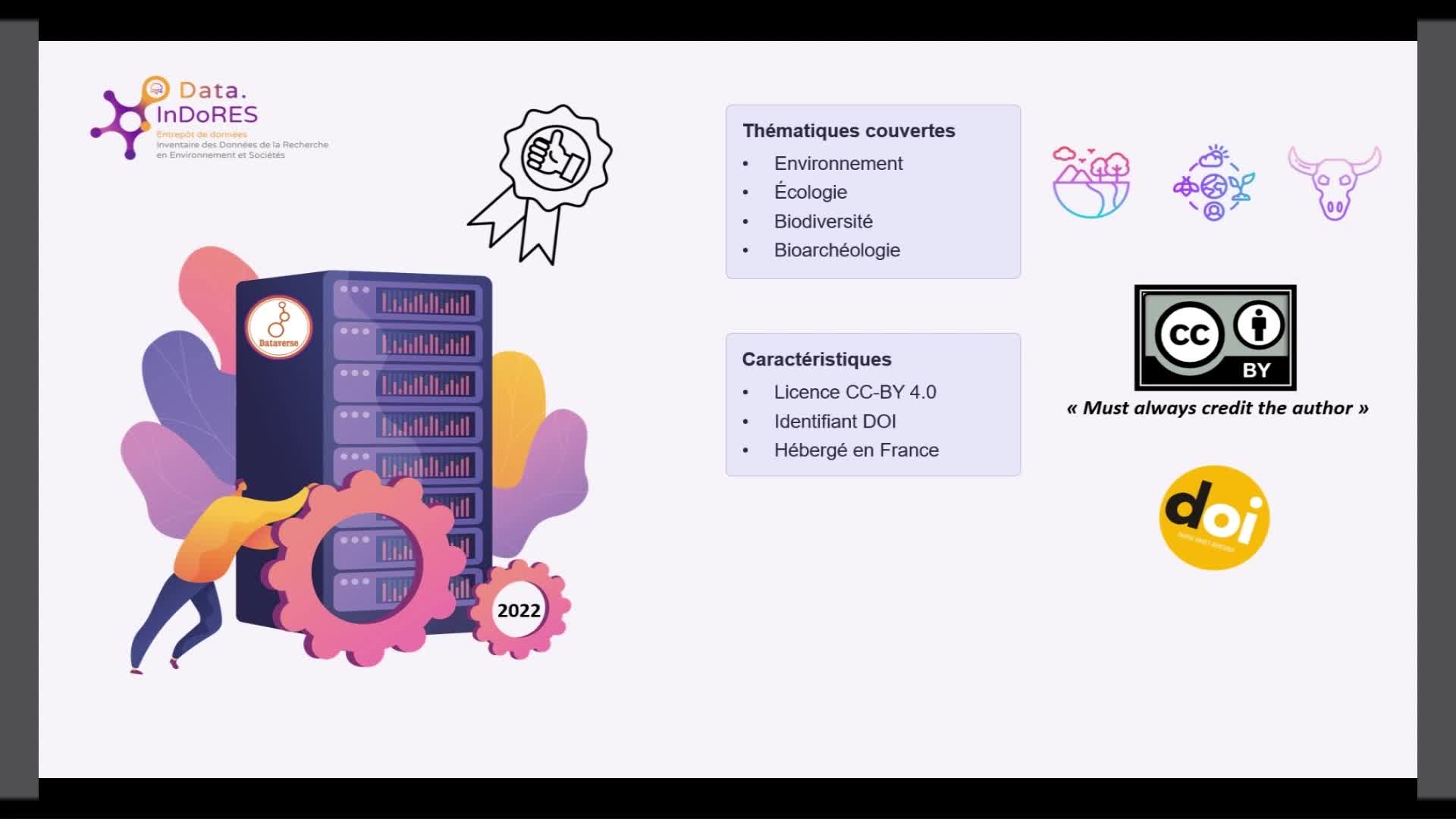
Présentation générale du portail InDoRES
Cette vidéo vous explique comment s'organise le projet InDoRES, son site et les outils mis à disposition de la communauté scientifique.
-
Interview de Bernard Hubert (Écologue à l'INRAE)
HubertBernardInterview de Bernard Hubert (Écologue à l'INRAE)
-
Journée de lancement PEPR Dynabiod - Matinée
BlochGillesSchuhlAlainHuetBriceBorelCorinnePersozCharlesLarigauderieAnnePorcherEmmanuelleRougerieRodolpheThuillerWilfriedRetransmission de la matinée de lancement du PEPR Dynabiod
-
Dynabiod : Entretien avec Emmanuelle Porcher, Wilfried Thuiller et Rodolphe Rougerie
RougerieRodolpheThuillerWilfriedPorcherEmmanuellePrésentation de Dynabiod par Emmanuelle Porcher, Wilfried Thuiller et Rodolphe Rougerie, les co-directeurs scientifiques du programme. 🎥 © MNHN - S. Pagani 📷 Illustrations : Sensory Odyssey, Paul
-
Quand elles arrivent en ville
PodevinSophieDefranceJérémyDes binômes, composés d’un·e scientifique et d’un·e réalisateur·rice, ont 48h pour écrire, tourner et monter un court métrage ensemble sur le sujet de recherche du/de la scientifique. Les participant
-
Fertiliser à l'urine, vers une gestion artisanale et circulaire des nutriments
BrunFlorentUtiliser les urines et les matières fécales en agriculture ? L'idée n'a rien de nouveau ! Face au dépassement des limites planétaires, la recherche d'alternatives renouvelables devient essentielle,
-
Livestock farming: source of biodiversity - Q/A
DumontBertrandLemauviel-LavenantServaneMartelGilles[Grazing livestock] Sequence 15. Livestock farming: source of biodiversity
-
Parc Urbain des Papillons (Marseille)
CarréMagueloneChatrieLauraLe Parc Urbain des Papillons (PUP) est un site expérimental unique dédié à la biodiversité urbaine à Marseille
-
Nourrir l’Europe en 2050
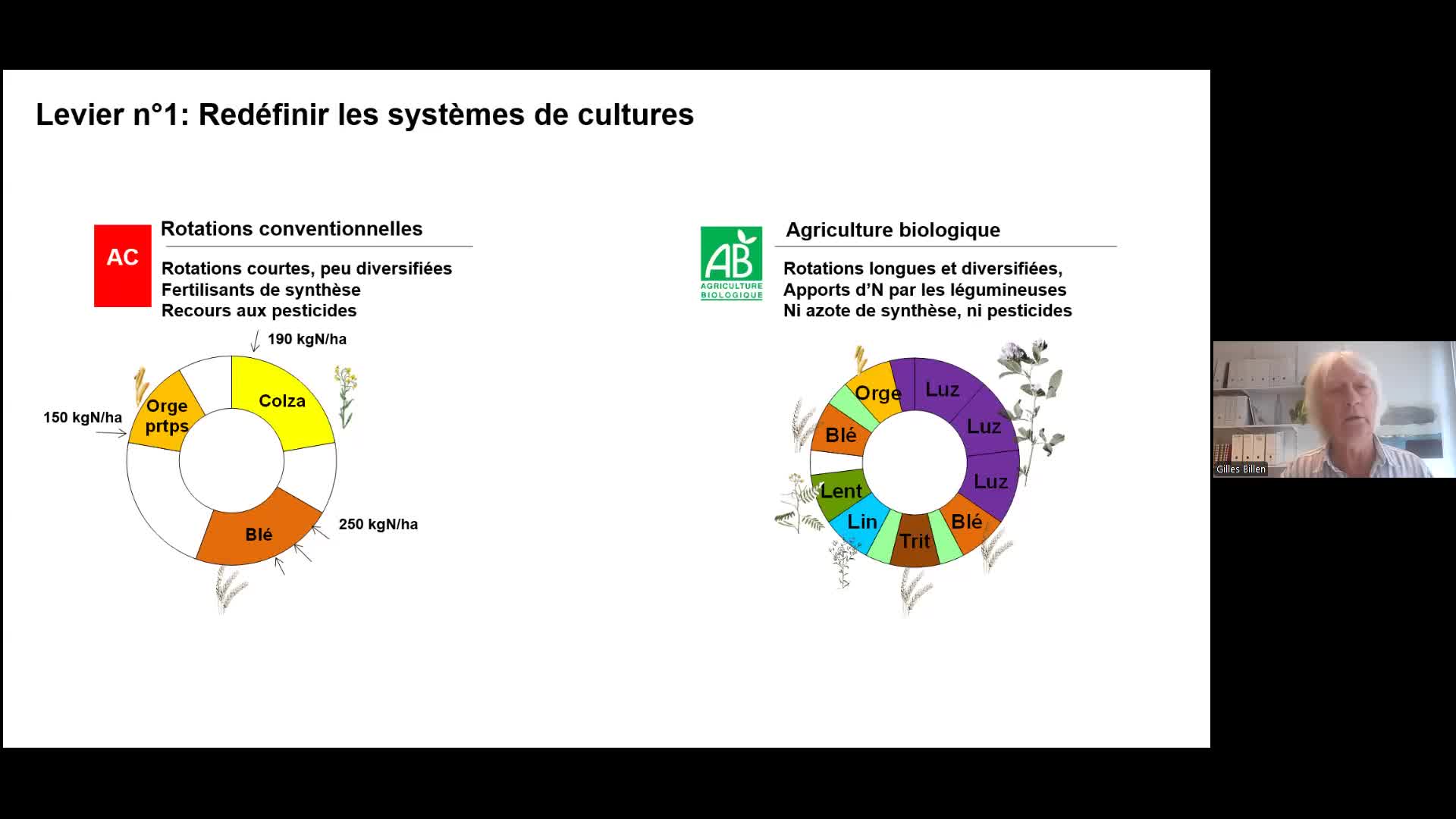
BillenGillesDans le cadre de la semaine européenne du développement durable (SEED), le service responsabilité sociale de l’employeur a proposé le webinaire « Nourrir l’Europe en 2050 avec une alimentation durable