
Pierre MOEGLIN - 3
Pierre Mœglin Pierre Mœglin est à l’origine, en 1991, avec Élisabeth Fichez, du Sif, qu’il anime depuis cette date. Ses recherches portent en parallèle sur les industries éducatives et l
Mon compte
Pas encore inscrit ?
Pierre Mœglin Pierre Mœglin est à l’origine, en 1991, avec Élisabeth Fichez, du Sif, qu’il anime depuis cette date. Ses recherches portent en parallèle sur les industries éducatives et l
LDPC codes have an interesting feature: they are free of algebraic structure. We will study in detail this proposal for the McEliece cryptosystem in this session. LDPC codes were originally
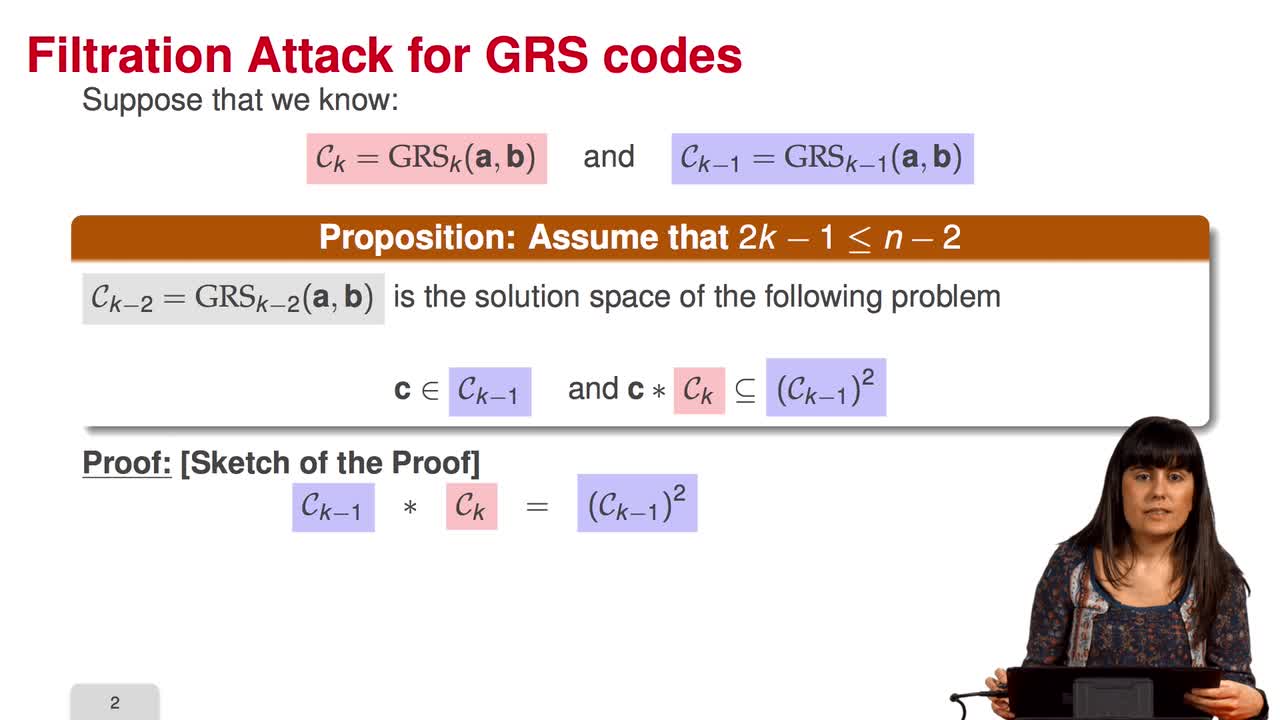
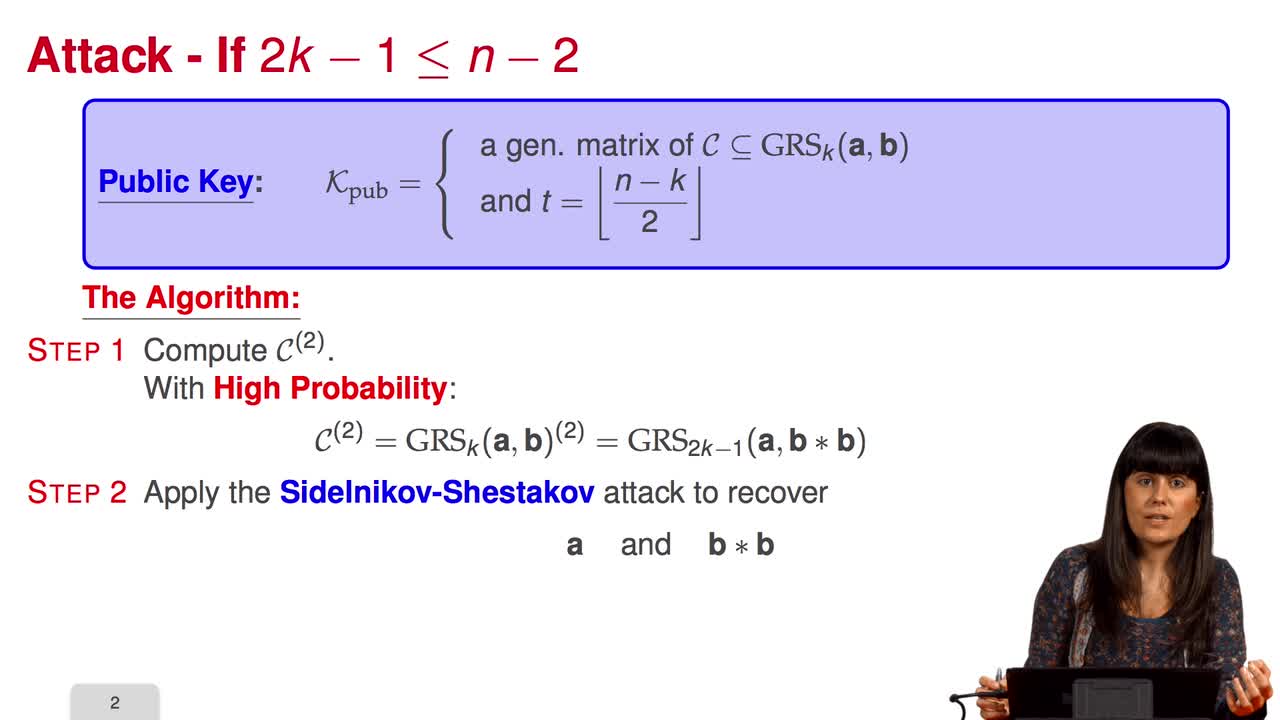
In this session, we will talk about using subcodes of a Generalized Reed–Solomon code for the McEliece Cryptosystem. Recall that to avoid the attack of Sidelnikov and Shestakov, Berger and
Welcome to this MOOC which is entitled: code-based cryptography. This MOOC is divided in five weeks. The first week, we will talk about error-correcting codes and cryptography, this is an introduction
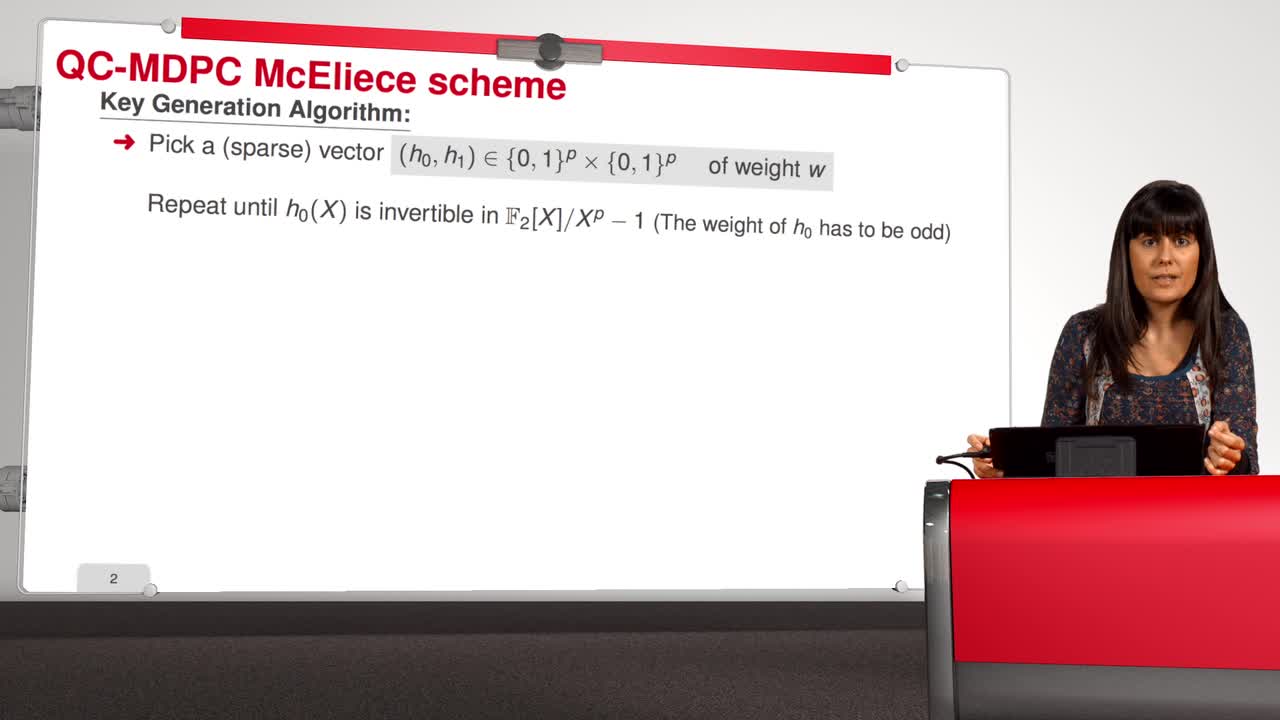
This is the last session where we will talk about reducing the key size. Here we will introduce the MDPC codes. In 2012, the MDPC codes were proposed for the McEliece schemes. An MDPC code is a
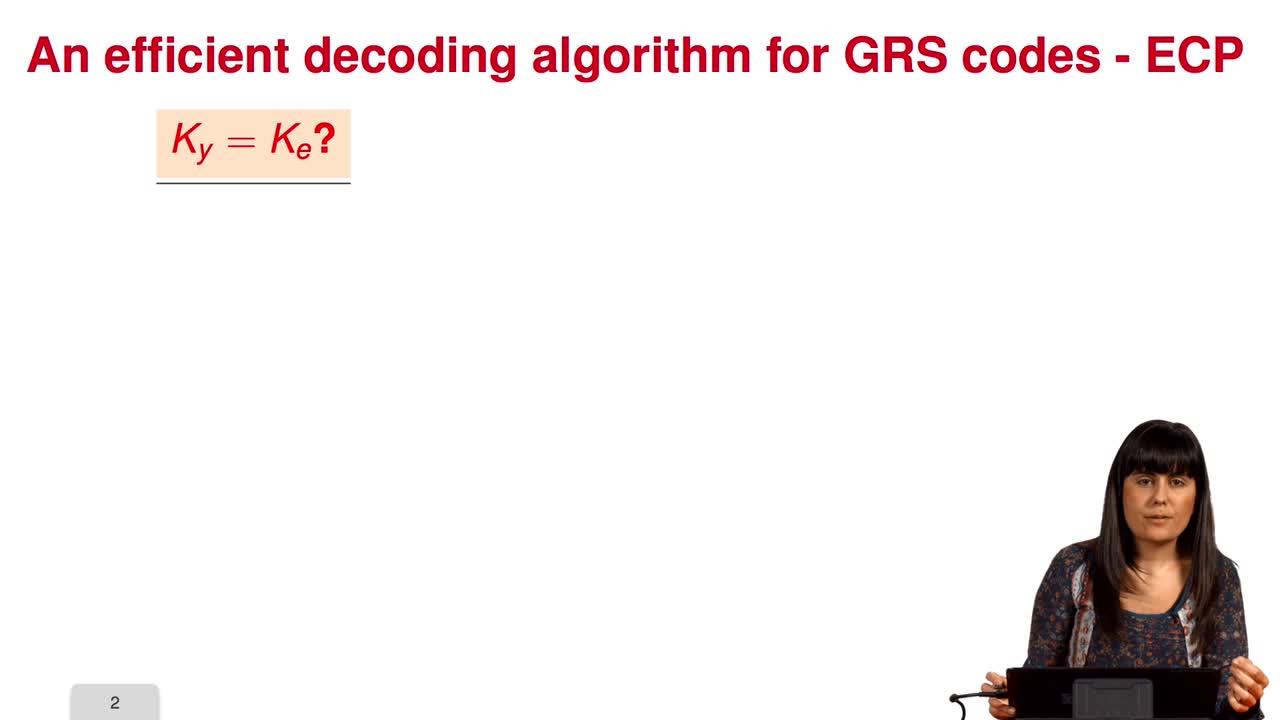
We present in this session a general decoding method for linear codes. And we will see it in an example. Let C be a generalized Reed-Solomon code of dimension k associated to the pair (c, d). Then,
In this session, we will give a brief introduction to Coding Theory. Claude Shannon's paper from 1948 entitled "A Mathematical Theory of Communication" gave birth to the disciplines of Information
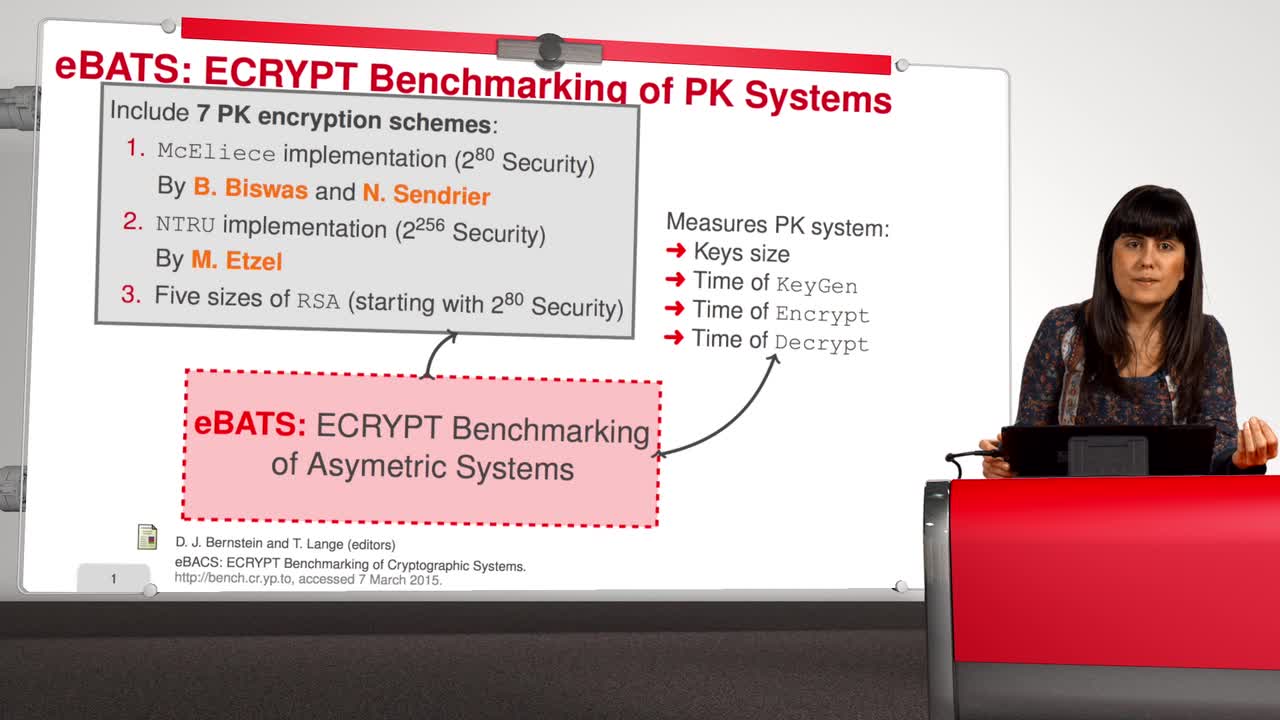
This is the last session of the second week. The cryptography community has different options for using public key cryptosystems, among others, they have RSA or DSA. But … McEliece has the same
In this session we will discuss the proposal of using generalized Reed-Solomon codes for the McEliece cryptosystem. As we have already said, generalized Reed-Solomon codes were proposed in 1986 by
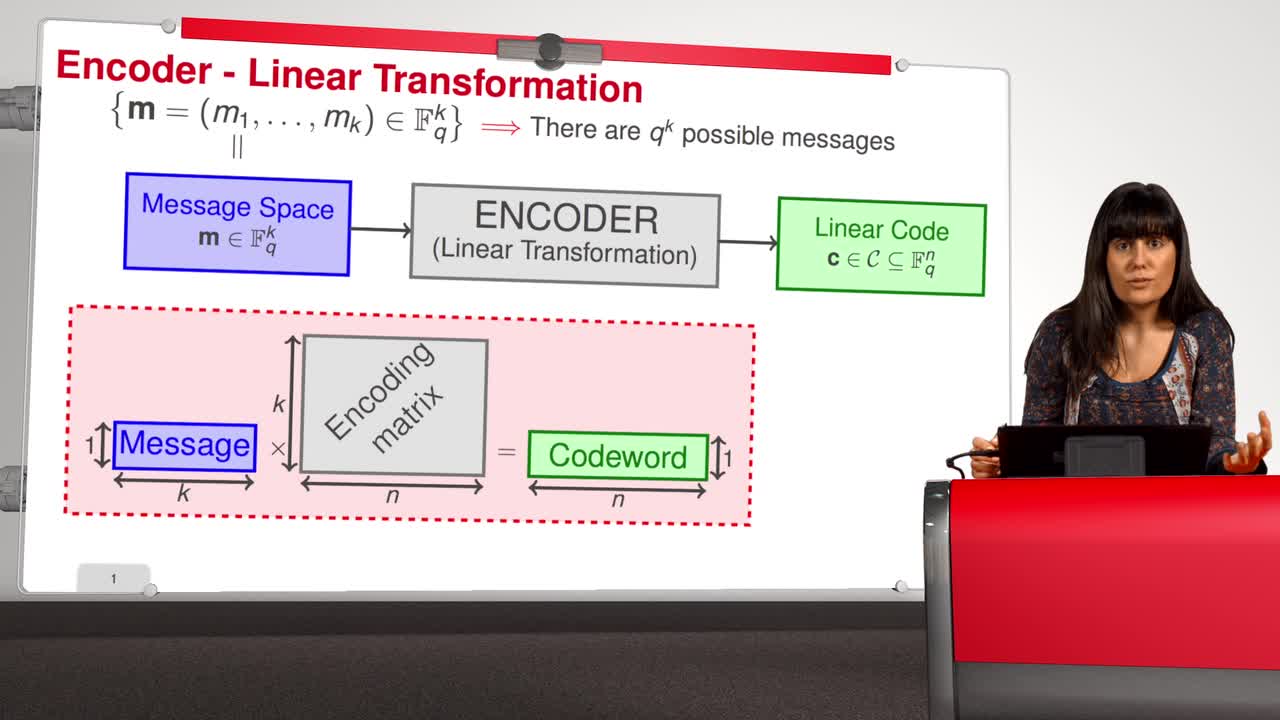
In this session, we will talk about the easy map of the - one-way trapdoor functions based on error-correcting codes. We suppose that the set of all messages that we wish to transmit is the set
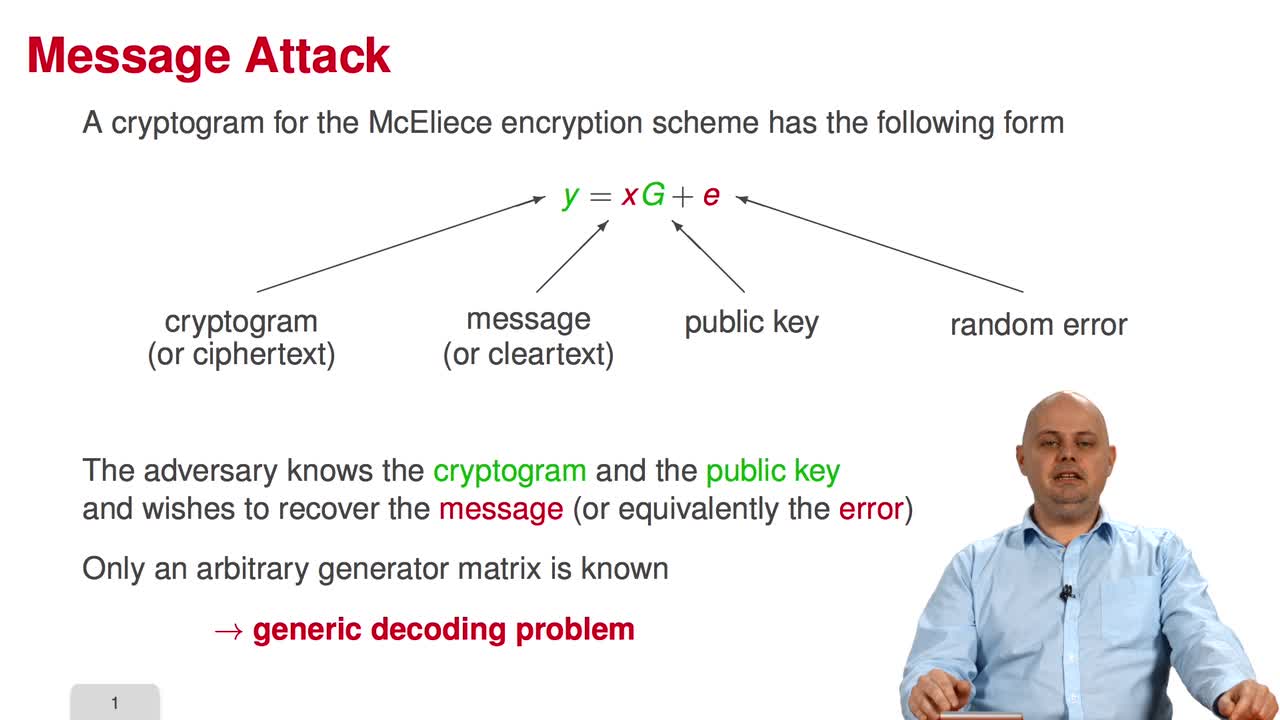
Welcome to the third week of the MOOC on code-based cryptography. This week, we will learn about message attacks. Among the ten sessions of this week, the first six will present the most essential
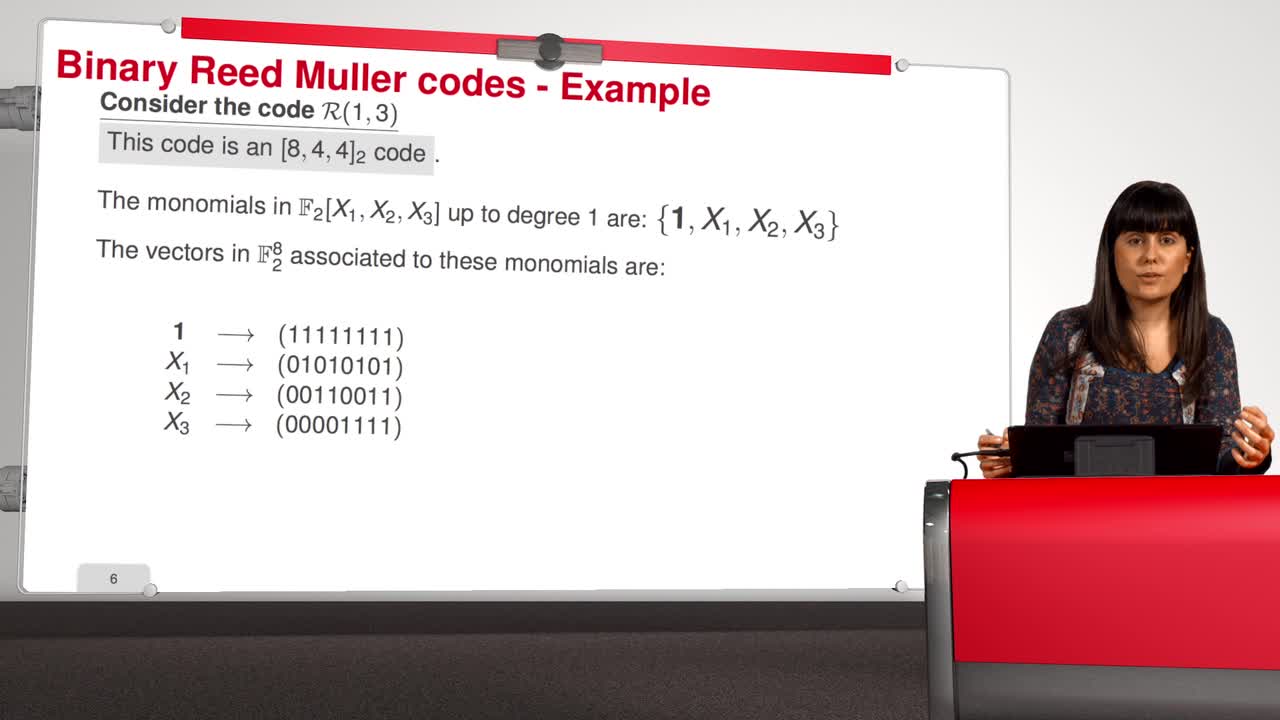
In this session, we will introduce an attack against binary Reed-Muller codes. Reed-Muller codes were introduced by Muller in 1954 and, later, Reed provided the first efficient decoding algorithm