Notice

“Pronouns, past struggles, new practices: political continuity or radical change?”, Claudine Raynaud, Université Paul-Valéry, France
- document 1 document 2 document 3
- niveau 1 niveau 2 niveau 3
Descriptif
I would like to compare two second wave French feminists’ thought and LGBTQIA+ theorizing and practice regarding pronouns and ponder their possible interactions. My focus will be the work of Luce Irigaray (1930- ) and Monique Wittig (1935-2003) in the 70s-80s. These two French feminist thinkers have been chosen among others notable French feminists (for example Beauvoir, Cixous, Kristeva) for their incursion into and reflection upon language and subjectivity. According to them, language, run through patriarchal power, cannot speak/write the female subject, the lesbian subject, the “I” of speech and writing.
Luce Irigaray is first and foremost a philosopher. Her training in psychoanalysis, psychology, linguistic and literature, as well as her writing, singles her out as one of the most incisive theorists on the question of language (hence on the use of pronouns). Unconscious and pre-conscious structures determine speech: consequently, To Speak is Never Neutral (1985). Monique Wittig belongs to another school of feminism: radical materialist feminism. A co-founder of the MLF (Mouvement de Libération des Femmes), Wittig is historically one of the most prominent thinkers of heterosexuality and lesbianism (La Pensée straight, [1978] 2001). Her reflection on pronouns and her practice of a language that reflects her theoretical insights led her to use of the third person feminine plural: “elles” = they in Les Guérillères (1969), and to a deconstruction of “je” into “j/e” in Le Corps lesbien (1973).
While the contemporary conversation and polemics around the use of pronouns may be traced to the history of feminist thought on language, its inscription in a ritual of self-naming, its claim for a different civic identity, play out on a different arena (to take up Wittig’s phrase, the title of the 2024 anthology of her writings, In the Enemy’s Arena). It is this difference and the echoes between these two political moments that I wish to investigate.
Intervention / Responsable scientifique
Dans la même collection
-
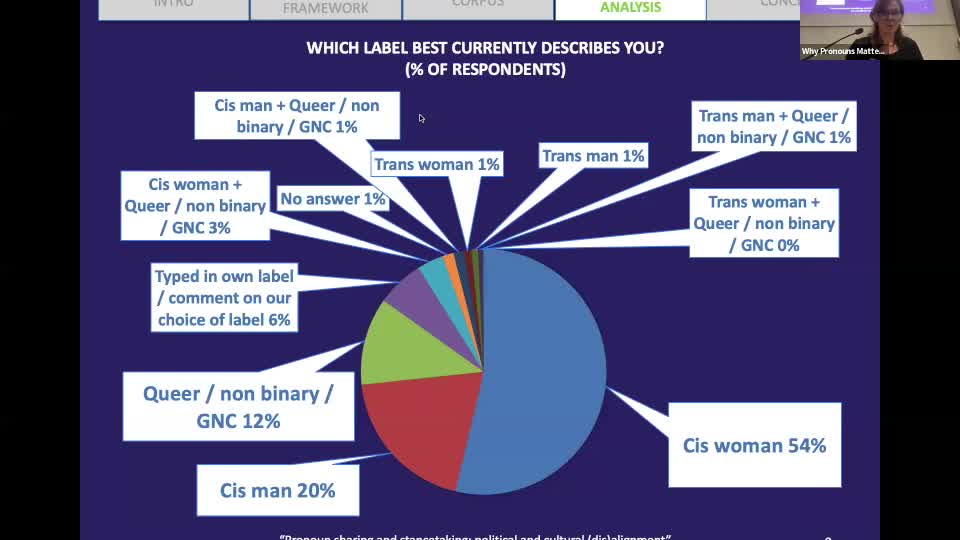
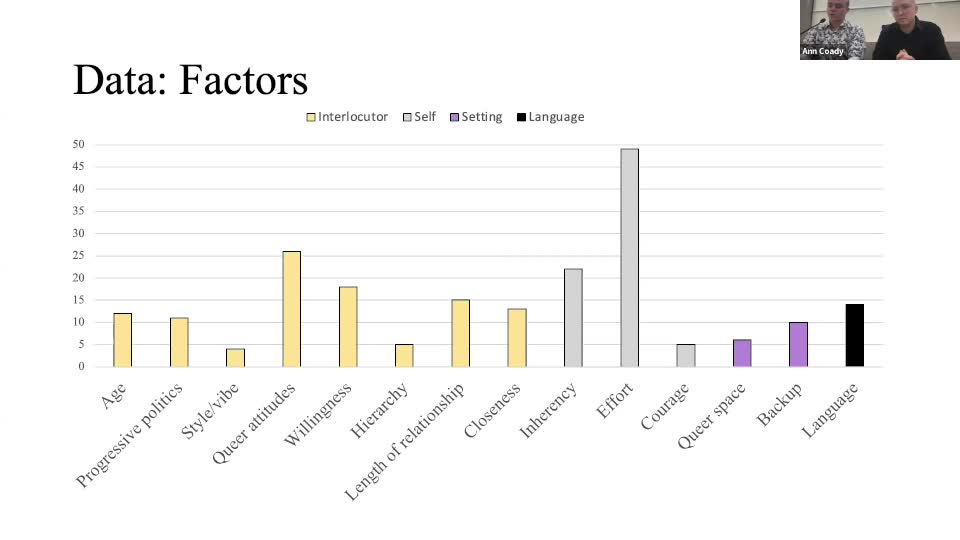
“Pronoun sharing and stancetaking: political and cultural (dis)alignment”, Ann Coady, Université Pa…
I begin my presentation by putting current pronoun-sharing practices in political and theoretical context, briefly discussing the current political debate surrounding these practices and comparing
-
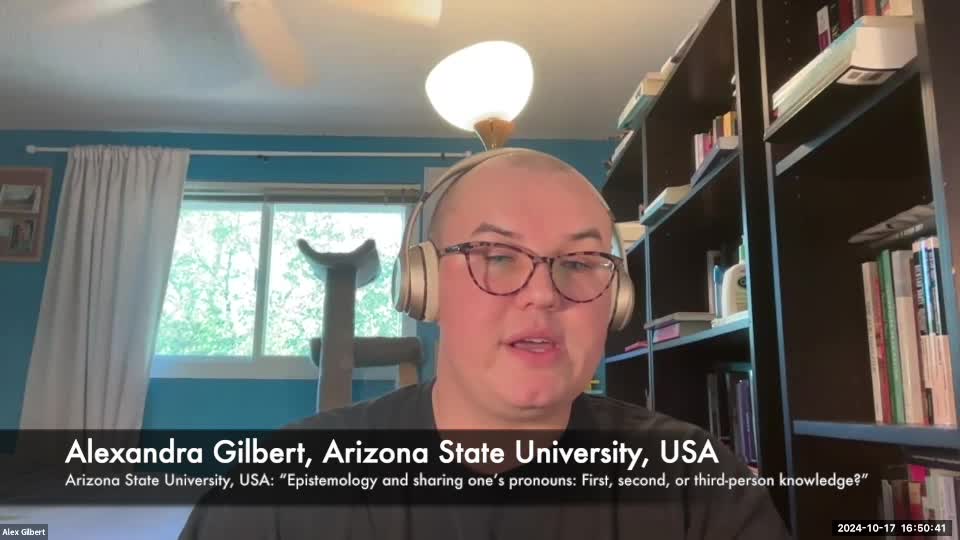
“Epistemology and sharing one’s pronouns: First, second, or third-person knowledge?”, Alexandra Gil…
In this paper, I consider sharing one’s pronouns as an act that asserts self-knowledge and positions oneself in relation to an addressee and a shared social landscape: see me this way, interact with
-
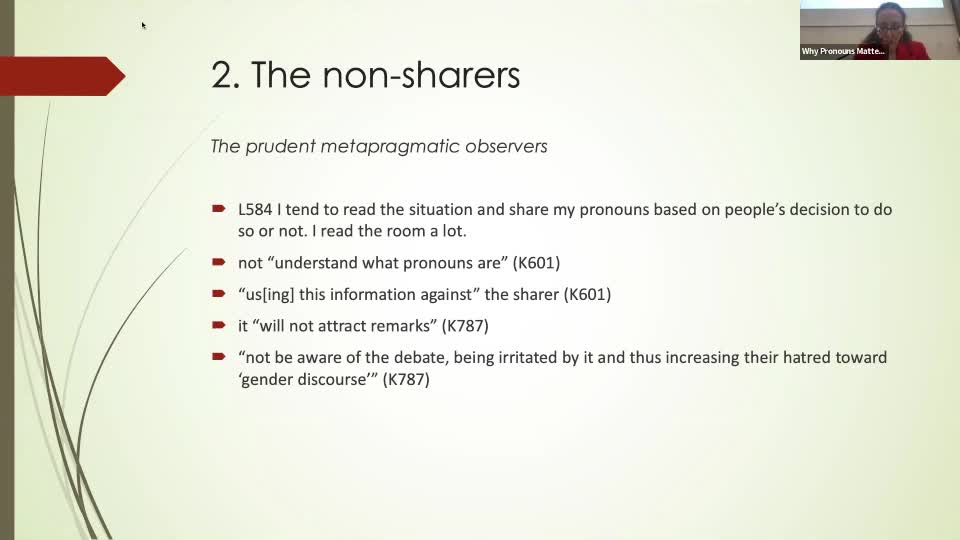
“What’s in a pronoun and how does it matter?: From the perspective of pragmatics”, Sandrine Sorlin,…
SorlinSandrineIn this talk, I wish to give a quick overview of the quite recent ‘pronoun sharing’ trend from a linguistic and pragmatic perspective, going through the new collocations and semantic shifts of the
-
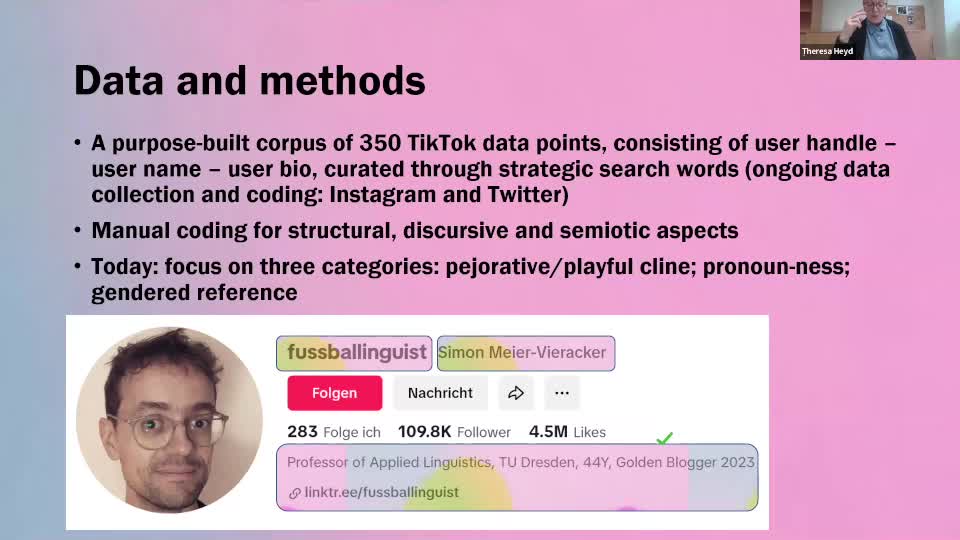
“Mock pronouns”, Theresa Heyd, Universität Heidelberg, Germany
HeydTheresaThis paper gives an account of mock pronouns as a (predominantly digital) discursive practice. The rise of pronouns and pronominal discourse as a gender-inclusive practice has been accompanied by
-
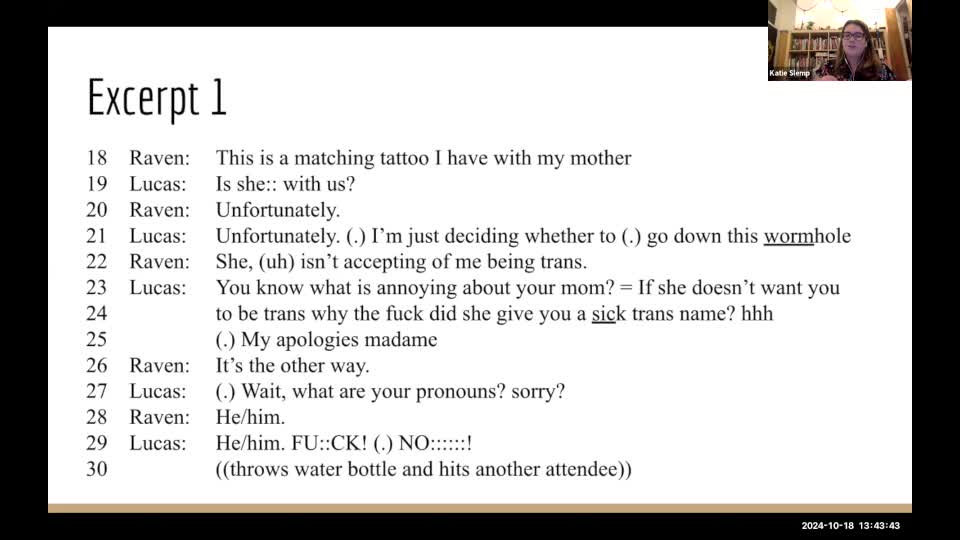
““Wait, what are your pronouns, sorry?”: Conversation analysis of pronoun requests in comedians’ cr…
Comedians on TikTok frequently show videos of their crowd work, where they ask questions to the attendees. While this is not part of their structured stand-up, it allows for spontaneous interaction
-
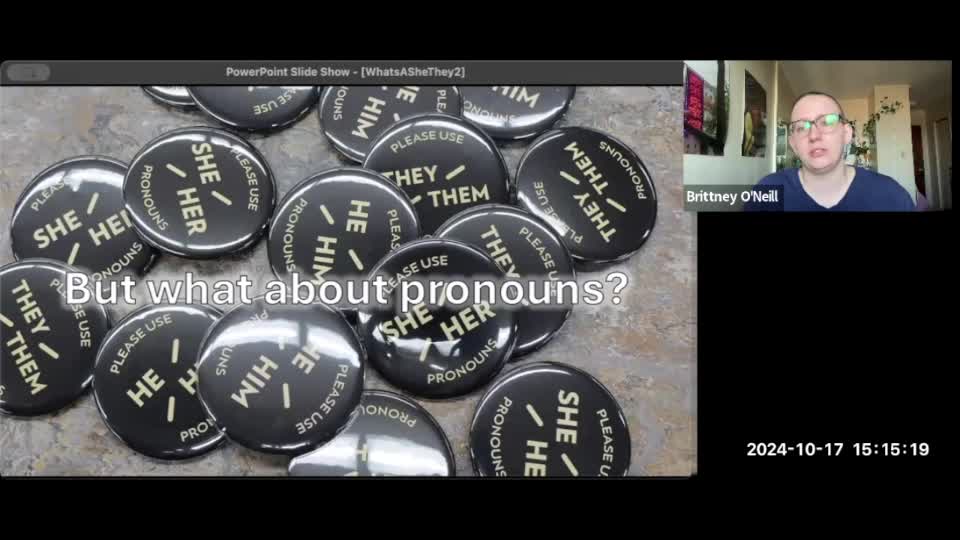
““What’s a she/they?”: An (auto)ethnographic exploration of epistemic justice and the double bind o…
In this paper, I combine autoethnographic reflections with an exploration of epistemic injustice (e.g. Berenstain, 2016; Davis, 2016; Fricker, 2007; Pohlhaus, 2014) to consider how the persistent
-
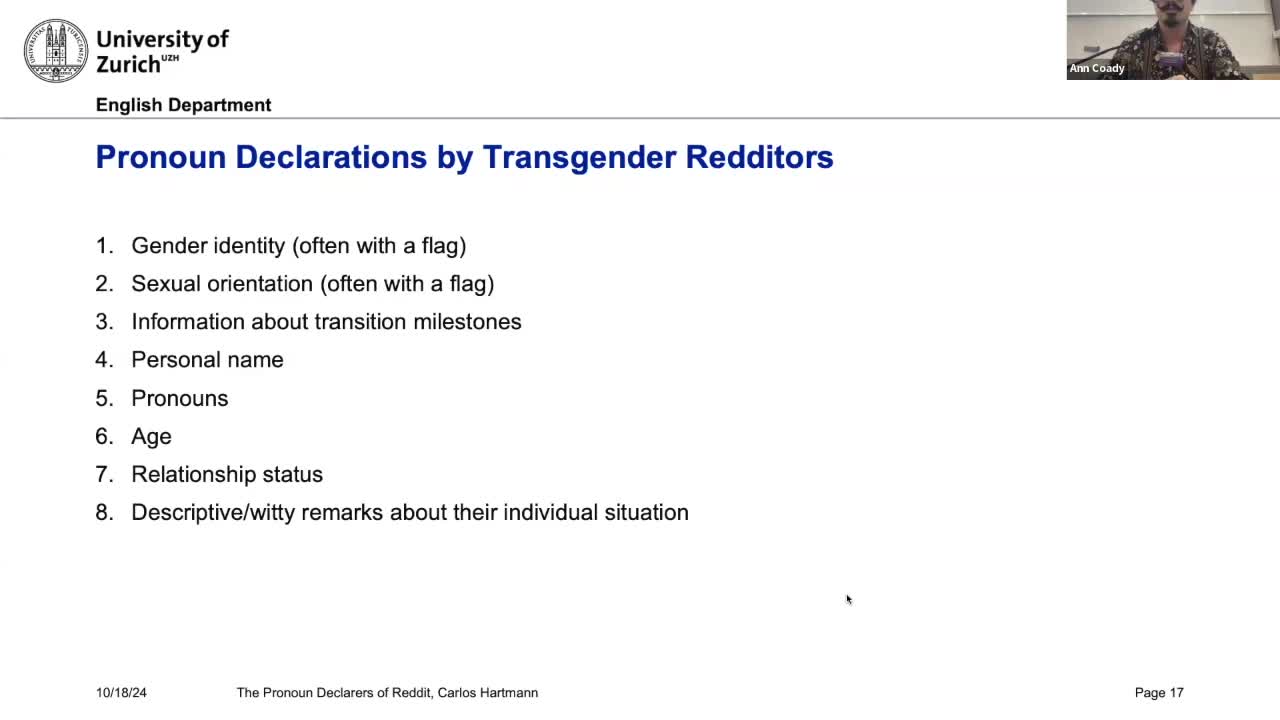
“A sociolinguistic case study on the Pronoun Declarers of Reddit”, Carlos Hartmann, Universität Zür…
For this study, I extracted and analyzed Reddit comments featuring pronoun declarations within their user flairs, the optional descriptors displayed alongside usernames. The goal was to identify a
-
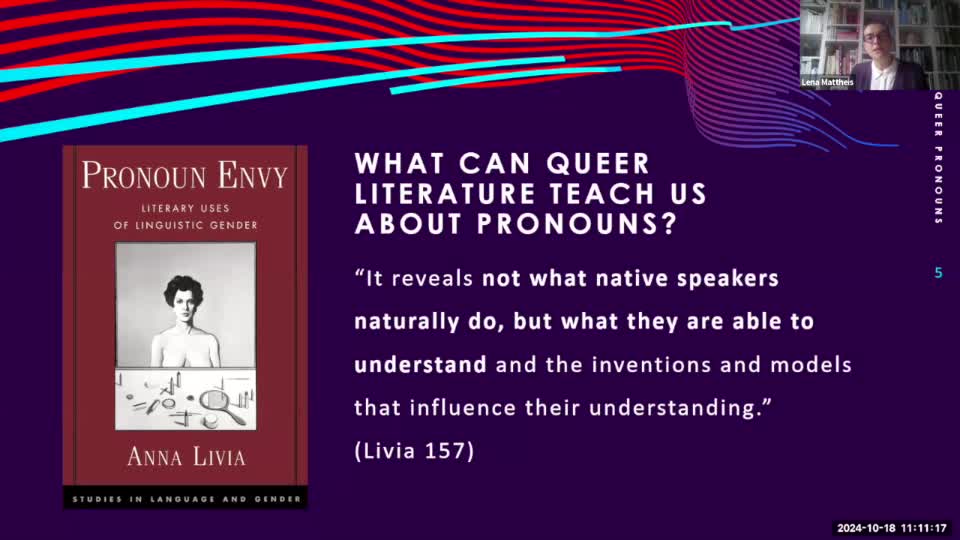
“Gendernonconforming Pronouns in Literature”, Lena Mattheis, University of Surrey, UK
Queerly reshaped pronouns, forms and narrative strategies are flourishing in contemporary non-binary, trans and queer literature. From singular ‘they’ to ‘it’ to neopronouns to the collective voice of
-
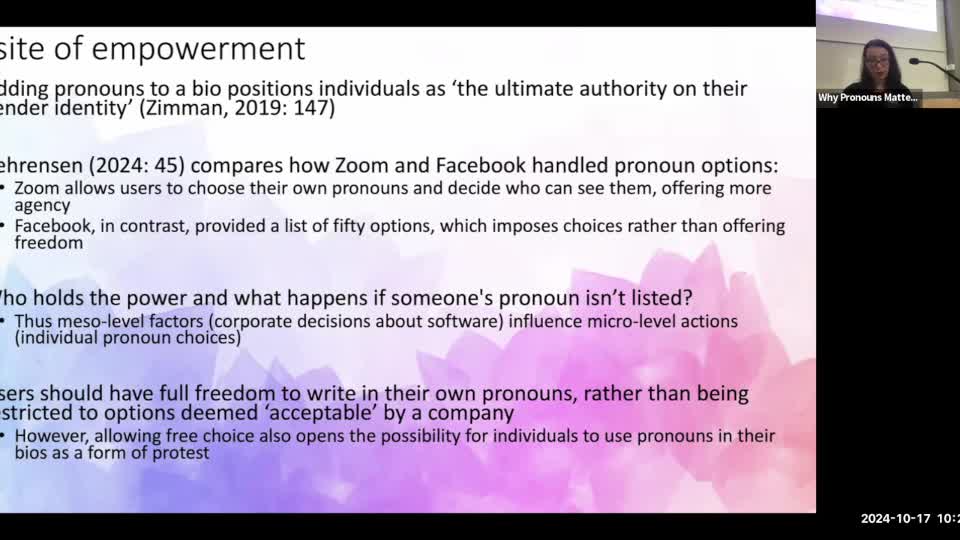
“Pronouns in bio: A site of empowerment, validation, struggle, performance, distraction, and corpor…
Pronouns in bio: A site of empowerment, validation, struggle, performance, distraction, and corporate rainbow washing?
-
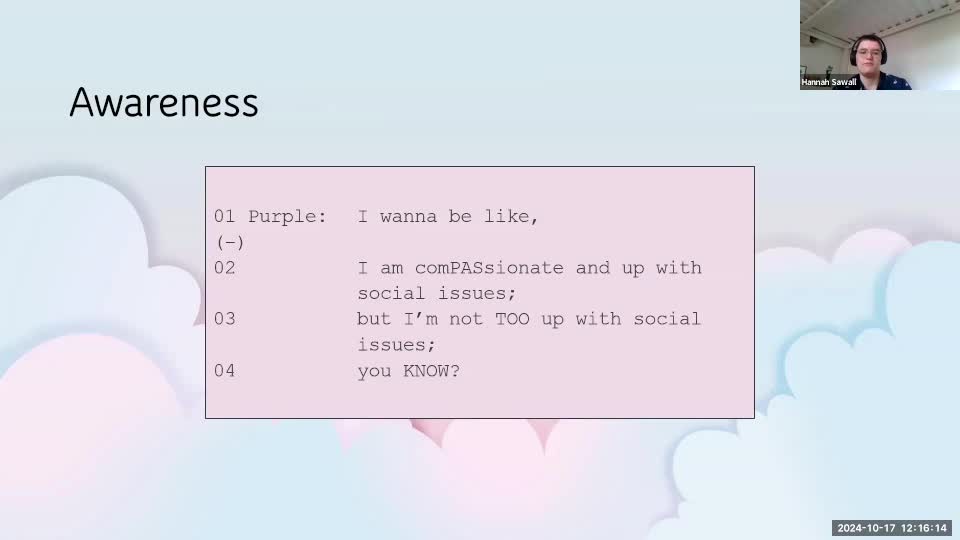
““Mein Name ist Lena und meine Pronomen sind she/her”: Exploring Indexicalities of Pronoun Sharing …
Since pronoun sharing has been associated with different political stances from virtue signaling to trans liberation, it is clear that they transport more information than simply how a person asks to
-
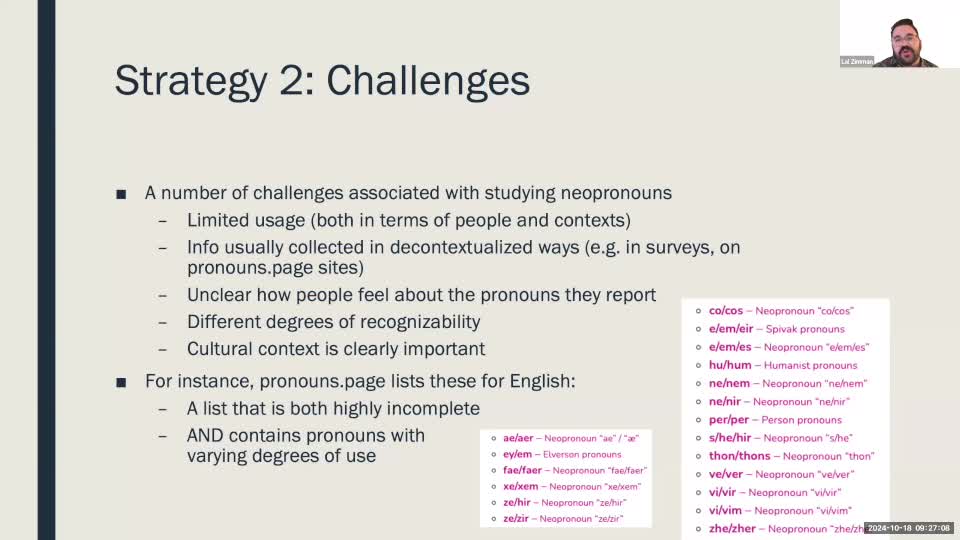
"Pronouns, positionality, and power: Institutionalized transphobia, intersectionality and trans-aff…
ZimmanLalThis talk explores the complex role of pronouns in the negotiation of (socio)linguistic justice, leading to the argument that the success of trans-affirming language depends on a broader
-
“Pronouns in Motion: Pronoun variability among Swiss non-binary individuals”, Justyna King and Elij…
Our paper aims to explore pronoun practices and flexibility among Swiss non-binary individuals, by elucidating the factors influencing the pronoun usage of Swiss non-binary people, discerning the
Avec les mêmes intervenants et intervenantes
-
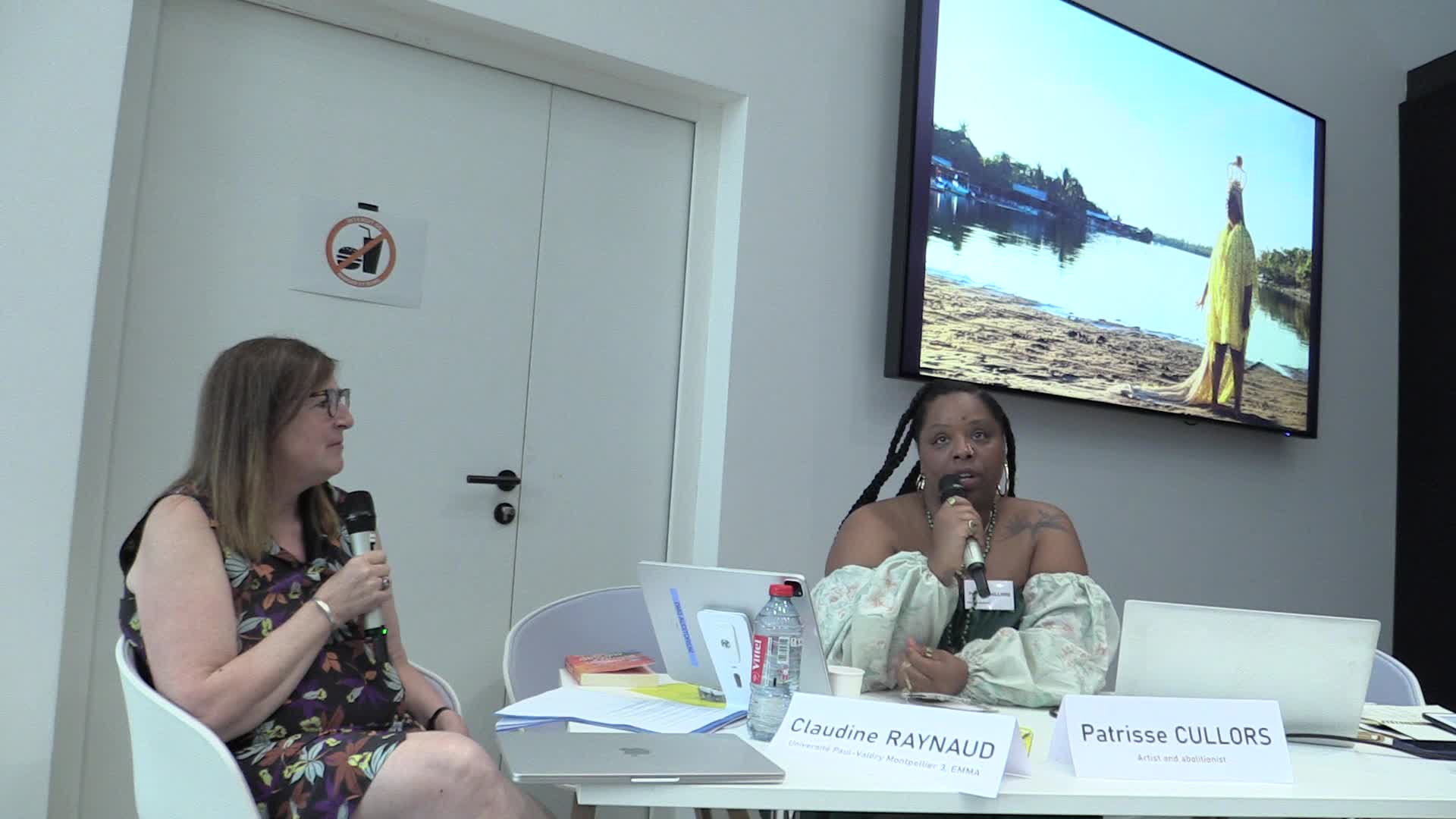
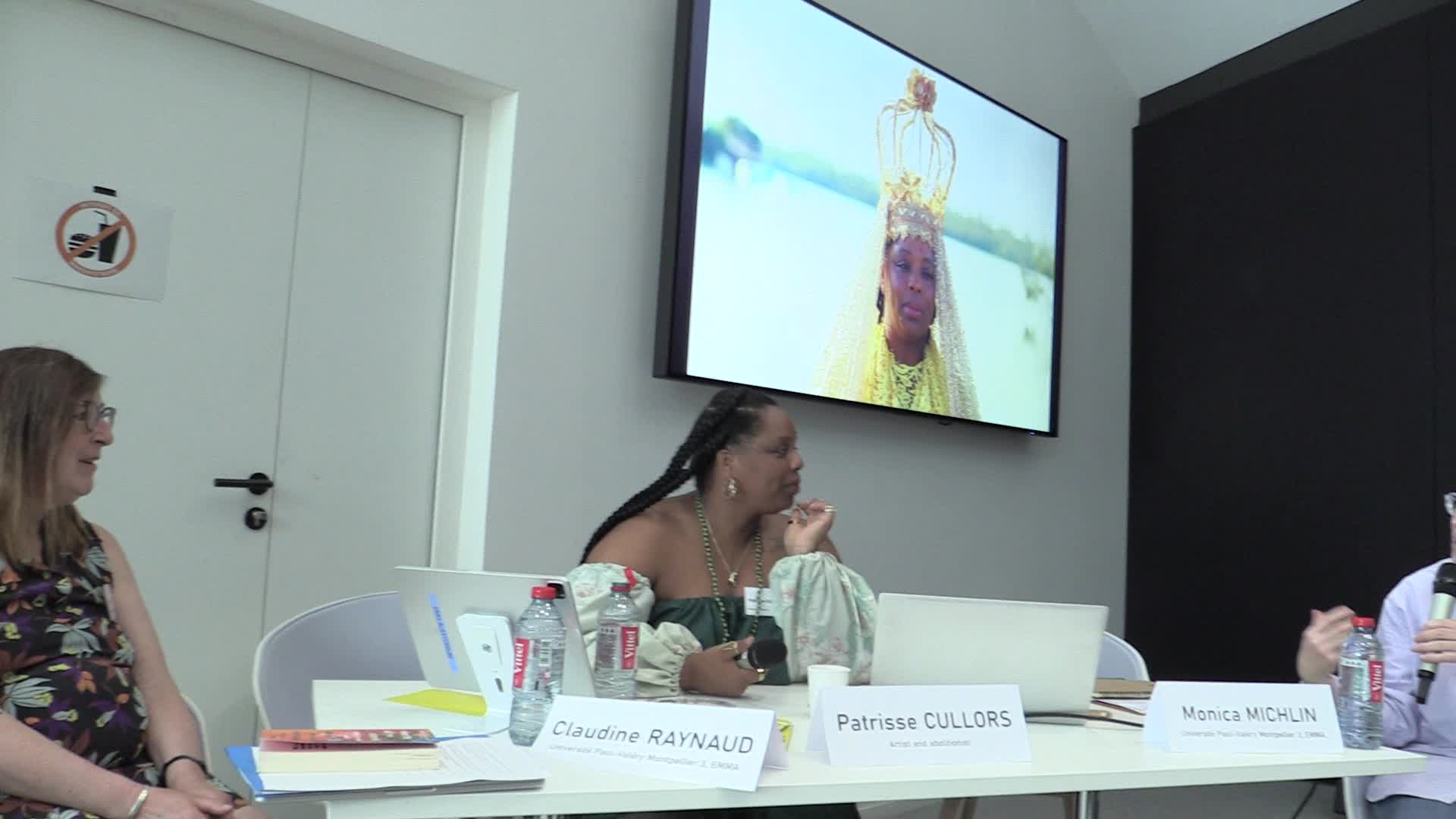
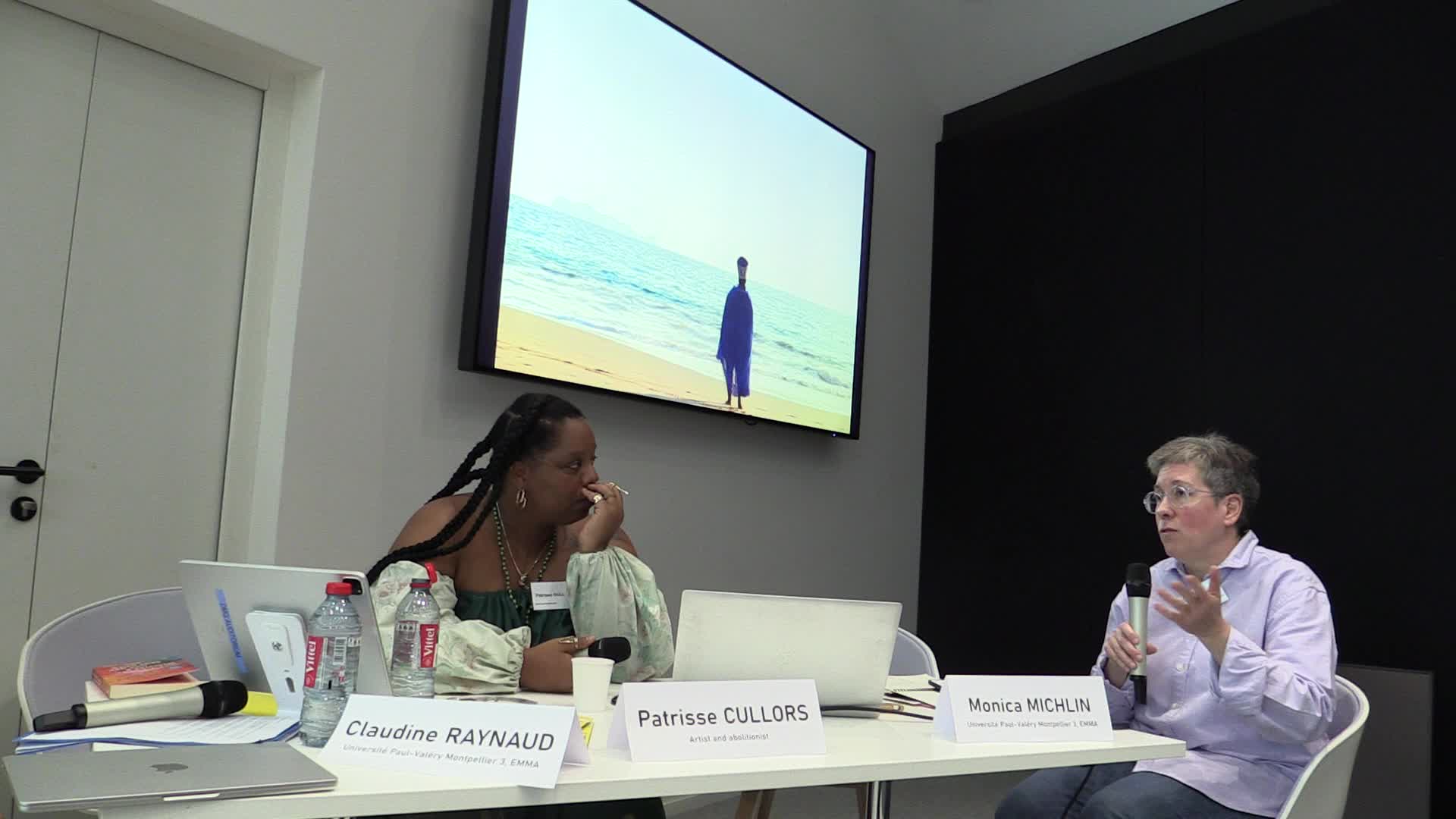
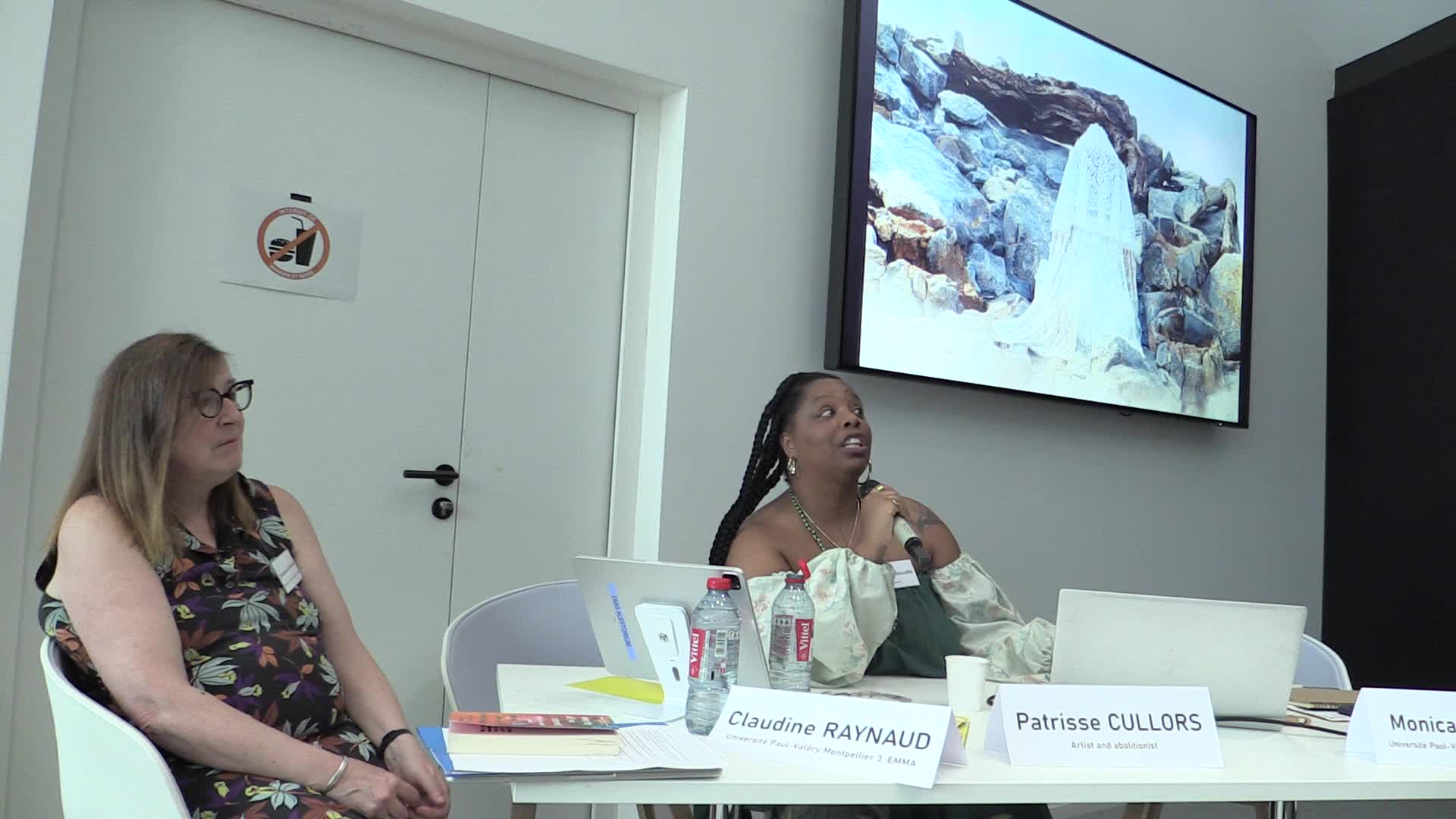
Questions and Answers with Patrisse Cullors, artist, and BLM co-founder (Part I)
RaynaudClaudineMichlinMonicaQuestions and Answers with Patrisse Cullors, artist, and BLM co-founder (Part I)
-
Questions and Answers with Patrisse Cullors, artist, and BLM co-founder (Part IV)
RaynaudClaudineMichlinMonicaQuestions and Answers with Patrisse Cullors, artist, and BLM co-founder (Part IV)
-
Questions and Answers with Patrisse Cullors, artist, and BLM co-founder (Part II)
RaynaudClaudineMichlinMonicaQuestions and Answers with Patrisse Cullors, artist, and BLM co-founder (Part II)
-
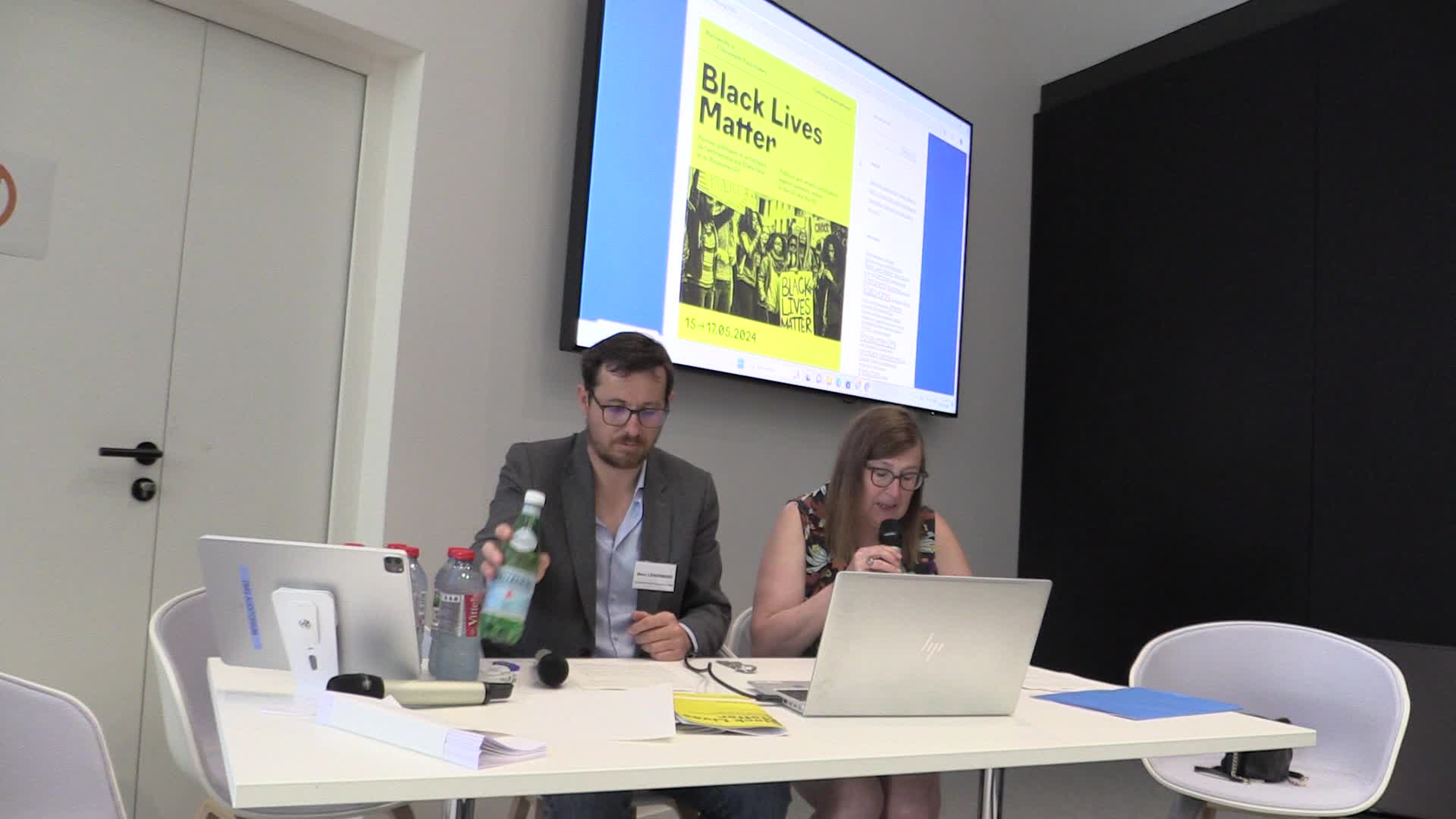
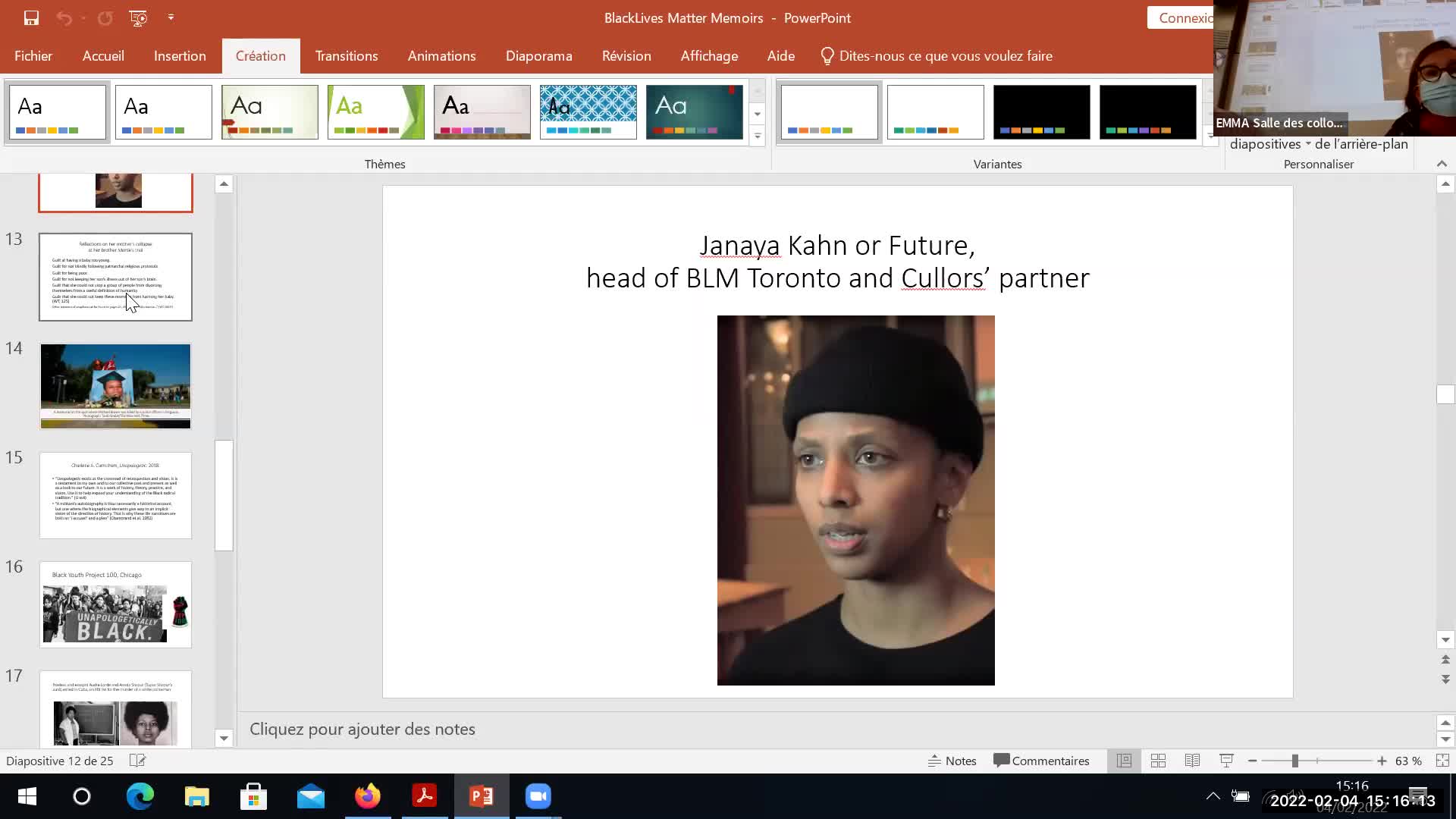
Black Lives Matter: Political and artistic mobilization against systemic racism in the US and the U…
RaynaudClaudineLenormandMarcBlack Lives Matter: Political and artistic mobilization against systemic racism in the US and the UK Conference (opening remarks)
-
Questions and Answers with Patrisse Cullors, artist, and BLM co-founder (Part III)
RaynaudClaudineMichlinMonicaQuestions and Answers with Patrisse Cullors, artist, and BLM co-founder (Part III)
-
Sur le même thème
-
Entretien avec Mathilde Ferrer
FerrerMathildeLaksDéborahEntretien avec Mathilde Ferrer, directrice du Centre d’information et de documentation de l’École des Beaux-Arts de Paris, cheffe d’atelier, ancienne élève de l’École des Beaux-Arts de Paris.
-
Apprentissage du lexique en Cycle 3 : des propositions de jeux pour mémoriser et réinvestir le lexi…
VialMarieLors de cette intervention, je présenterai des exemples d'activités ludiques, rapides et faciles à mettre en place, qui visent à permettre aux élèves de mémoriser les mots, à l'oral et à l'écrit,
-
La vidéo pour travailler les différentes compétences langagières à l'école élémentaire
CoumelValérieJe présenterai une séance d'enseignement où une vidéo authentique est exploitée pour travailler les compétences de compréhension, de production et d'interaction orale.
-
Étude d'une mise en œuvre d'EMILE à l'école primaire en France
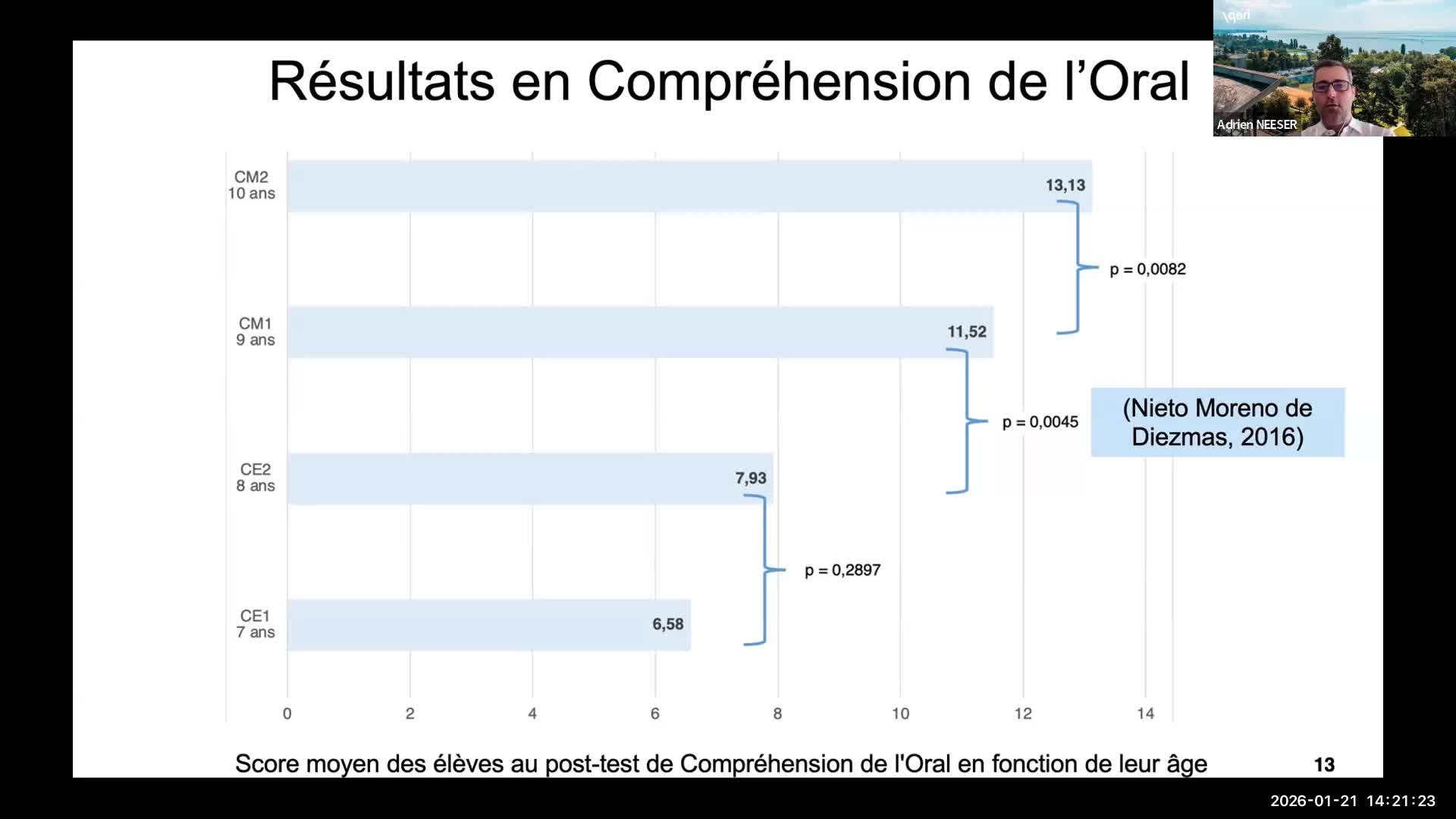
NeeserAdrianCette intervention présentera une mise en œuvre de dispositifs EMILE à l'école primaire en France basée sur les recommandations européennes et ministérielles.
-
EMILE, y es-tu ? Enseigner les langues en école primaire en France
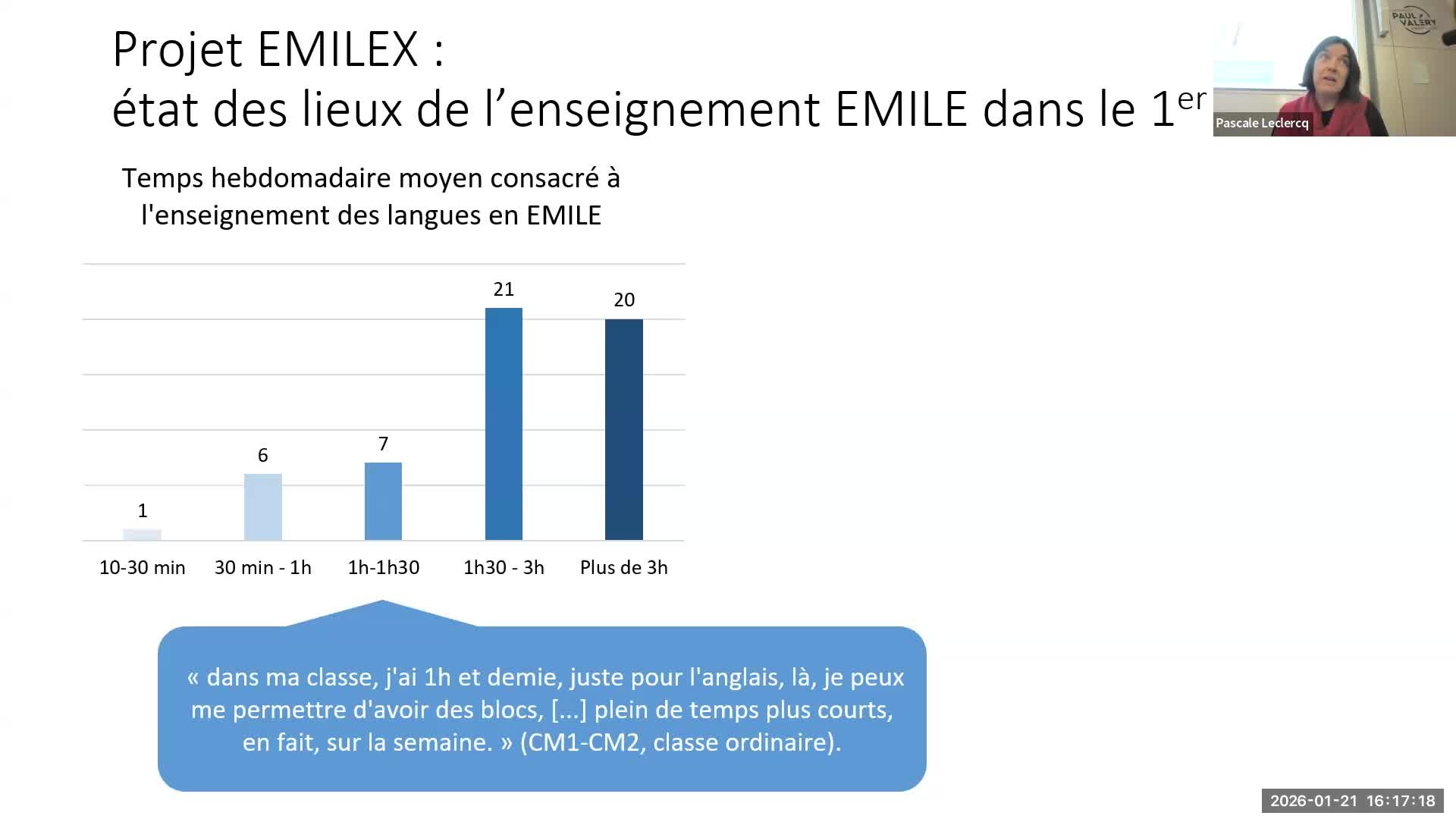
LeclercqPascaleBourdaisAurélieAzaouiBrahimNous nous proposons de faire un état des lieux de la situation des dispositifs EMILE en France à partir d’une enquête réalisée en 2024-25 sous forme de questionnaire, auquel ont répondu 335
-
L’EMILE et les jeunes apprenants dans l’Académie de Grenoble : effets sur la conscience métalinguis…
Payre-FicoutCoralieLa présente étude a été menée dans des écoles élémentaires françaises (élèves de 7 à 8 ans) afin d’examiner les effets de l’EMILE sur la conscience métalinguistique des enfants, leur motivation et
-
Participation multimodale et apprentissage de l’anglais en maternelle : repenser l’observation du l…
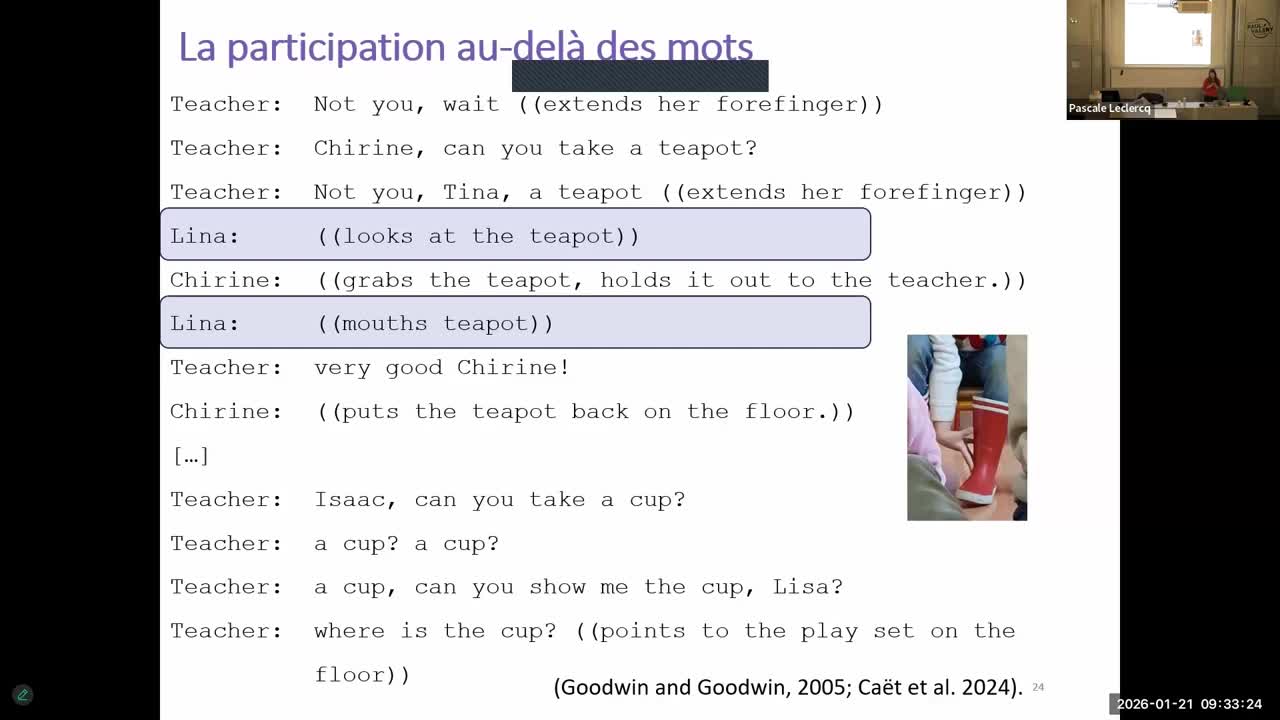
Beaupoil-HourdelPaulineCette communication analyse la participation multimodale des très jeunes apprenants (Very Young Learners, Uysal and Yavuz, 2015) (3 à 6 ans) lors de séances d’anglais en maternelle et propose un cadre
-
Valorisation des langues d’héritage des élèves : une clé de la réussite scolaire ?
LenartEwaDans une école élémentaire de la banlieue parisienne, une recherche-action a réuni pendant trois années scolaires (2021-2024) enseignants, élèves et parents autour d’un objectif commun : reconnaître
-
Entretien avec Sylvie Fanchon
FanchonSylvieLaksDéborahEntretien avec Sylvie Fanchon, artiste peintre, cheffe d’atelier à l’École des Beaux-Arts de Paris de 2000 à 2019.
-
Les comics : ping-pong entre deux continents
LonniMarieGabillietJean-PaulMarie Lonni interview Jean-Paul Gabilliet à propos des comics, leur histoire et leur influence dans le monde la BD.
-
“Backward-looking Patterns of Behaviour”? Re-thinking the Bristol Reform Riots of 1831
PooleSteveThis talk considers in depth the protests that broke out in the city of Bristol in October 1831, in the context of the Lords' rejection of the First Reform Act, and explores the way in which the crowd
-
Multilinguality and data access: an area studies librarian’s perspective
WagnerCosimaMultilinguality and data access: an area studies librarian’s perspective