Notice

Environmental impacts of food systems
- document 1 document 2 document 3
- niveau 1 niveau 2 niveau 3
Descriptif
Alexandre Meybeck (Senior Forests, Trees and Agroforestry Scientist, CIFOR) describes the effects of today's dominant food systems on the environment. Natural resources are part of food systems, but food production and consumption are among the main causes of environmental pressure.
The main drivers are presented, among which agriculture is the main responsible for deforestation, soil degradation and biodiversity loss. But the causes are also found at other levels of the food system.
It concludes by stressing the urgent need for collective action on global consumption, in farming systems, through landscape approaches and along value chains.
Intervention / Responsable scientifique
Thème
Dans la même collection
-
Lessons for food system policy, programs and governance – A word from the experts
AlphaArlèneBhattacharjeeLalitaInterview with Arlène Alpha (Researcher, CIRAD) and Lalita Bhattacharjee (Senior Nutrition Advisor, FAO Bangladesh) about food system policy, programs and governance.
-
United Nations Decade of Action on Nutrition 2016–2025
WijnhovenTrudyTrudy Wijnhoven (Nutrition Officer, FAO) gives presentation about the United Nations Decade of Action on Nutrition 2016–2025, also referred to as the Nutrition Decade.
-
Food-based dietary guidelines (FBDGs) to inform policies and programmes for food system transforma…
Islas RamosAnaAna Islas Ramos (Nutrition Officer, FAO) spoke about the use of FBDGs to inform policies and programmes to transform food systems.
-
Lessons for food system policy, programs and governance
FracassiPatriziaPatrizia Fracassi (Senior Nutrition and Food System Officer, FAO) explains (and gives examples) that interventions within the food systems can have competing priorities that require balancing risks
-
From data to impact – Tools for gathering information and taking decisions. A word from the experts.
Guillermo-TuazonMaria AntoniaVan DoorenCornéInterview with Maria Antonia Guillermo-Tuazon (Nutrition and Food Systems Officer, FAO) and Corné van Dooren (World Wildlife Fund Netherlands).
-
Nutrition-sensitive investment in agriculture and food systems - Budget analysis guidance note
FracassiPatriziaPatrizia Fracassi (Senior Nutrition and Food System Officer, FAO) presents FAO’s work on Budget Analysis for nutrition sensitive investments in agri-food systems.
-
The theory of change in programming for sustainable healthy diets - Understanding the system thinki…
SeowTi KianLorvaoClémentTi Kian Seow (Nutrition and Food Systems Officer, FAO) and Clement Lorvao (Senior Monitoring and Evaluation Expert, FAO) present how to use theories of change and impact pathways to mainstream
-
From data to impact – Tools for gathering information and taking decisions
Guillermo-TuazonMaria AntoniaMaria Antonia Tuazon (Nutrition and Food Systems Officer, FAO) addressed the issue of data collection for planning, monitoring and evaluating the transformation of food systems.
-
Systems approaches to food production and supply – a word from the experts
BickslerAbramPolo GalanteAndreaInterview with Abram Bicksler (Agricultural Officer, FAO) and Andrea Polo Galante, (Senior Nutrition Consultant, FAO) on linkages between healthy diets and food production and the sustainable food
-
The role of urban and periurban agriculture in promoting sustainable food systems
SantiniGuidoGuido Santini (Programme Coordinator, FAO) develops a presentation on the role of urban and periurban agriculture in promoting sustainable food systems in urban areas.
-
Systems approaches to food production and supply
TartanacFlorenceFlorence Tartanac (Senior officer, market linkages and value chains groups, FAO) looks at the definition of food systems and their role in providing a fair livelihood for the world's population.
-
Systems approaches to the food environment - A word from the experts
MattioniDaliaSantacolomaPilarInterview with Dalia Mattioni, Research Associate - FOODTRAILS project - School of Geography and Planning, Cardiff University) and Pilar Santacoloma, Agri-food Systems Officer, FAO, who explain how


Avec les mêmes intervenants et intervenantes
-
Impacts environnementaux des systèmes alimentaires
MeybeckAlexandreAlexandre Meybeck (Senior Forests, Trees and Agroforestry Scientist, CIFOR) nous décrit les effets des systèmes alimentaires dominants actuels sur l'environnement.
-
Systèmes alimentaires et nutrition en 2021: comment en est-on arrivé là ? Le point de vue d’experts
MeybeckAlexandreFracassiPatriziaAlexandre Meybeck (Senior Forests, Trees and Agroforestry Scientist, CIFOR) et Patrizia Fracassi (Senior Nutrition and Food Systems Officer, FAO) expliquent les causes et les possibles leviers pour
-
Food systems and nutrition in 2021: how did we get here? A word from the experts
MeybeckAlexandreFracassiPatriziaAlexandre Meybeck (Senior Forests, Trees and Agroforestry Scientist, CIFOR) and Patrizia Fracassi, (Senior Nutrition and Food Systems Officer, FAO) explain the causes and the possible levers for


Sur le même thème
-
Construire ensemble l’alimentation de demain, savoureuse, saine et durable
Dans le cadre de la semaine européenne du développement durable (SEED), le service responsabilité sociale de l’employeur vous propose d’assister au webinaire « Construire ensemble l’alimentation de
-
Un pied dans la recherche - Kylian Minck
MinckKylianInterview de Kylian Minck, doctorant au GeePs dans le cadre du projet AgriPV-ER du PEPR TASE.
-
Pourquoi le thème de la nutrition dans un Printemps Éthique ?
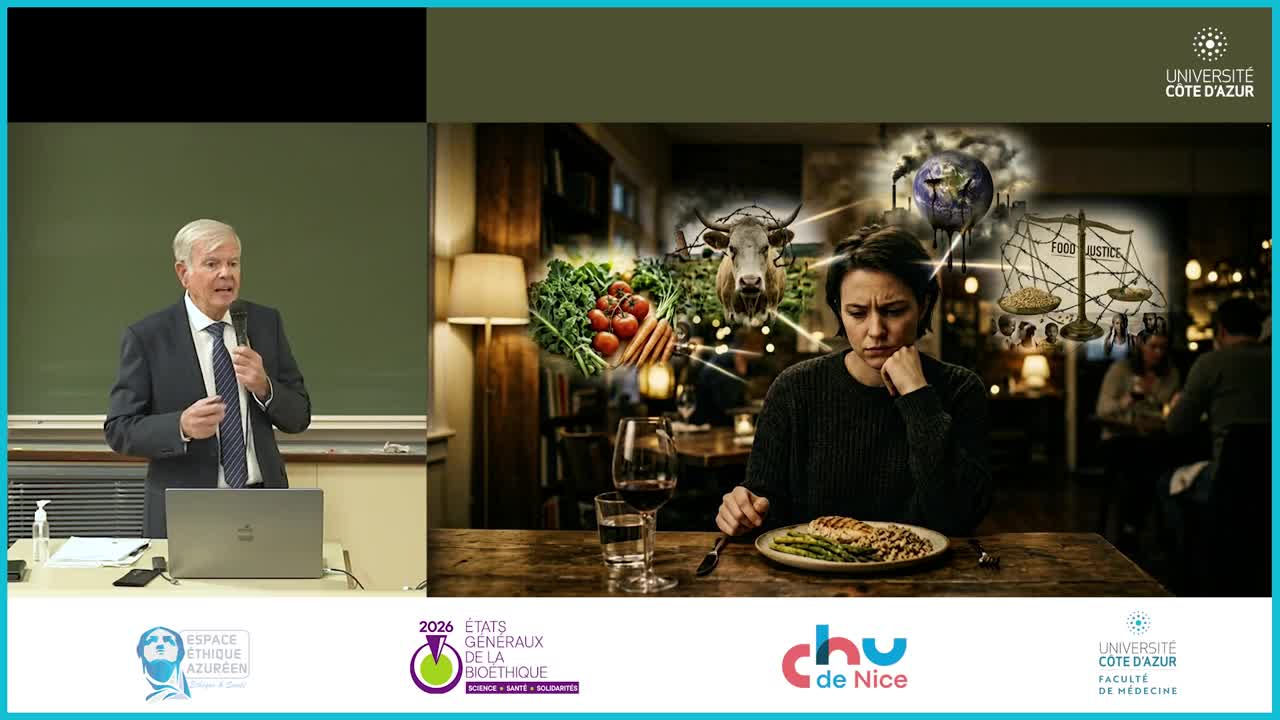
BernardinGillesL’alimentation ne se réduit pas à une affaire de goût ou de choix individuel : elle engage notre santé, notre environnement, la justice sociale et notre responsabilité envers les générations futures.
-
Nutrition et épigénétique : base des médecines prédictive et préventive
BenahmedMohamedL'épigénétique nous apprend que la manière dont nous nous nourrissons impactera non seulement notre santé mais également celle de la génération future
-
Aliments ultra-transformés et santé globale : où est l'éthique alimentaire ?
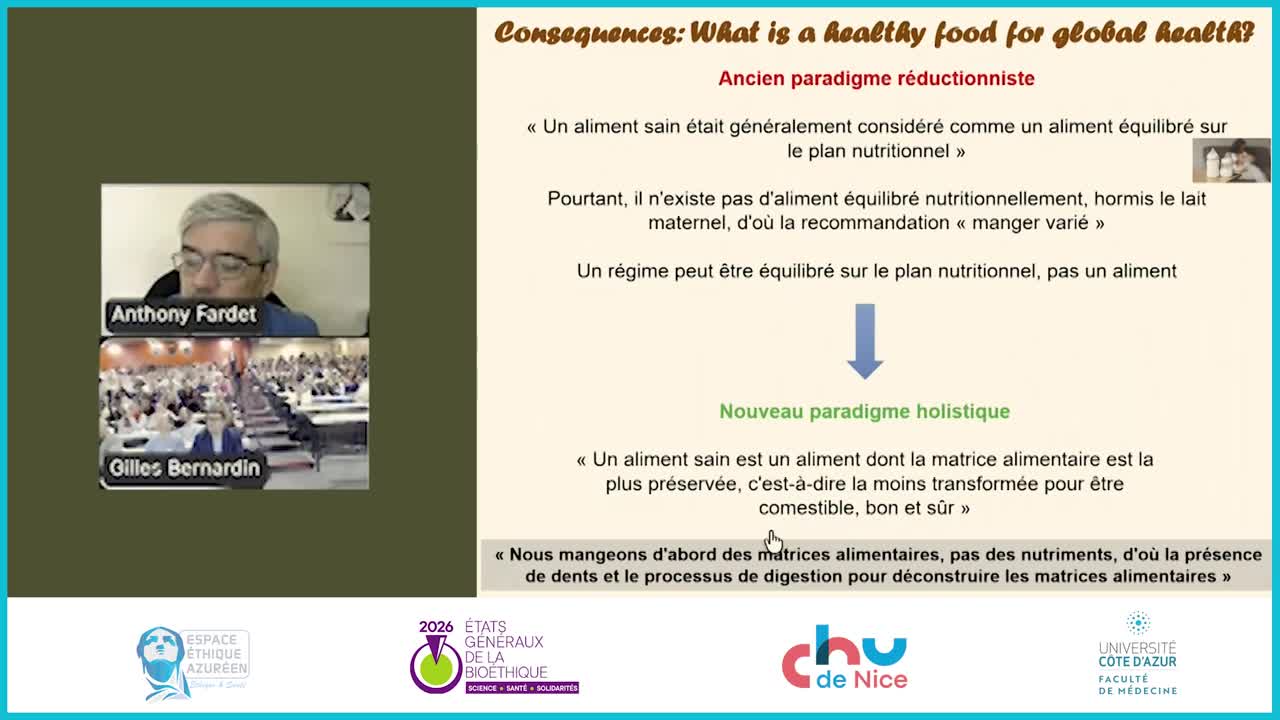
FardetAnthonySur la base d’études publiées liées aux régimes alimentaires, à la santé humaine et à la durabilité du système alimentaire, une proposition d’alimentation préventive et durable est possible si nous
-
Axe intestin - cerveau : du microbiote à la cognition
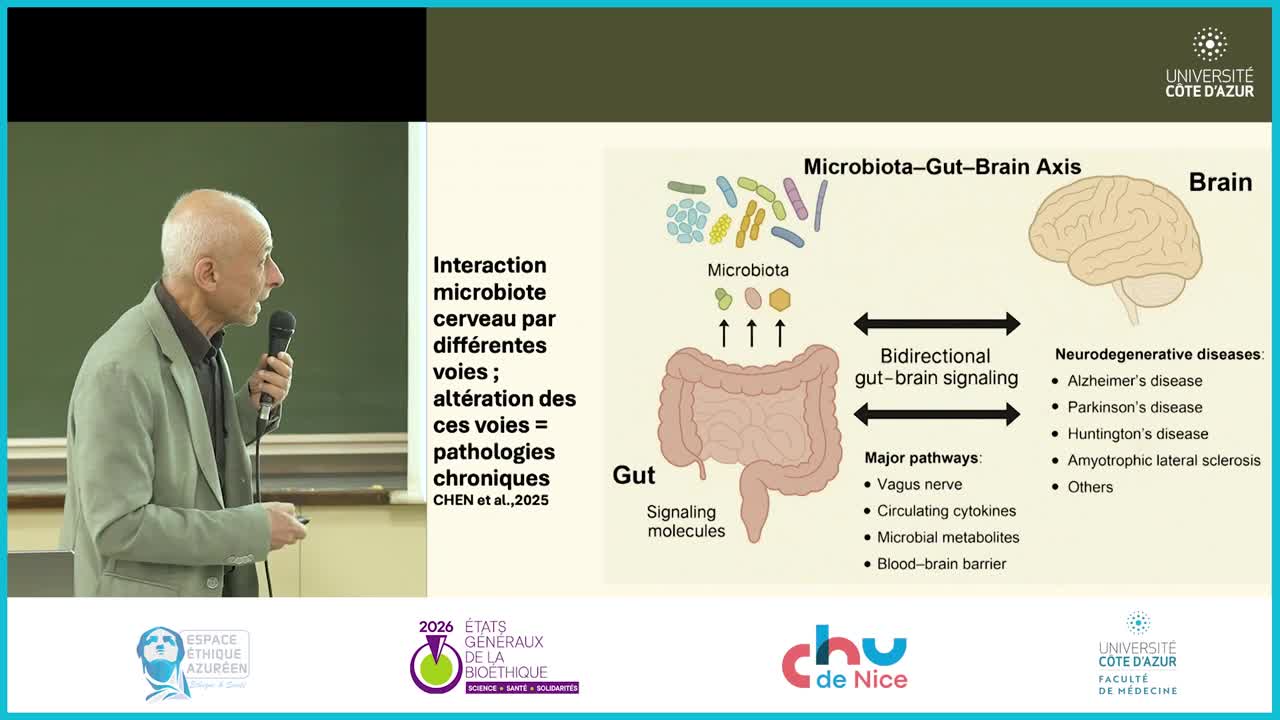
BenahmedMohamedDans cette seconde intervention, Mohamed Benahmed explore les interactions entre nutrition, microbiote intestinal et épigénétique, en se concentrant sur leurs effets possibles sur le cerveau.
-
La question des régimes : du contrôle nutritionnel au fantasme ? un éclairage éthique
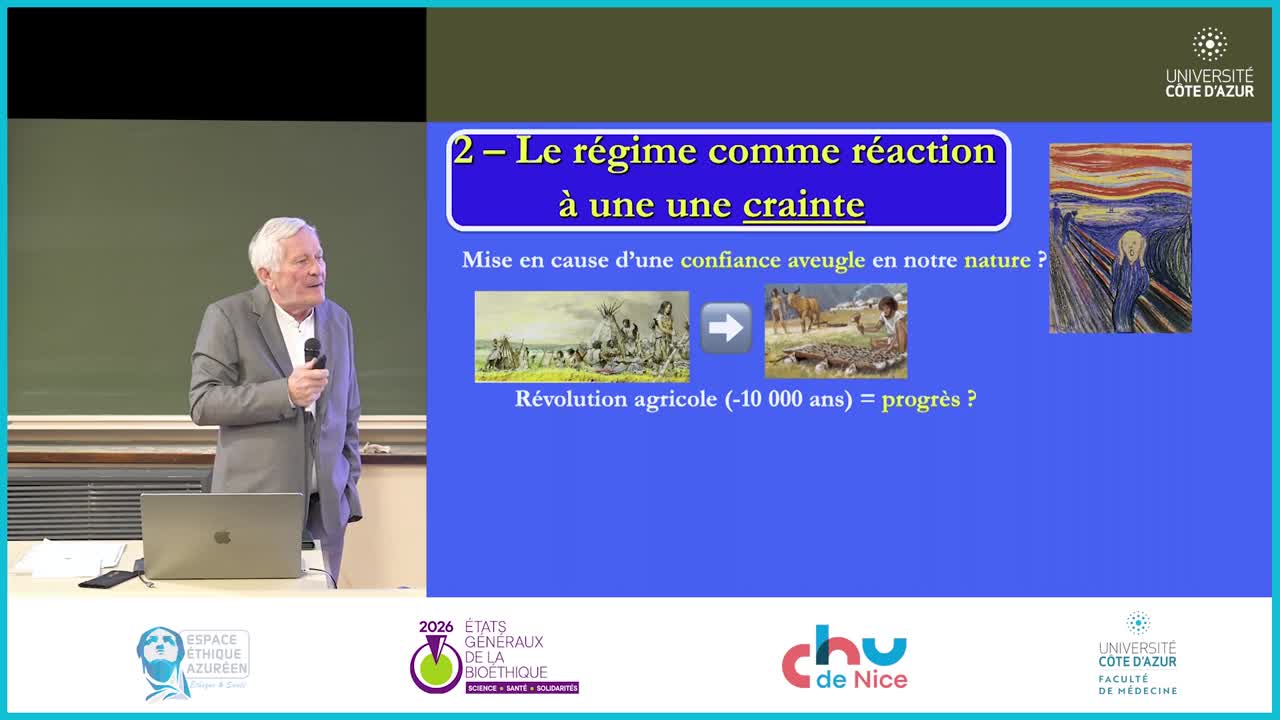
CaillolMichelMichel Caillol invite à considérer l’alimentation au-delà de ses seules composantes biologiques et nutritionnelles. Manger est un acte humain chargé de désir, de plaisir, de convivialité, de rites et
-
Manger plus sain et plus durable : est-ce accessible à toutes les bourses ?
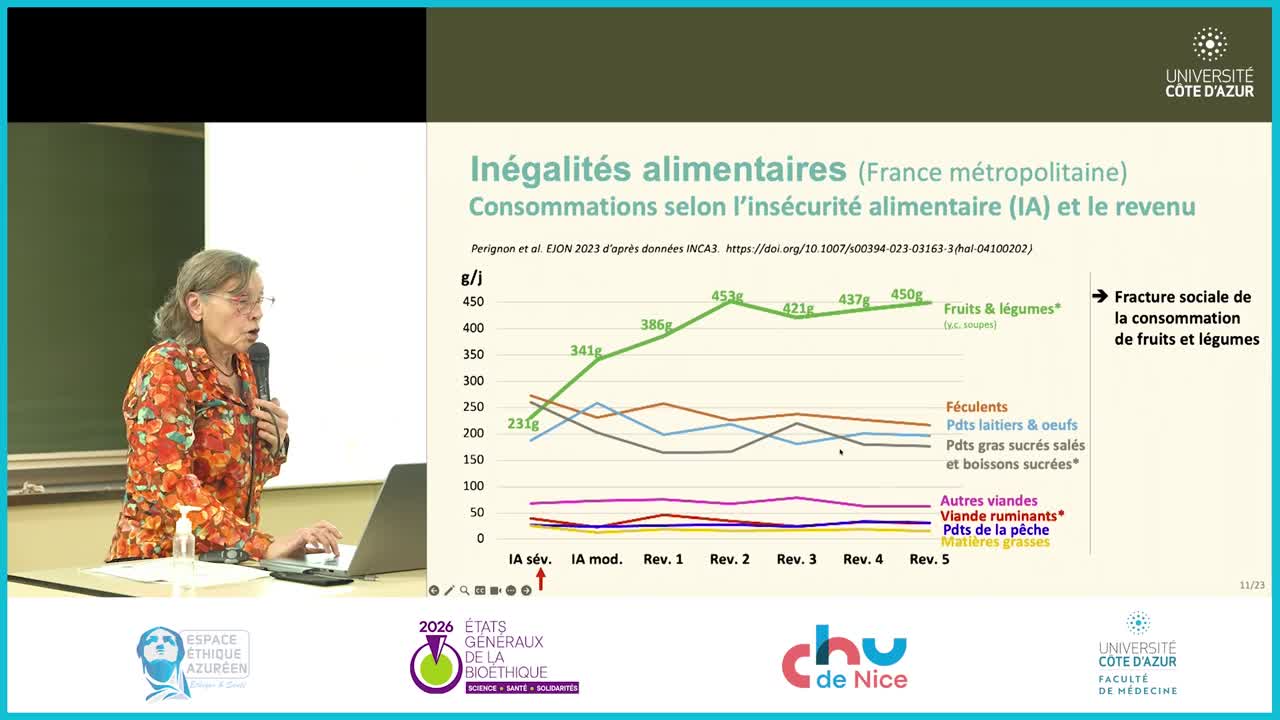
DarmonNicoleNicole Darmon montre que les inégalités sociales croissantes en France se traduisent par de fortes inégalités de santé, notamment pour l’obésité et le diabète. Ces pathologies suivent un gradient
-
Travail de nuit et comportement nutritionnel
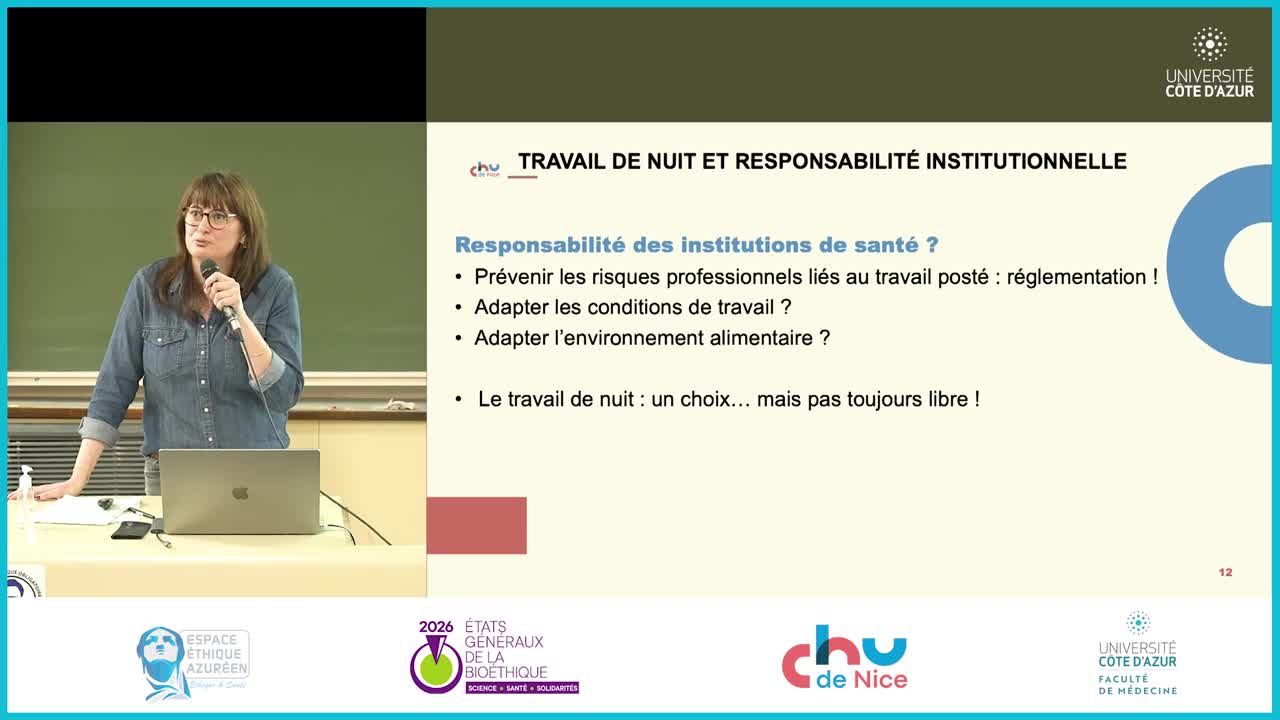
EstranSophieDiététicienne au CHU de Nice, Sophie Estran étudie l’impact du travail de nuit sur l’alimentation et la santé des soignants, en particulier ceux exerçant en réanimation dont les conditions de travail
-
The rice race, a forum theater experiment
CastellaJean-ChristopheDayetAlexiaNeangMalyneThe documentary showcases a forum theatre play called “The Rice Race”.
-
Système alimentaire mondial, changement climatique et durabilité
SoussanaJean-FrançoisCe webinaire porte sur le système alimentaire mondial. Après une remise en contexte, il met en évidence les risques qui pèsent sur ce système en lien notamment avec le changement climatique
-
14 - TISS 2026 | The impact of insect-proof netting on bat activity in apple orchards in the south …
DelmotteMontaineThe impact of insect-proof netting on bat activity in apple orchards in the south of France