Notice

A survey of the use of an upper mountain-alpine area in Central Italian Alps / Dagfinn Moe
- document 1 document 2 document 3
- niveau 1 niveau 2 niveau 3
Descriptif
Val Febbraro-Valle Spluga : a survey of the use of an upper mountain-alpine area in Central Italian Alps. Dagfinn MOE. In 2eme workshop d'Archéologie du paysage des montagnes européennes "La construction des territoires montagnards : exploitation des ressources et mobilité des pratiques" organisé par les Laboratoires GEODE et TRACES (Toulouse) et le Centre d'Archéologie Préhistorique du Rhône aux Alpes (Valence, France). Université Toulouse II-Le Mirail, 8-11 octobre 2009. [Première journée.]
An interdisciplinary palaeoecological study in the low-alpine and subalpine zones of Val Febbraro, upper Valle di Spluga in Italian central Alps, between 1830 and 2304 m a.s.l., suggests the temporary presence of early Neolithic groups at about 6000 uncal b.p. Evidence for local woodland clearance and charcoal dust were found. Phases of woodland and treeline disturbances, and indications of increased human presence are evident at about 5500, 5100, and 4000 b.p. A marked increase in disturbance, mainly related to pasturing, is dated to the beginning of the Bronze Age.
The last major stage of human impact on the vegetation coincides with the Final Bronze phase and the beginning of the Iron Age, with a small temporary reduction during the Roman period. 14C dated archaeological sites and finds are broadly concordant with the phases of human impact on the vegetation. The former use of a present day tourist path using the Baldiscio Pass between Valle Febbraro (I) and Valle Mesolcina (CH), is dated back to between 3500 b.p. and 3000 b.p.
A summary figure is presented. No locally significant climatic changes have been traced during the last 6000 years, and if present, they are probably overshadowed by the vegetational changes caused by human activity.
Intervention / Responsable scientifique

Thème
Documentation
Pistes bibliographiques
- The archaelogy of a peat bog in context : contribution of the study of biodiversification processes in historical time (Ligurian Apennine, NW, Italy). D. MOE ; BI. MENOZZI; C. BELLINI et al. In 4e Congrès International d'Archéologie Médiévale et Moderne : "L'Europe en Mouvement", Axe Archéologies environnementales, session Les sociétés médiévales et leurs milieux : pour une approche de la biodiversité historique. INHA / Paris1 Panthéon-Sorbonne : 3-8 septembre 2007, 11 p. [En ligne sur le site de Paris 1 Panthéon-Sorbonne].
Dans la même collection
-
L'agro-pastoralisme en milieu montagnard : l'apport des sépultures saisonnières / Patrice Courtaud
CourtaudPatriceL'agro-pastoralisme en milieu montagnard : l'apport des sépultures saisonnières. Patrice COURTAUD. In "La construction des territoires montagnards : exploitation des ressources et mobilité des
-
La construction des territoires montagnards : exploitation des ressources et mobilité des pratiques…
GalopDidierThe occupation and the exploitation of mountain environments, both during conquest and maximum demographic phases, or on the contrary, during desertification phases, differ in geographical
-
Human environmental interactions in high altitude zone between Neolithic and roman period / K. Walsh
WalshKevinA History of Transitions : human environmental interactions in the high altitude zone between Neolithic and roman period. Kevin WALSH. In "La construction des territoires montagnards : exploitation
-
L'évolution végétale holocène sur le versant sud des Pyrénées occidentales / Maria-José Iriarte
IriarteMaría JoséL'évolution végétale holocène sur le versant sud des Pyrénées occidentales. Maria José IRIARTE. In "La construction des territoires montagnards : exploitation des ressources et mobilité des pratiques"
-
Prehistory of the Southern Appalachian uplands of Tennessee / Jay Franklin
FranklinJay D.Prehistory of the Southern Appalachian uplands of Tennessee. Jay FRANKLIN. In "La construction des territoires montagnards : exploitation des ressources et mobilité des pratiques", 2e International
-
A cultural landscape research in a mediterranean mountain (Barcelona-Girona) / A. Garcia Molsosa
Garcia MolsosaArnauA cultural landscape research in a mediterranean mountain area : the "Massis del Montseny project" (Barcelona-Girona) / A. GARCIA MOLSOSA. In "La construction des territoires montagnards :
-
The Hidram4000 project : land use, human occupation and lanscape changes in Spain / A. Curras
Currás DominguezAndresThe Hidram4000 project : land use, human occupation and lanscape changes in Spain during the last 3000 years. The Somolinos lake record (1240 M A.S.L.) : Siera de Pela, Guadalajara Province. Andres
-
Exploitation of natural vegetal resources in chalcolithic areni-1 cave (Armenia) / R. Hovsepyan
HovsepyanRomanExploitation of natural vegetal resources in chalcolithic areni-1 cave settlement (Armenia). Roman HOVSEPYAN ovsepyan, Roman. In "La construction des territoires montagnards : exploitation des
-
Mountain anthropization in Alps : a multidisciplinary look in the Pygmalion program / F. Arnaud
ArnaudFabienMountain anthropization in Alps : a multidisciplinary look in the framework of Pygmalion research program. Fabien ARNAUD. In "La construction des territoires montagnards : exploitation des ressources
-
Wildfires in european alps : frequent yesterday, rare today, frequent tomorrow ? / W. Finsinger
FinsingerWalterWildfires in european alps : frequent yesterday, rare today, frequent tomorrow ?. Walter Finsinger. In "La construction des territoires montagnards : exploitation des ressources et mobilité des
-
Territorial practices, landscape dynamics and mobilities in a french mountain / P. Allée, Y. MIras
AlléePhilippeMirasYannickTerritorial practices, landscape dynamics and spatio-temporal mobilities in a french medium mountain : integrated approach combining archaeological and paleoecological inverstigations performed in the
-
Exploitation des vallées andorranes depuis le Néolithique/ J.-M. Palet Martinez, H. Orengo Romeu
Palet i MartínezJosep M.Orengo RomeuHèctor A.L'exploitation des ressources des vallées andorranes du Madriu-Perafita-Claror et de la chaîne du Cadi (Pyrénées orientales) depuis le Néolithique à partir des données archéologiques et
Sur le même thème
-
Entretien avec Danielle Stordeur
StordeurDanielleDanielle Stordeur est préhistorienne, directrice de recherche émérite au CNRS, spécialisée dans la néolithisation du Proche-Orient. Elle témoigne de son arrivée à Jalès et de son travail au sein de l
-
Entretien avec Frédéric Abbès
AbbèsFrédéricFrédéric Abbès, ingénieur de recherche au CNRS spécialiste des technologies lithiques néolithiques raconte son arrivée à Jalès, en Ardèche, au sein de l'équipe pluridisciplinaire montée par l
-
Entretien avec Yann Callot
CallotYannYann Callot, Professeur émérite de Géographie, évoque son arrivée et son travail à la commanderie de Jalès, les collaborations scientifiques et l’ancrage territorial du site de Jalès.
-
Entretien avec Emmanuelle Vila
VilaEmmanuelleEmmanuelle Vila, directrice de recherche au CNRS et archéozoologue revient sur son arrivée à Jalès et sur la place de l’archéozoologie au sein de l’équipe pluridisciplinaire réunie par Jacques Cauvin
-
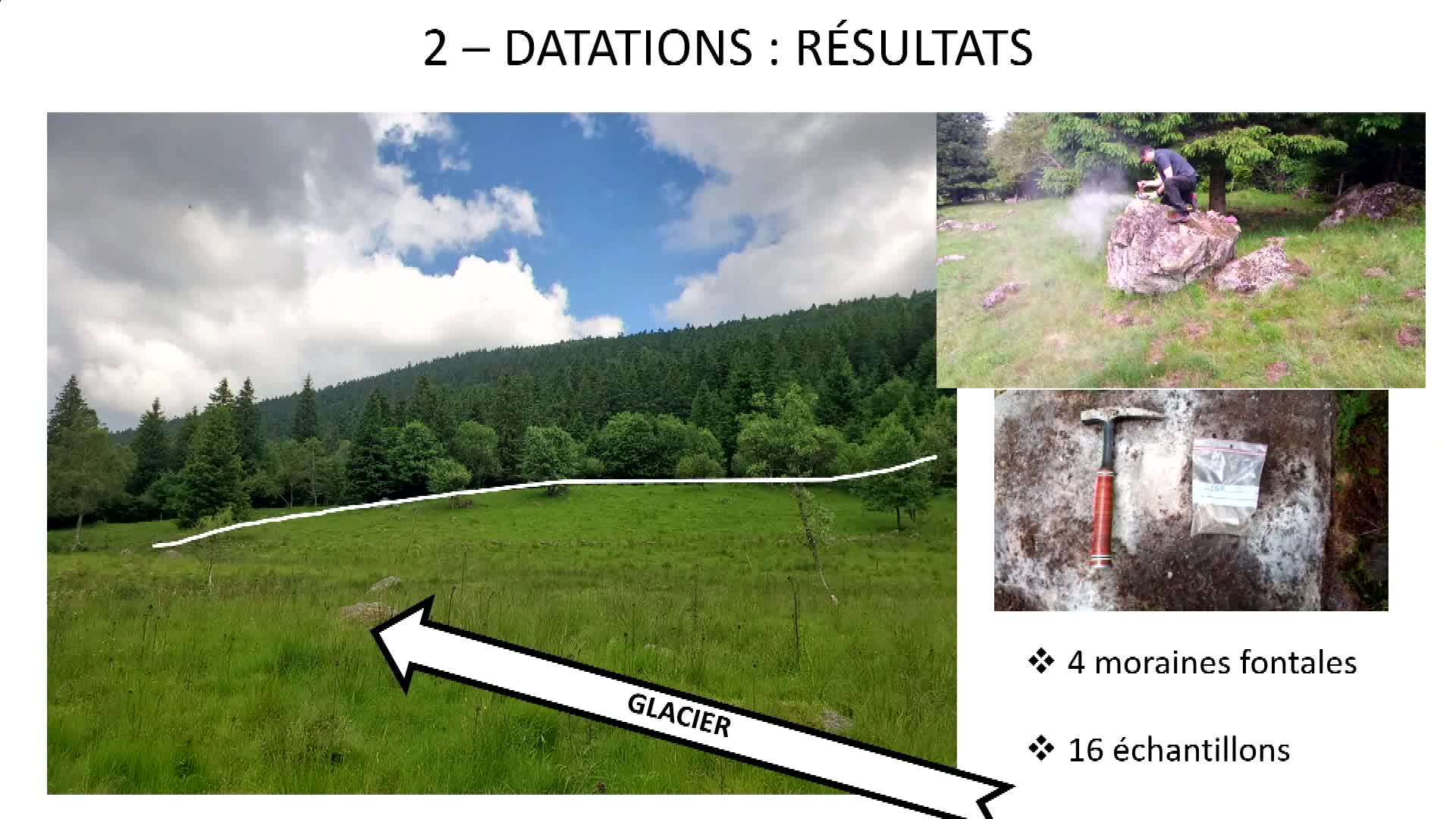
GLAMCE - Dater les paysages glaciaires du Forez : combinaison d’une technique low-tech (Marteau de …
RousselErwanAncrenazArthurArthur Ancrenaz et Erwan Roussel, membres de GEOLAB, présentent le projet GLAMCE.
-
Glozel-Session 2 : Table ronde conclusive
AngevinRaphaëlBonFrançoisGilabertChristopheGernigonKarimZurbachJulienTable ronde conclusive de la session n°2 - Glozel et la Préhistoire : construction(s) intellectuelle(s) et institutionnelle(s) - du colloque Glozel dans l’histoire de l’archéologie française : sources
-
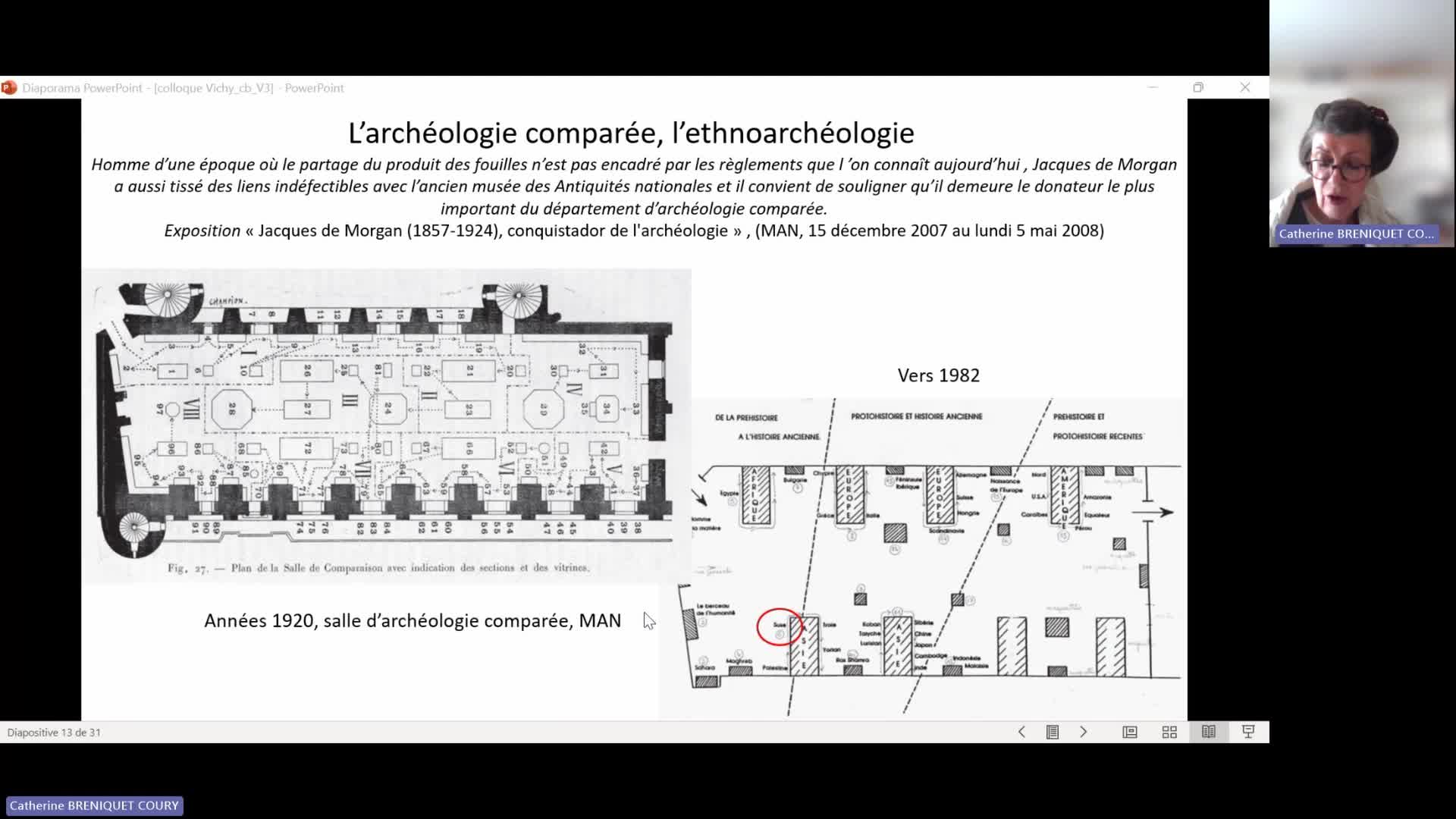
Genèse et apories de la Préhistoire récente au Proche-Orient
BreniquetCatherineCatherine Breniquet revient sur les enjeux de la naissance de la préhistoire récente du Proche-Orient.
-
Le « Mirage oriental » de Salomon Reinach et la question primordiale de l’origine de la civilisatio…
GernigonKarimDès la publication du premier fascicule relatant ses fouilles de Glozel avec Fradin (1925), Morlet fait référence à l'article « Le Mirage oriental » publié par Salomon Reinach en 1893 dans L
-
L’archéologie néolithique à la fin du XIXe et au début du XXe siècle : entre construction scientifi…
GilabertChristopheÀ la fin du XIXe et au début du XXe siècle, la question du Néolithique est encore fortement liée à une vision évolutionniste de l’apparition de la « civilisation » en Europe et sur le pourtour
-
Glozel ou le « trompe-l’œil » d’une nouvelle résolution du hiatus entre Paléolithique et Néolithique
BonFrançoisFrançois Bon s'intéresse à la manière dont s'est difficilement opérée la reconnaissance d'une période de transition entre le Paléolithique et le Néolithique...
-
Témoignage de Anca-Cristina Dan
DanAnca-CristinaGuérinAnaëlleDans le cadre de la préparation du 250e anniversaire de son ouverture au public, en décembre 2020, la Bibliothèque interuniversitaire de la Sorbonne (BIS) a mené une collecte d’archives orales afin de
-
Les grandes étapes de l’alimentation, du Paléolithique à l’époque gauloise
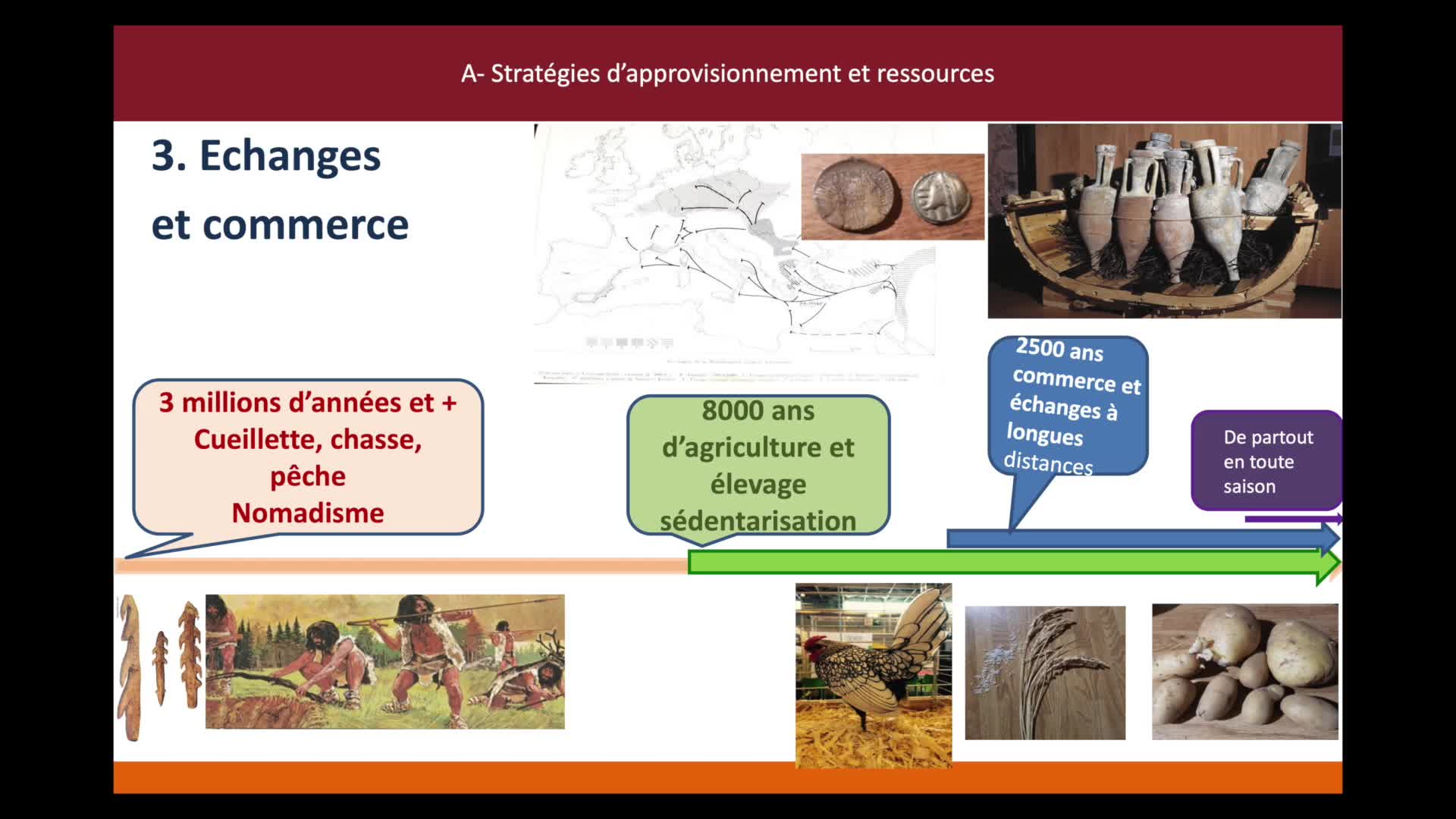
FlouestAnneAnne Flouest, géologue et docteure en paléoclimatologie, revient sur l’étonnante évolution des usages alimentaires du Paléolithique à l’époque gauloise.