

Code-Based Cryptography


Descriptif
We all use cryptography in our daily lives. The security of the most popular Public-Key Cryptosystems are based either on the hardness of factoring or the presumed intractability of the discrete logarithm problem. Advances on these problems or the construction of large quantum computers would dramatically change the landscape: Code-Based Cryptography is a powerful and promising alternative.
The objective of this course is to present the state of the art of these cryptosystems. This MOOC covers the essentials that you should know about this hot topic in Cryptography and Coding Theory: the security-reduction proofs, the possible attacks, several proposals to reduce the key-size, etc.
TARGETED AUDIENCE
This course is intended for undergraduate and Master’s degree students in mathematics or computer science.
Postgraduate students and researchers from the disciplines of computer algebra, coding theory and cryptography can also benefit from this course.
More widely, mathematicians, physicists or engineers interested in information and communication technologies and every person who wants to know more about cryptography, coding theory or code-based cryptography can be interested in this course.
PRE-REQUISITES
Knowledge about linear algebra, finite field and complexity theory is required.
COURSE SYLLABUS
Click on a link below to access the videos of the course.
Part 1: Error-Correcting Codes and Cryptography
Part 2: McEliece Cryptosystem
Part 3: Message Attacks (ISD)
Part 4: Key Attacks
Part 5: Other cryptographic constructions relying on coding theory
The material of this course come from a MOOC delivered on France Université Numérique : https://www.fun-mooc.fr/courses/inria/41006S02/session02/about
Vidéos
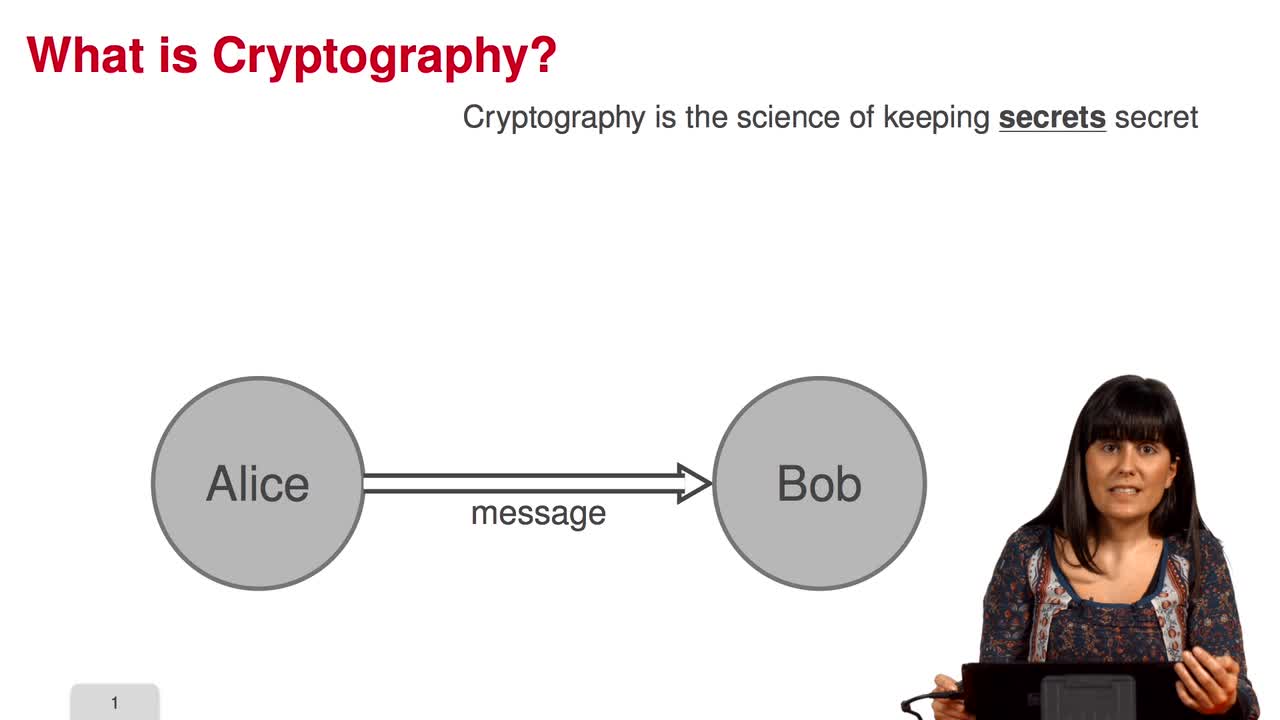
1.1. Introduction I - Cryptography
Welcome to this MOOC which is entitled: code-based cryptography. This MOOC is divided in five weeks. The first week, we will talk about error-correcting codes and cryptography, this is an introduction
1.2. Introduction II - Coding Theory
In this session, we will give a brief introduction to Coding Theory. Claude Shannon's paper from 1948 entitled "A Mathematical Theory of Communication" gave birth to the disciplines of Information
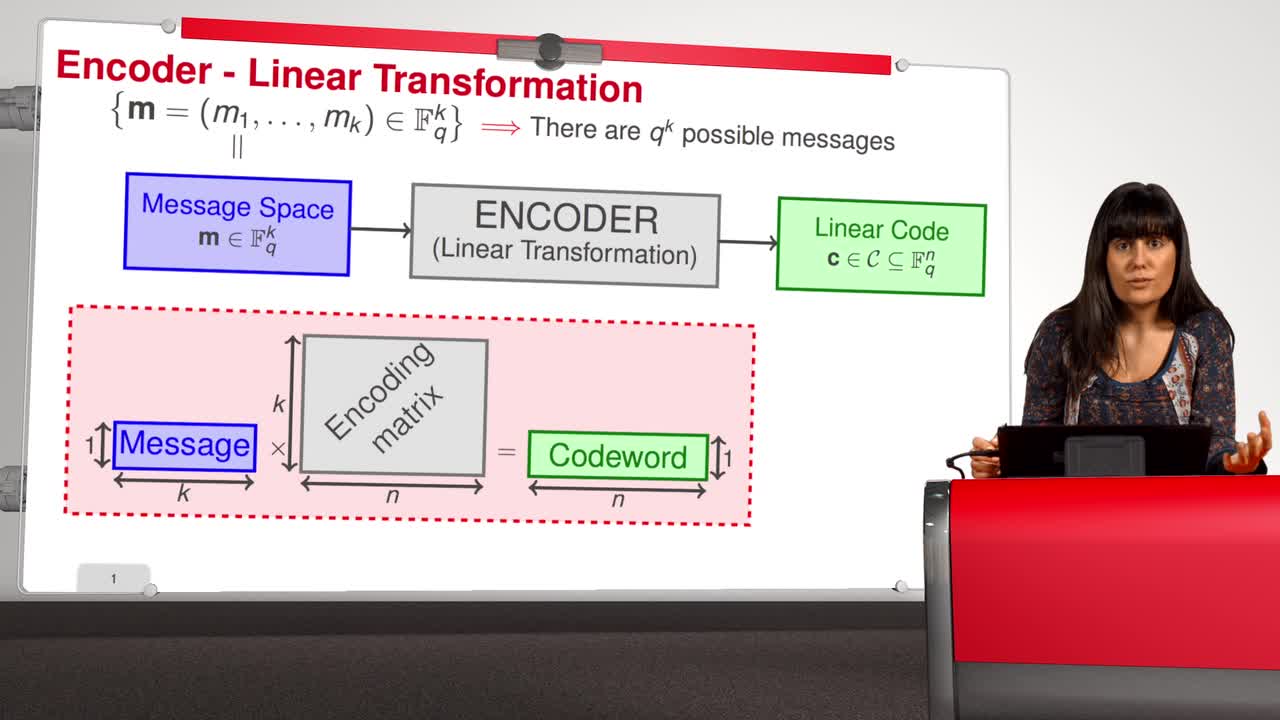
1.3. Encoding (Linear Transformation)
In this session, we will talk about the easy map of the - one-way trapdoor functions based on error-correcting codes. We suppose that the set of all messages that we wish to transmit is the set
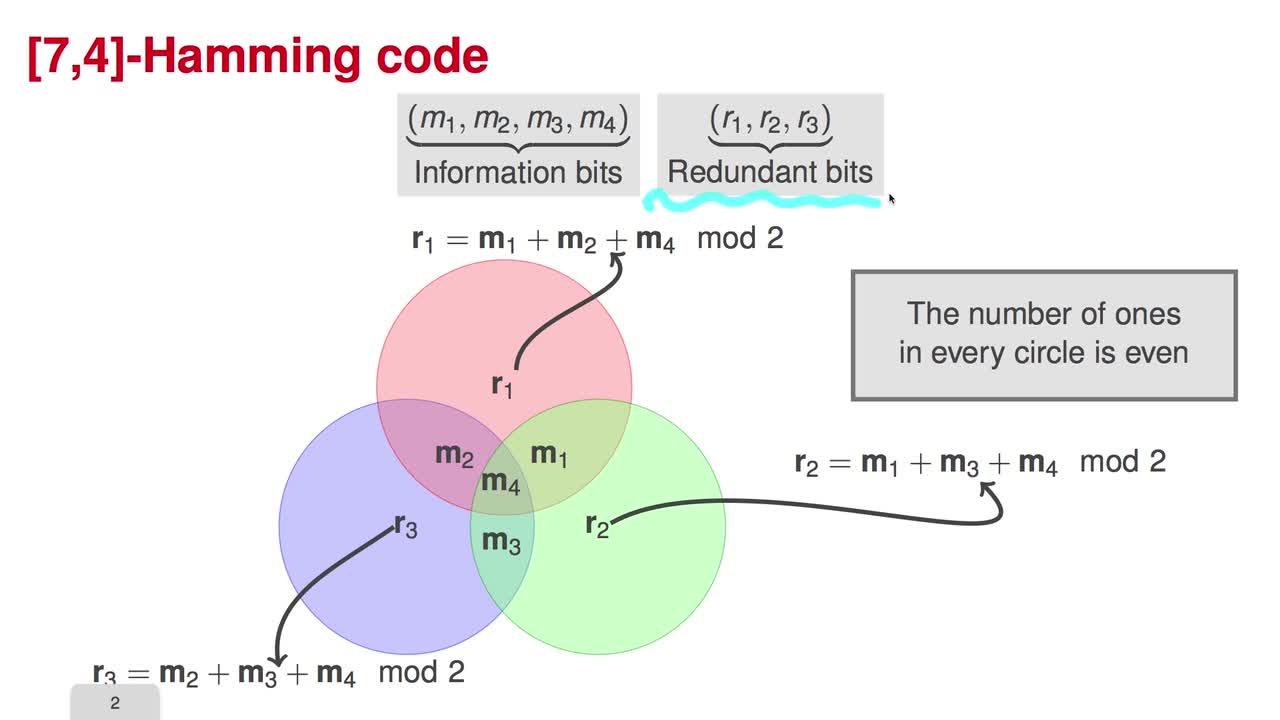
1.4. Parity Checking
There are two standard ways to describe a subspace, explicitly by giving a basis, or implicitly, by the solution space of the set of homogeneous linear equations. Therefore, there are two ways of
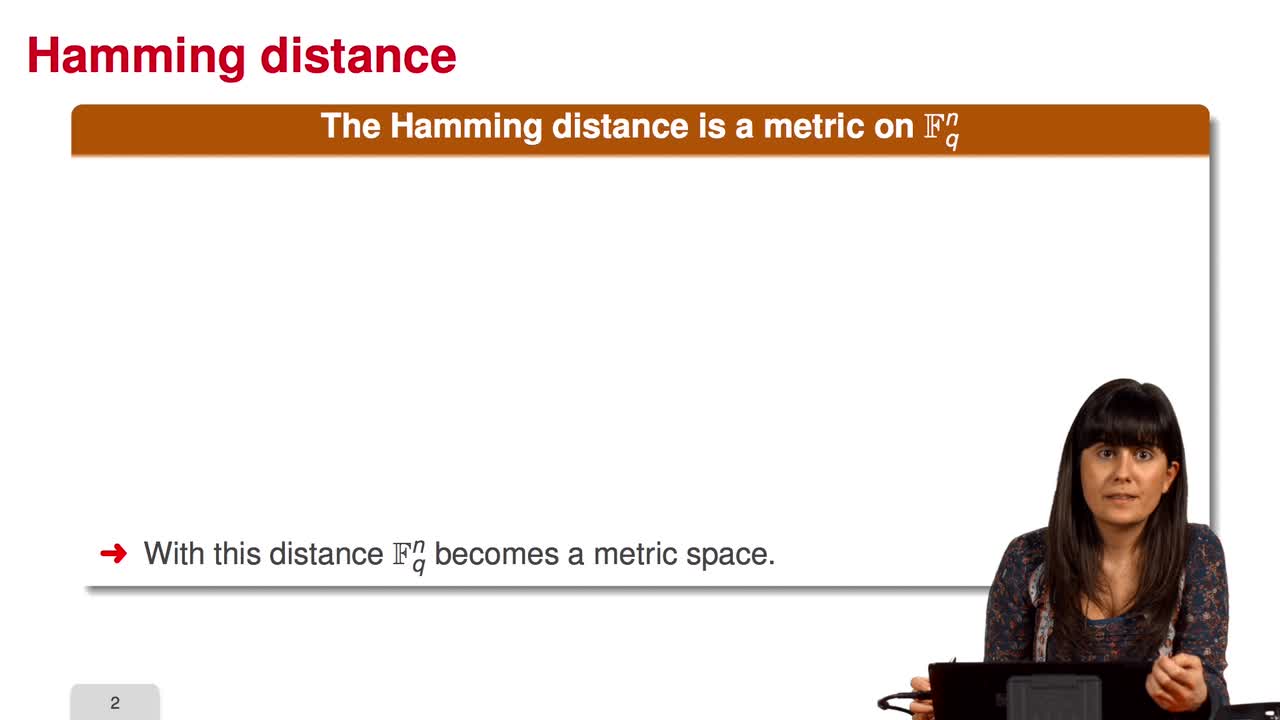
1.5. Error Correcting Capacity
This sequence will be about the error-correcting capacity of a linear code. We describe the way of considering the space Fq^n as a metric space. This metric is necessary to justify the principle of
1.6. Decoding (A Difficult Problem)
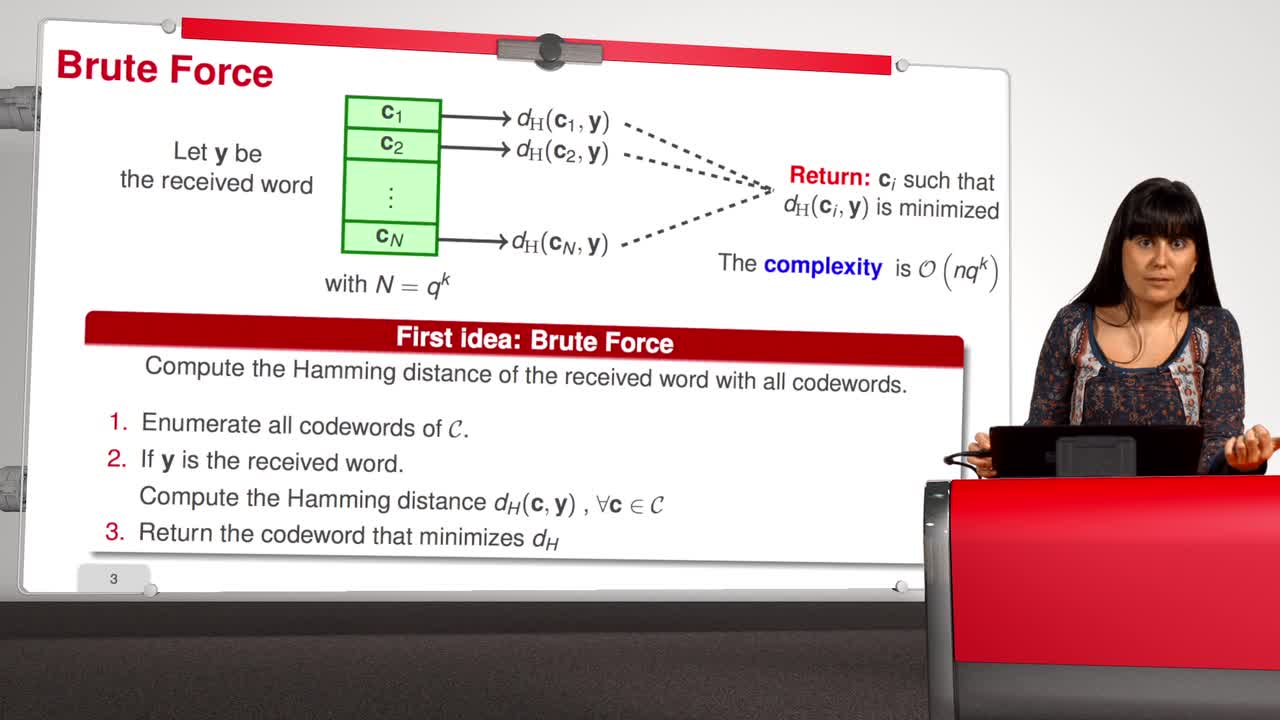
The process of correcting errors and obtaining back the message is called decoding. In this sequence, we will focus on this process, the decoding. We would like that the decoder of the received
1.7. Reed-Solomon Codes
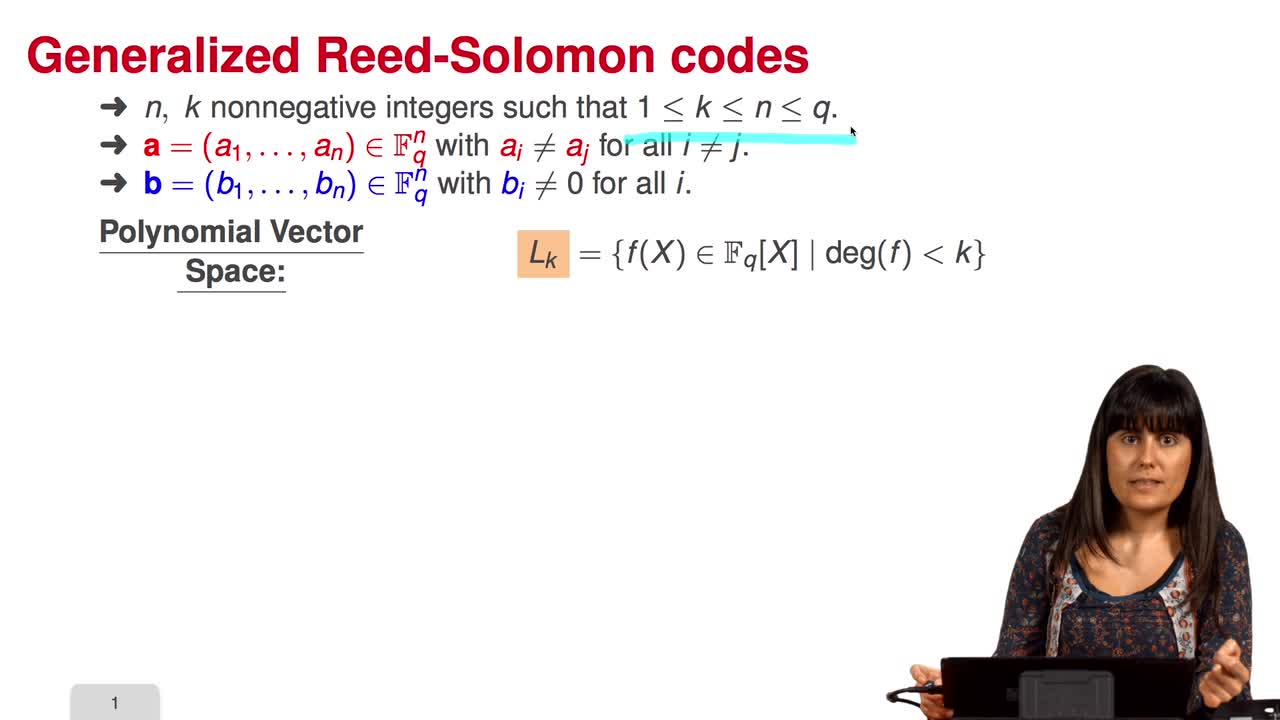
Reed-Solomon codes were introduced by Reed and Solomon in the 1960s. These codes are still used in storage device, from compact-disc player to deep-space application. And they are widely used
1.8. Goppa Codes
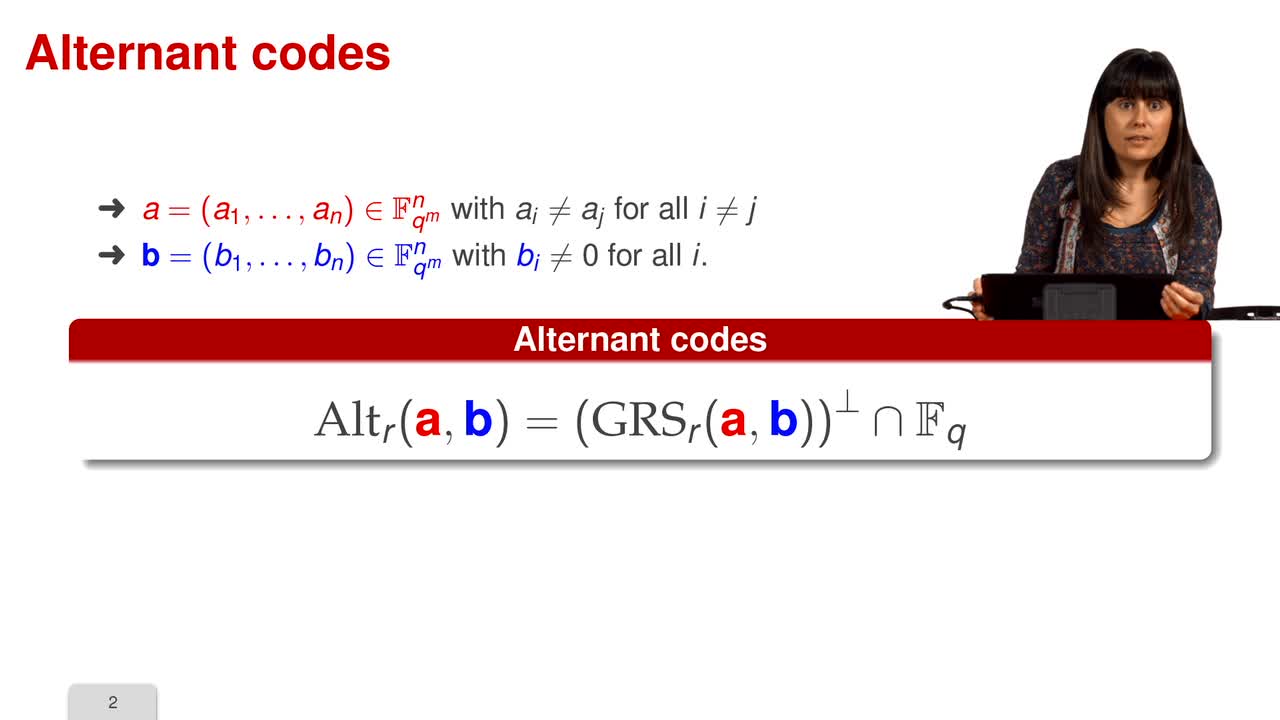
In this session, we will talk about another family of codes that have an efficient decoding algorithm: the Goppa codes. One limitation of the generalized Reed-Solomon codes is the fact that the
1.9. McEliece Cryptosystem
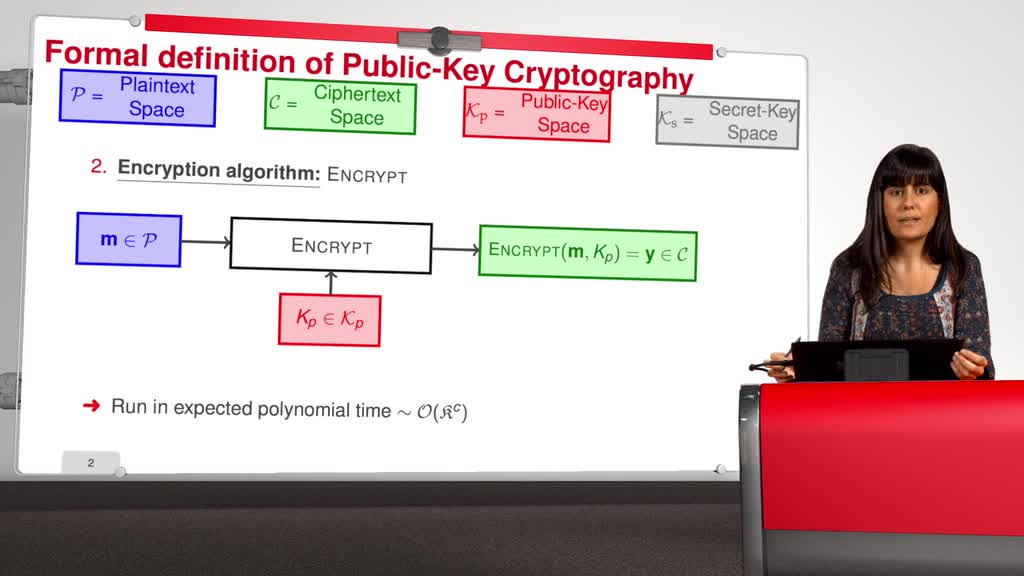
This is the last session of the first week of this MOOC. We have already all the ingredients to talk about code-based cryptography. Recall that in 1976 Diffie and Hellman published their famous
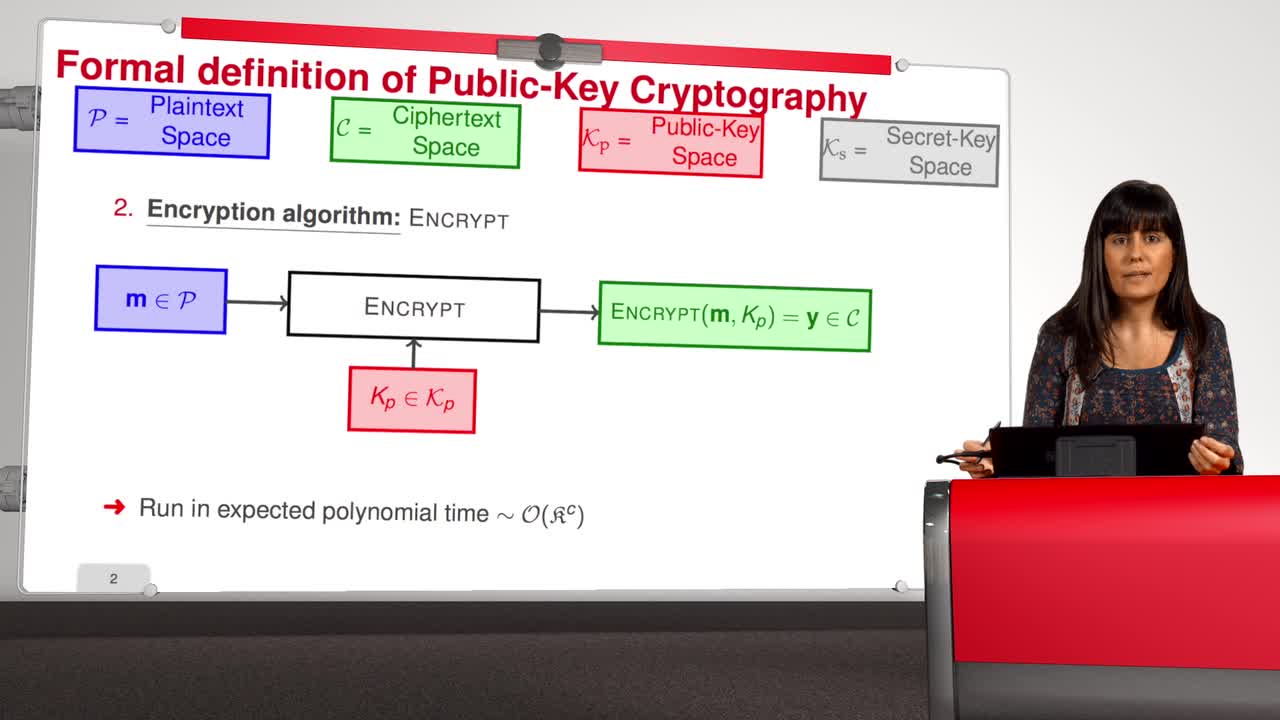
2.1. Formal Definition
Welcome to the second week of this MOOC entitled Code-Based Cryptography. This week, we will talk in detail about the McEliece cryptosystem. First, in this session, we will describe formally the
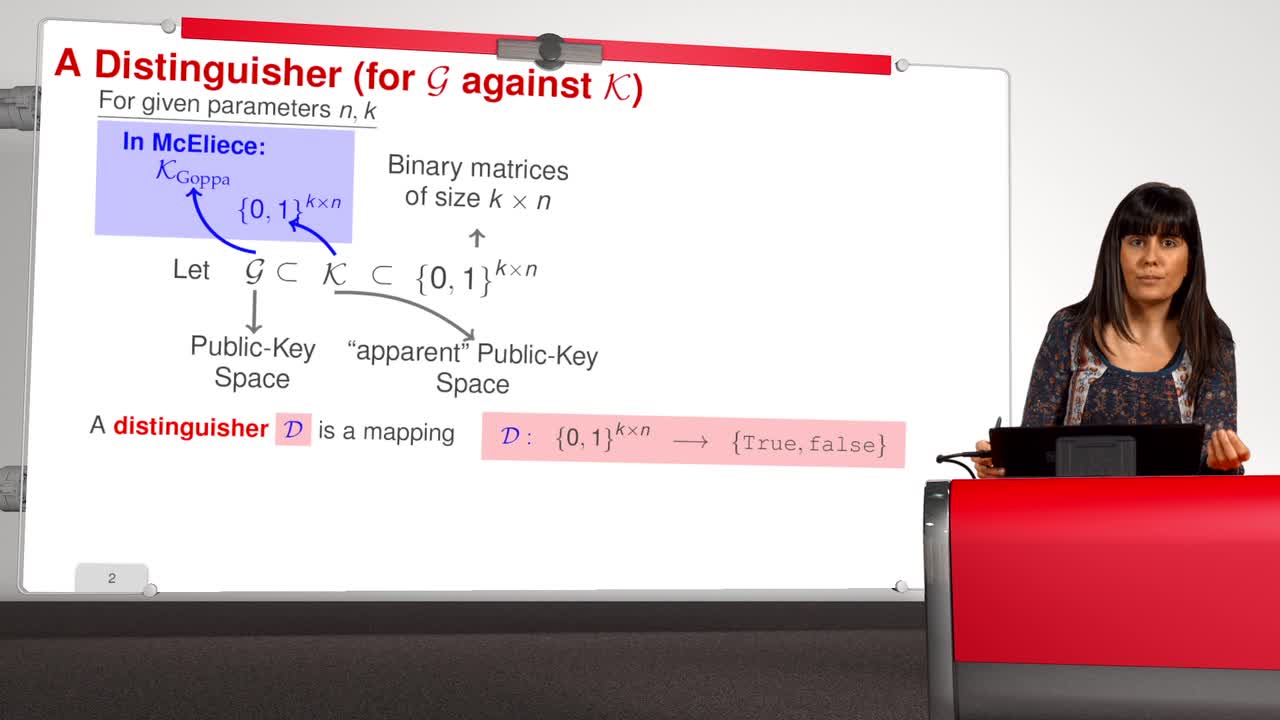
2.2. Security-Reduction Proof
Welcome to the second session. We will talk about the security-reduction proof. The security of a given cryptographic algorithm is reduced to the security of a known hard problem. To prove that a
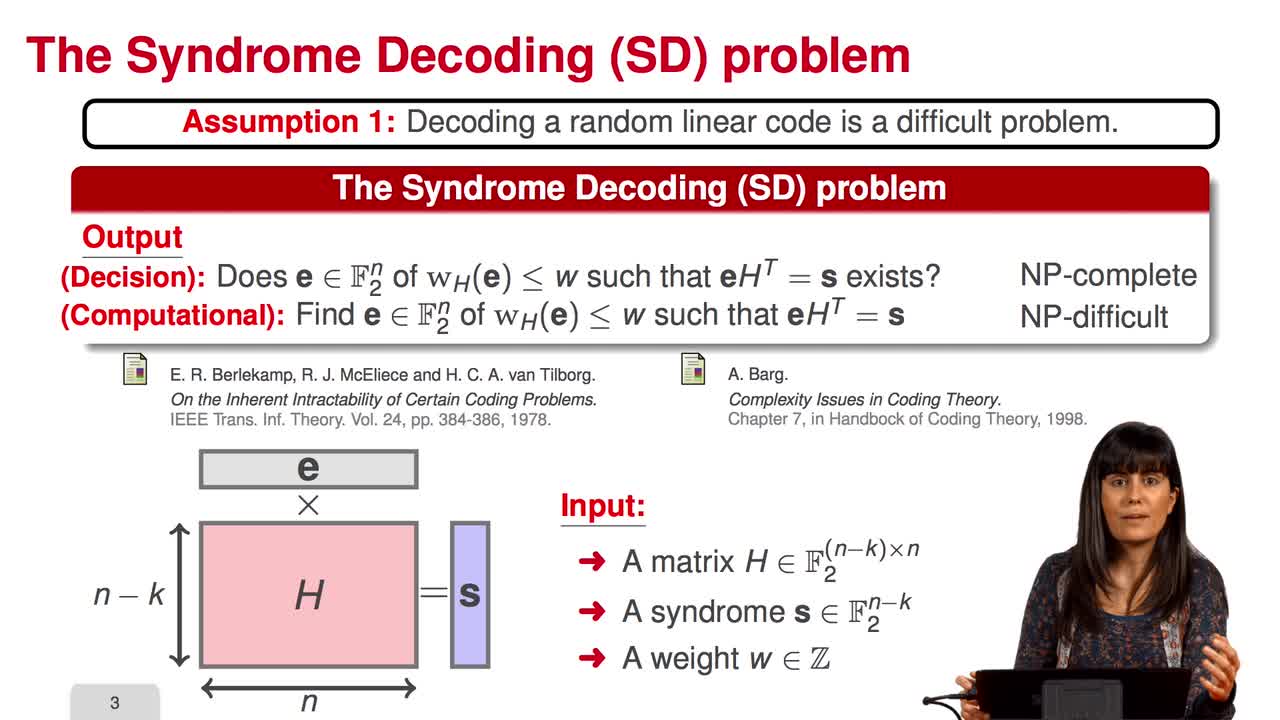
2.3. McEliece Assumptions
In this session, we will talk about McEliece assumptions. The security of the McEliece scheme is based on two assumptions as we have already seen: the hardness of decoding a random linear code and
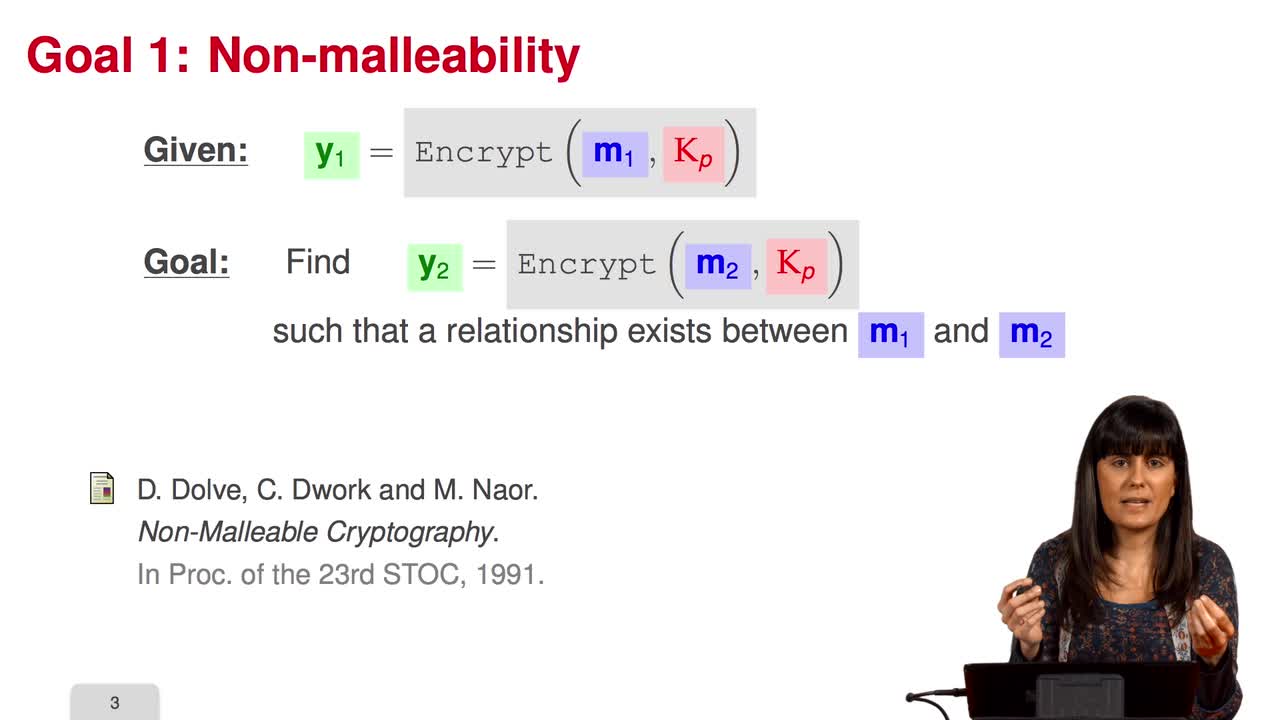
2.4. Notions of Security
In this session, we will study the notion of security of public-key scheme. A public-key scheme is one-way if the probability of success of any adversary running in polynomial time is negligible.
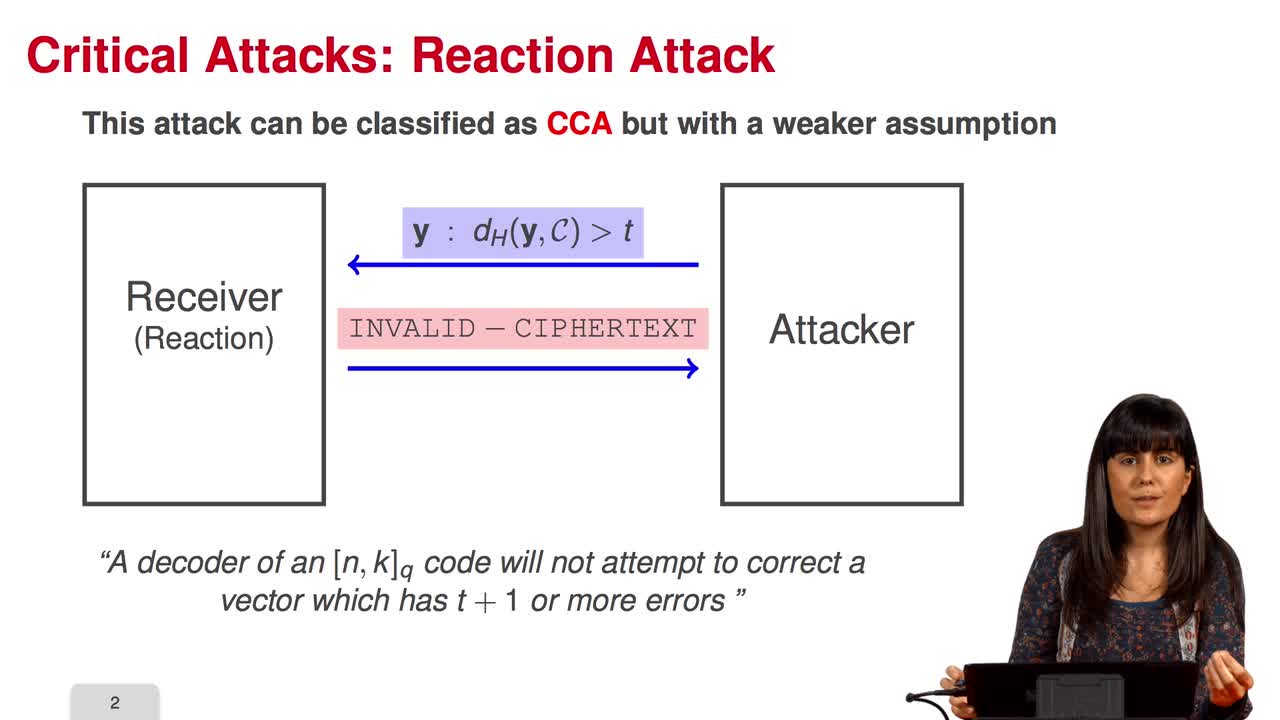
2.5. Critical Attacks - Semantic Secure Conversions
In this session, we will study critical attacks against the public-key cryptosystem. The partial knowledge on the plaintext reduces drastically the computational cost of the attack to the McEliece
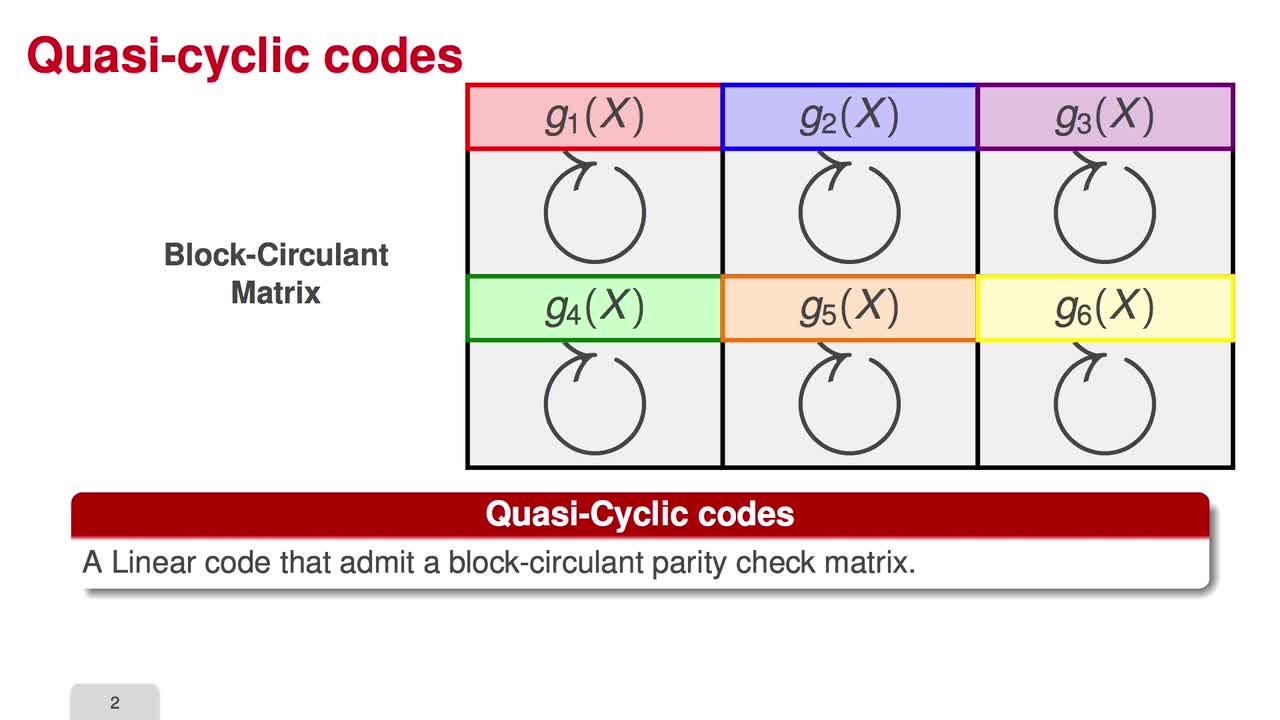
2.6. Reducing the Key Size
In the next three sessions, I will explain how to reduce the key size of code-based cryptosystem. Circulant matrices are the central point in many attempts to reduce the key size of code-based
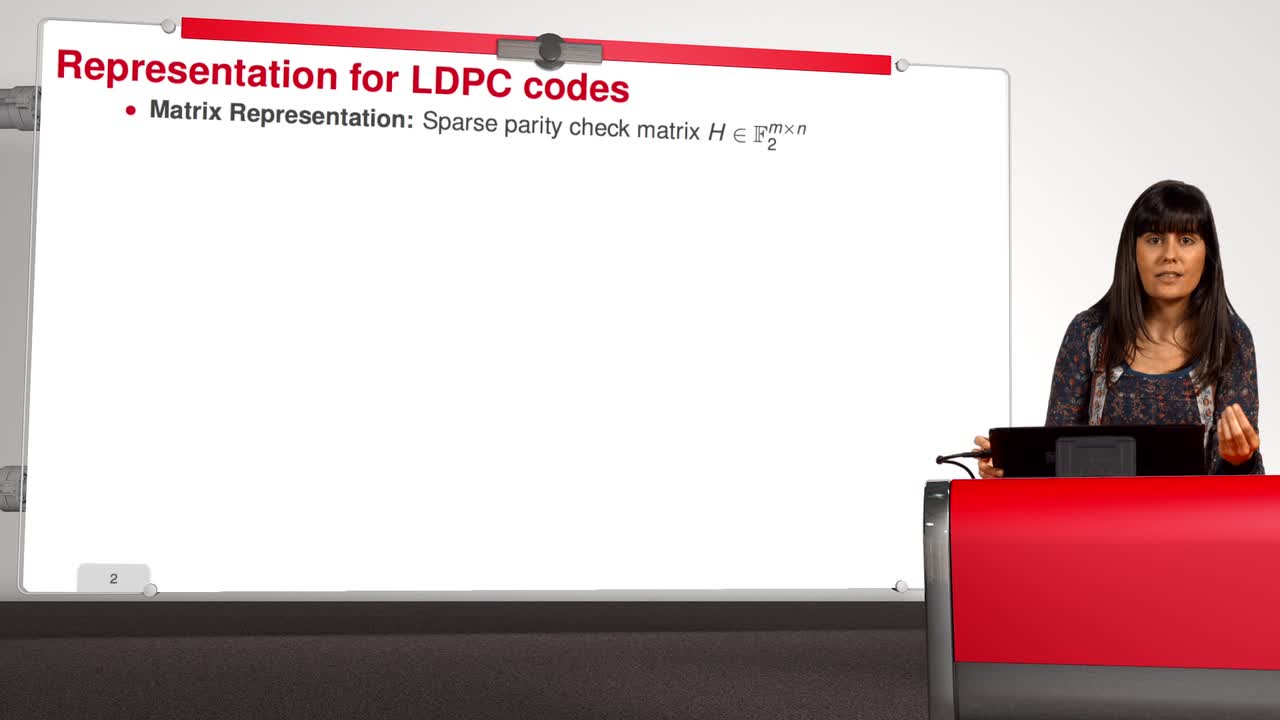
2.7. Reducing the Key Size - LDPC codes
LDPC codes have an interesting feature: they are free of algebraic structure. We will study in detail this proposal for the McEliece cryptosystem in this session. LDPC codes were originally
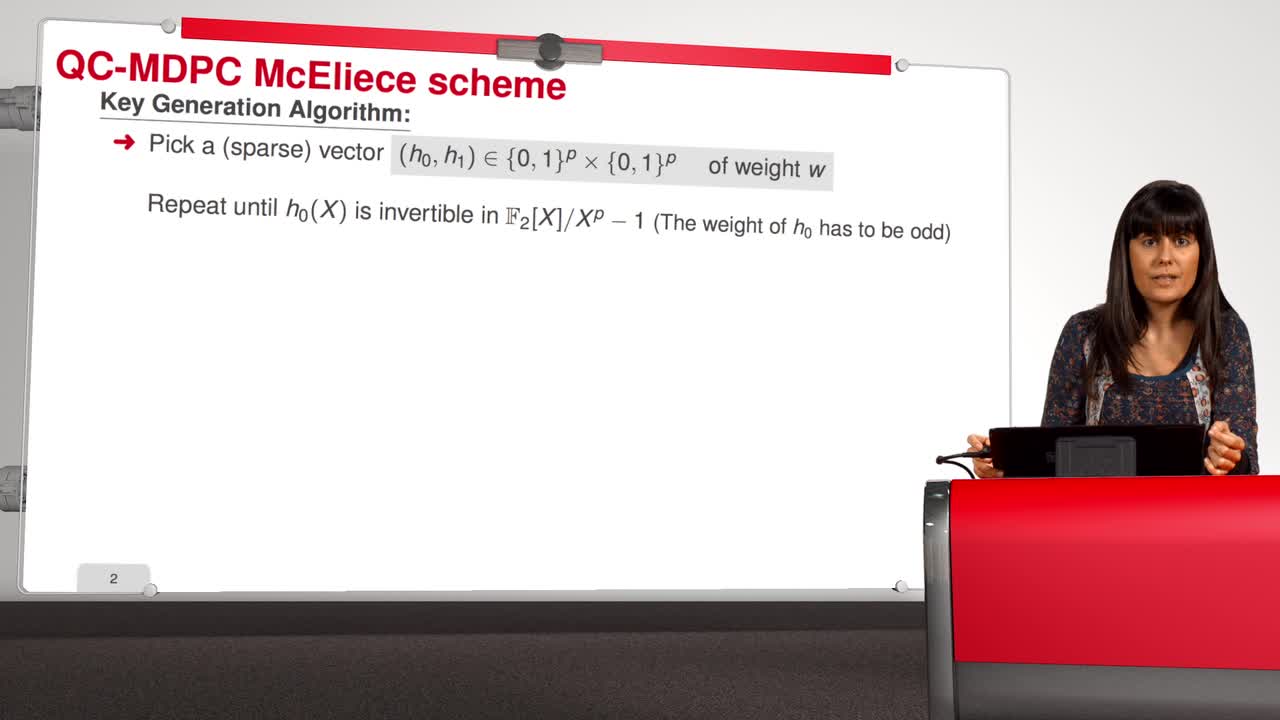
2.8. Reducing the Key Size - MDPC codes
This is the last session where we will talk about reducing the key size. Here we will introduce the MDPC codes. In 2012, the MDPC codes were proposed for the McEliece schemes. An MDPC code is a
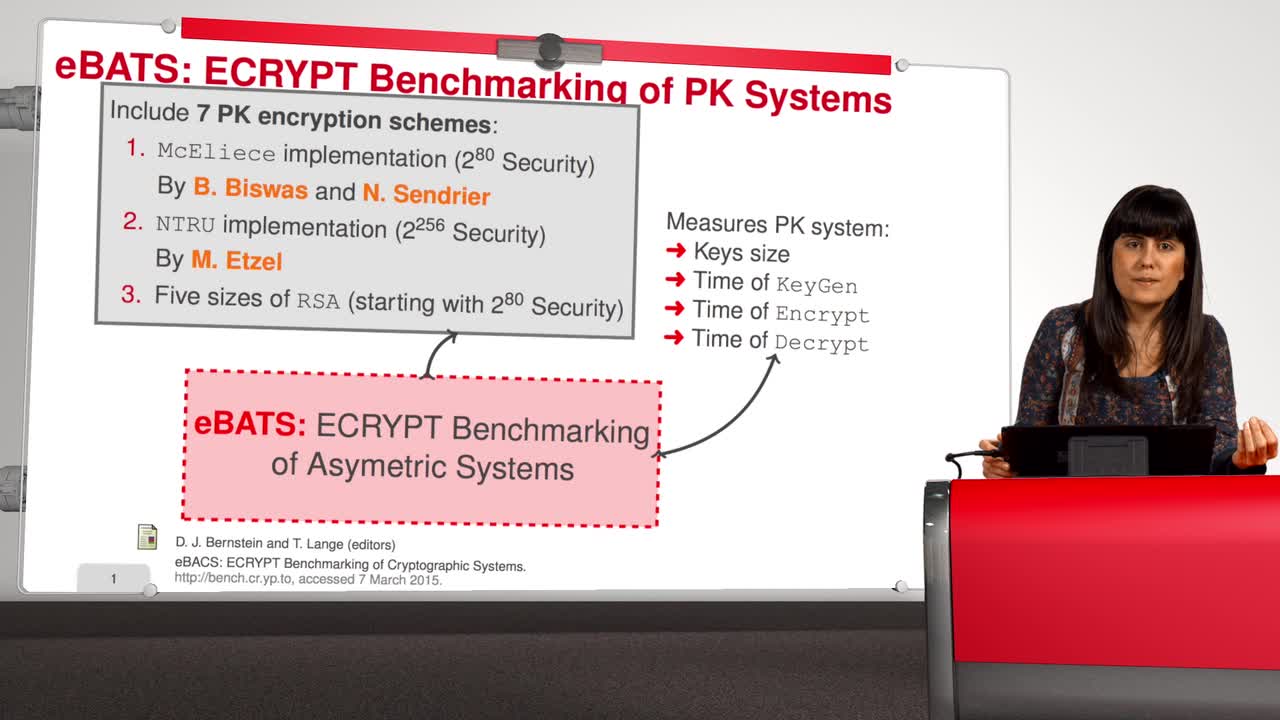
2.9. Implementation
This is the last session of the second week. The cryptography community has different options for using public key cryptosystems, among others, they have RSA or DSA. But … McEliece has the same
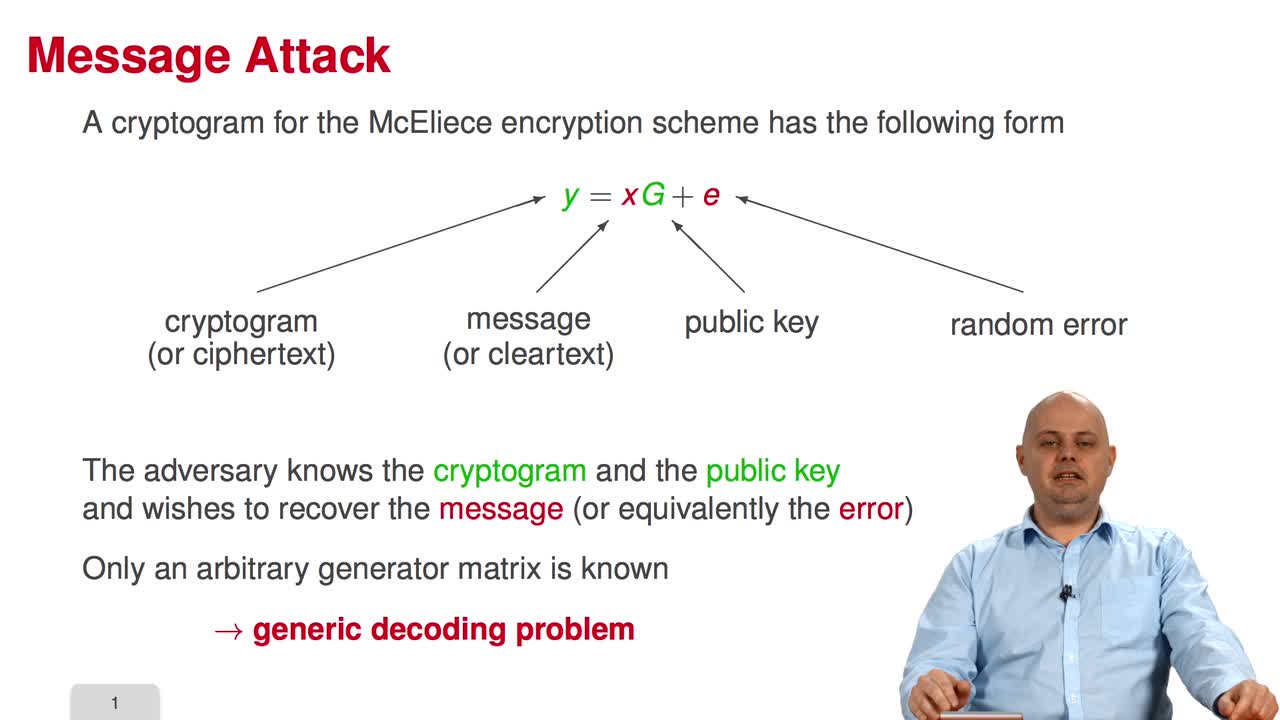
3.1. From Generic Decoding to Syndrome Decoding
Welcome to the third week of the MOOC on code-based cryptography. This week, we will learn about message attacks. Among the ten sessions of this week, the first six will present the most essential
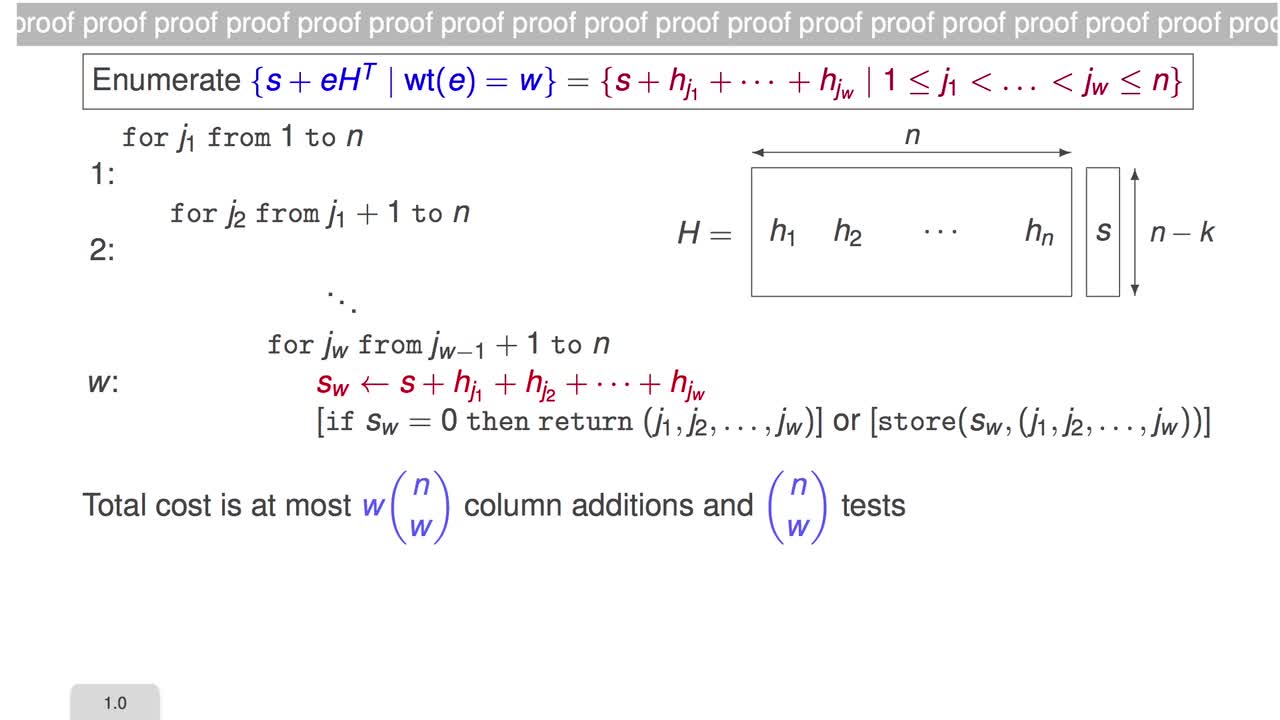
3.2. Combinatorial Solutions: Exhaustive Search and Birthday Decoding
In this session, I will detail two combinatorial solutions to the decoding problem. The first one is the Exhaustive Search. To find our w columns, we will simply enumerate all the tuples j1 to jw
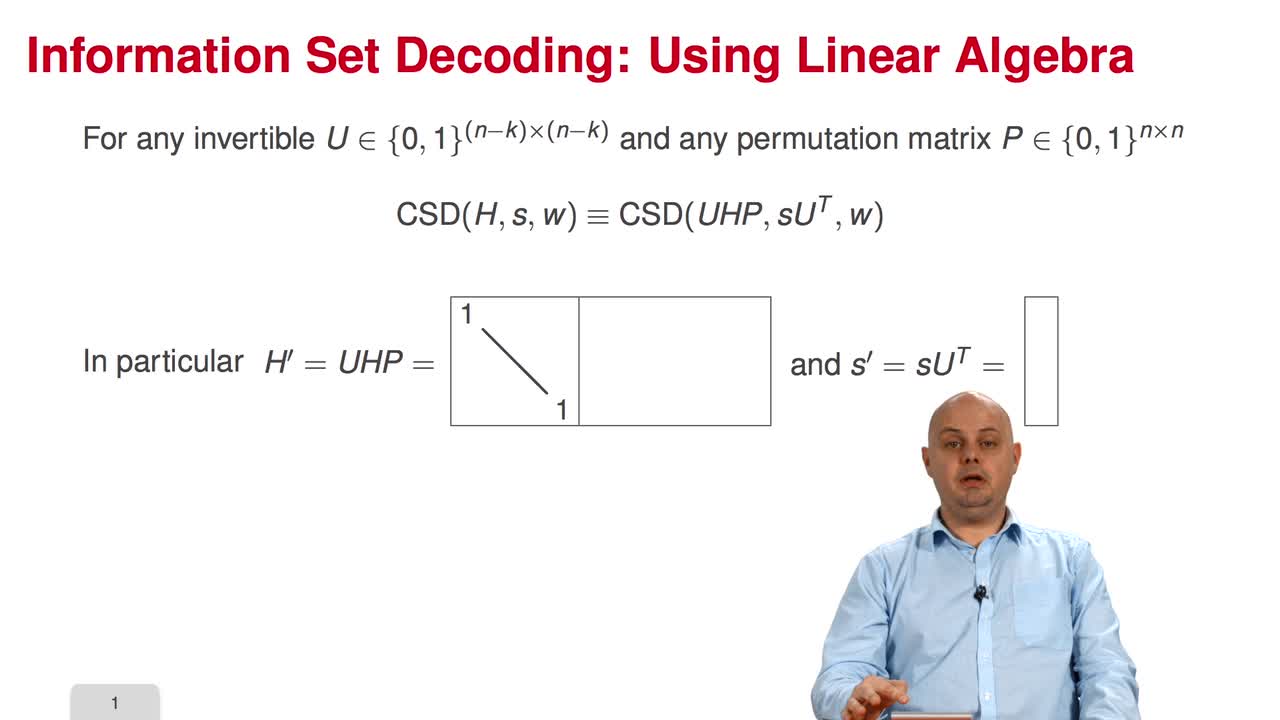
3.3. Information Set Decoding: the Power of Linear Algebra
In this third session, we will present the most important concept of the week: Information Set Decoding. The problem of decoding is not only a combinatorial problem. Because we are dealing with
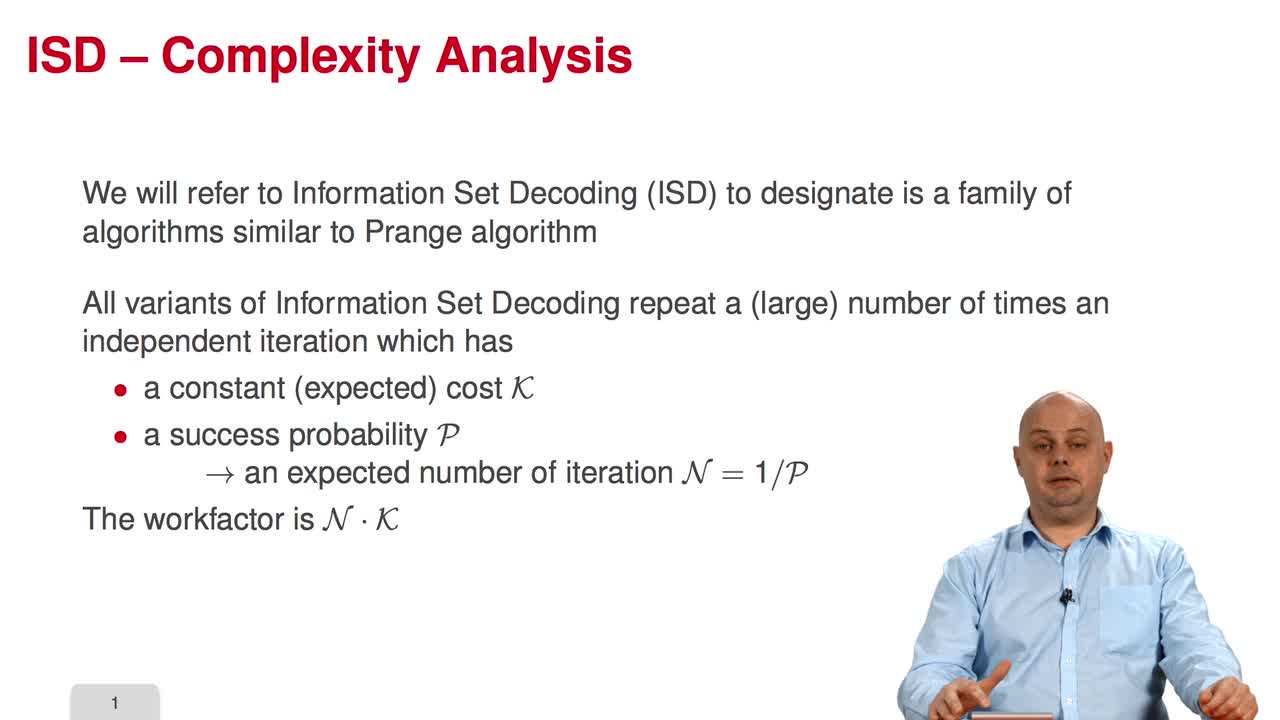
3.4. Complexity Analysis
In this session, I will present the main technique to make the analysis of the various algorithms presented in this course. So, Information Set Decoding refers to a family of algorithms which is
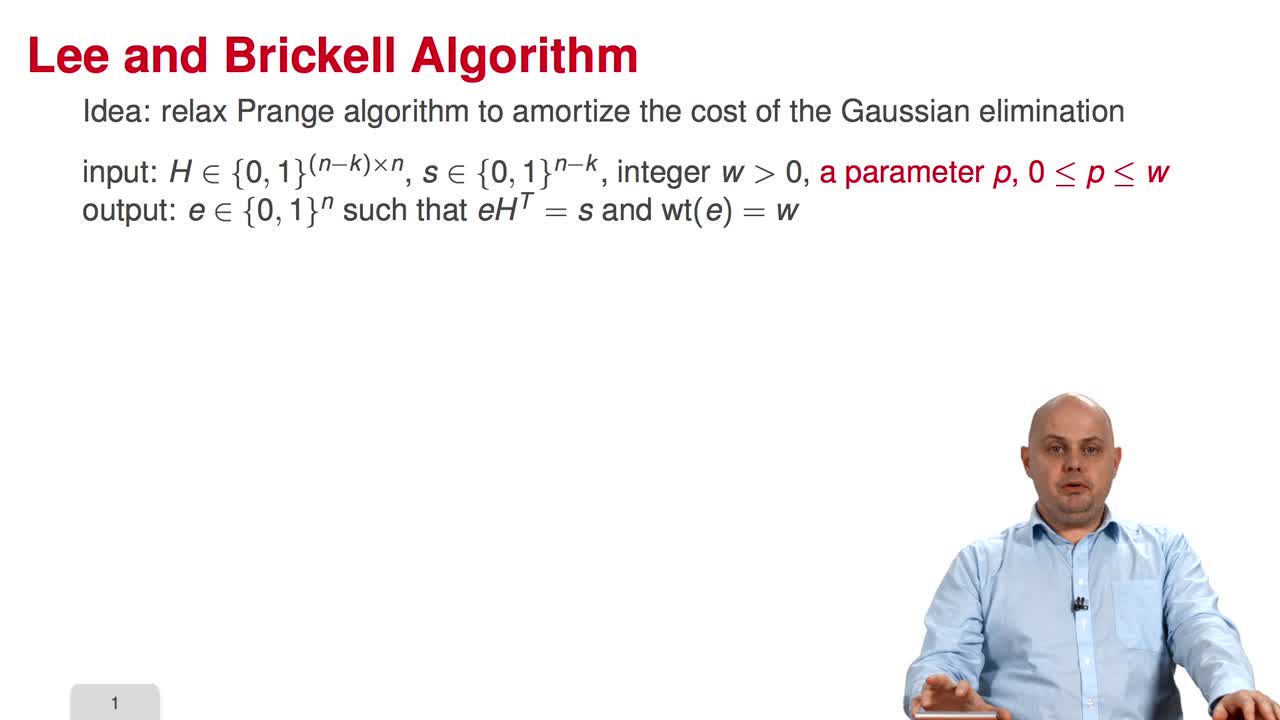
3.5. Lee and Brickell Algorithm
In this fifth session, we will study a variant of information set decoding proposed by Lee and Brickell. So, the main idea consists in relaxing the Prange algorithm to amortize the cost of the
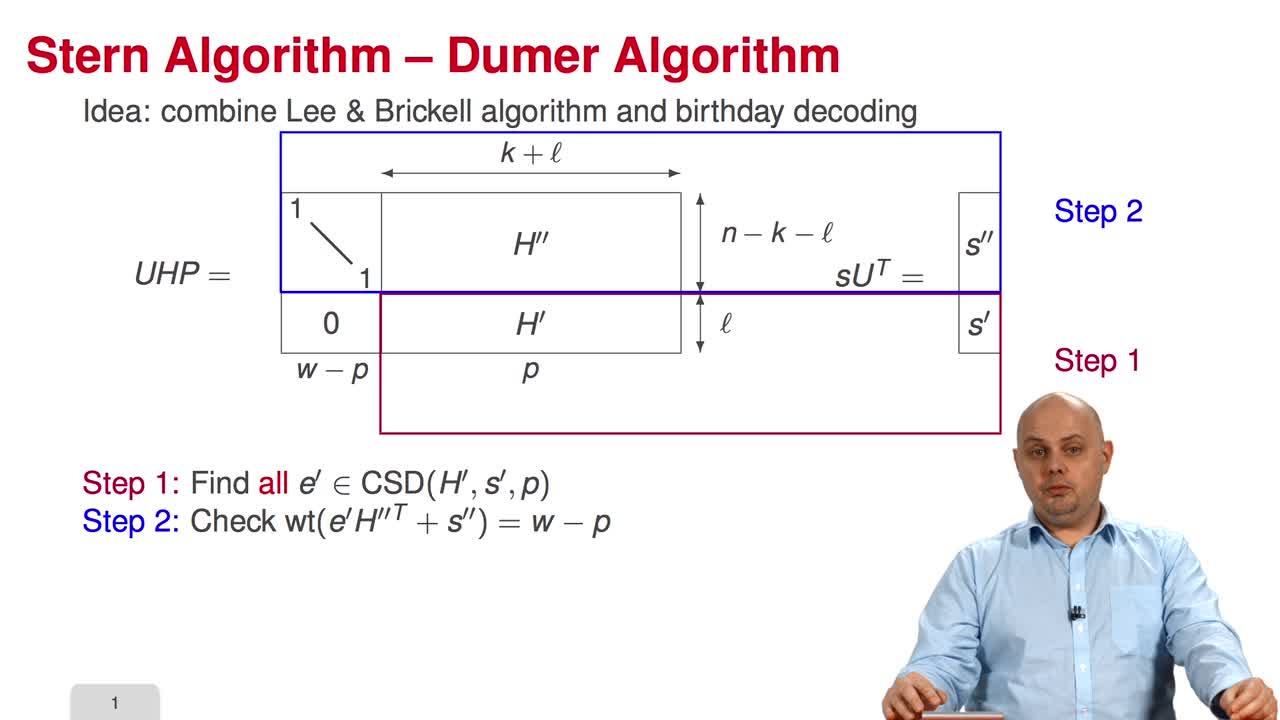
3.6. Stern/Dumer Algorithm
In this session, we will present the Stern algorithm for decoding. In fact, the idea is to combine two algorithms that we have seen before, the Lee and Brickell algorithm and the Birthday Decoding.
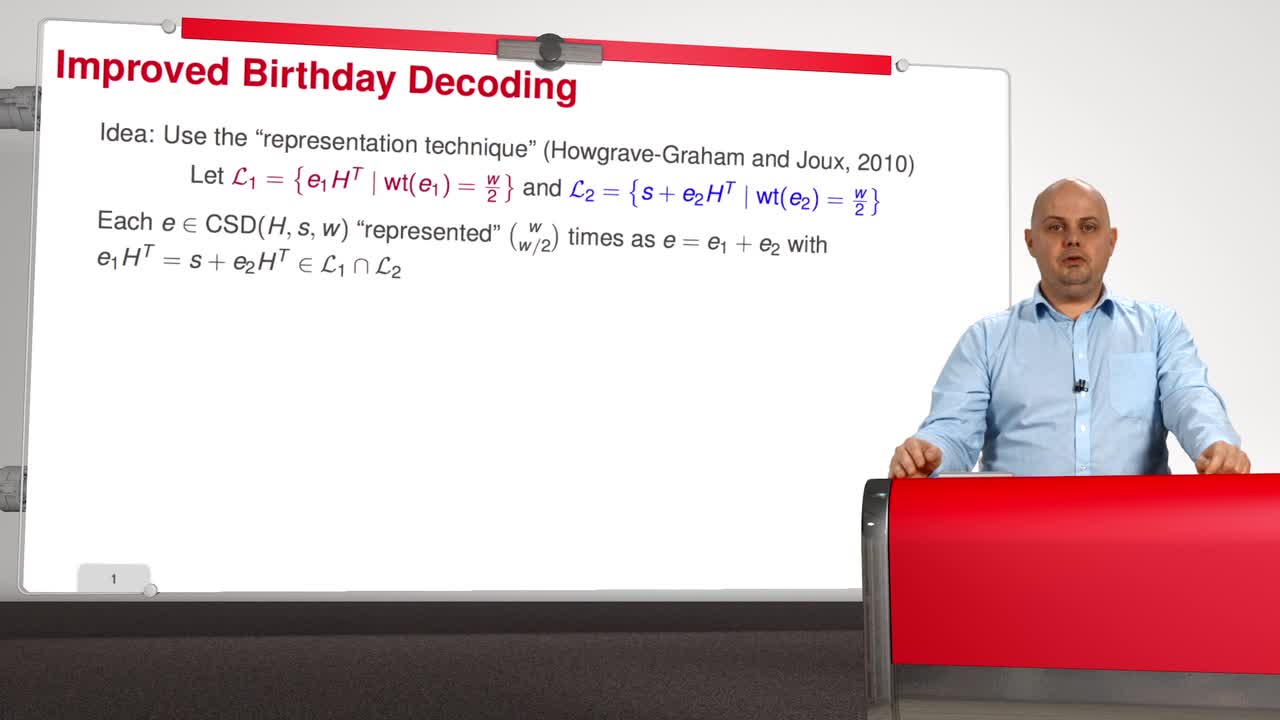
3.7. May, Meurer, and Thomae Algorithm
So, with the session 7 we are entering the most advanced part of that course. The idea of what I called the Improved Birthday Decoding is to use the so-called "representation technique" introduced
3.8. Becker, Joux, May, and Meurer Algorithm
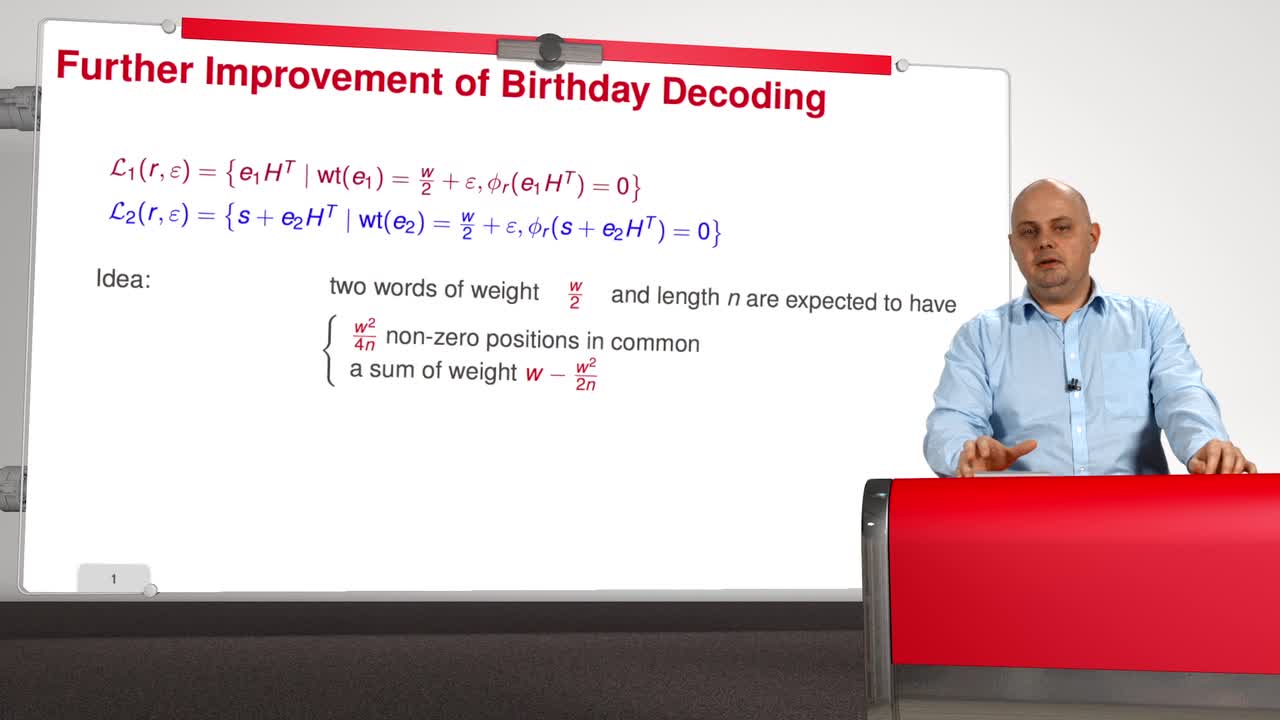
Now in session 8, we will present yet another evolution of information set decoding. Before presenting this improvement, we will first improve the Birthday Decoding algorithm what I call a Further
3.9. Generalized Birthday Algorithm for Decoding
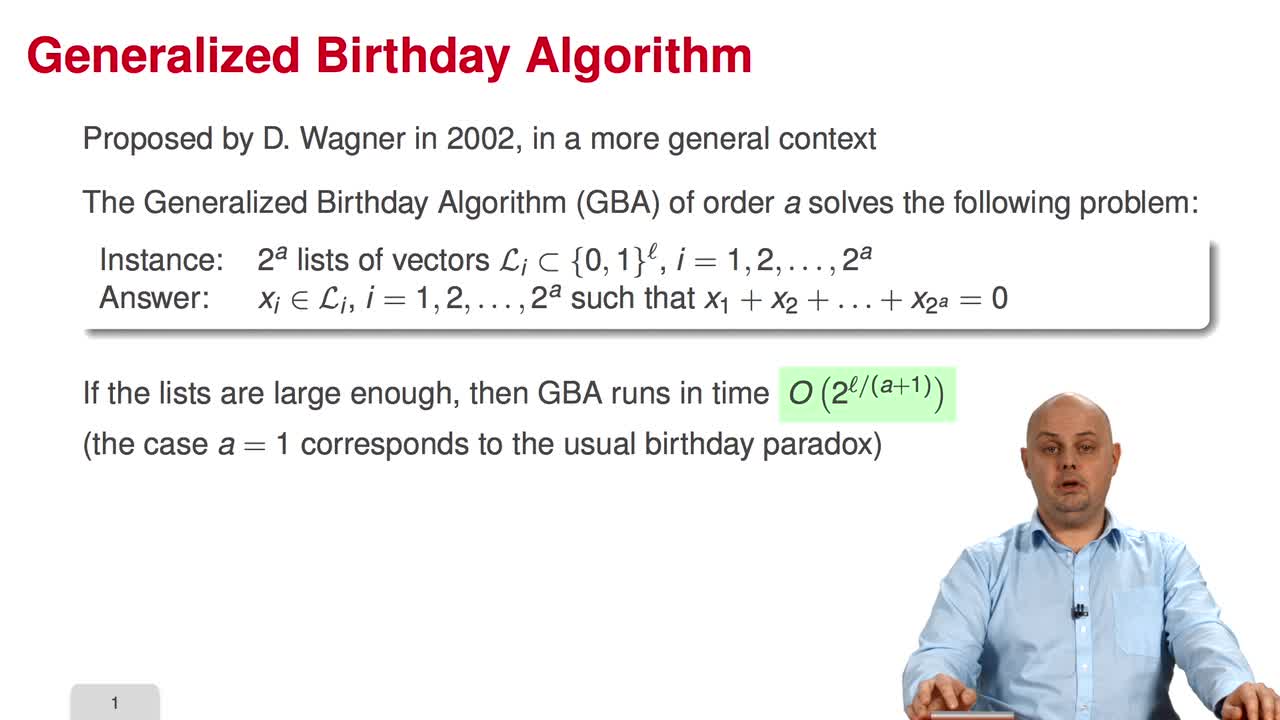
The session nine is devoted to the application of the Generalized Birthday Algorithm to decoding. The Generalized Birthday Algorithm was presented by David Wagner in 2002, in a more general
3.10. Decoding One Out of Many
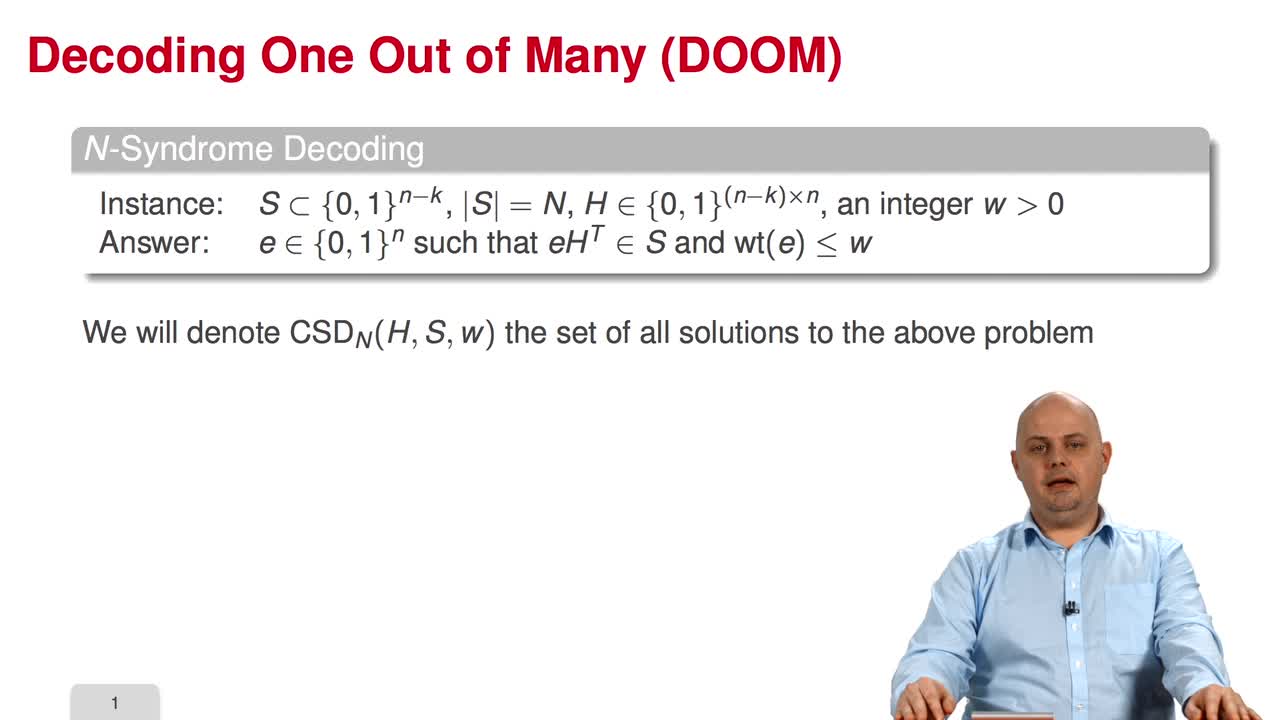
The final session of this week is devoted to Decoding One Out of Many. Decoding One Out of Many is interested in solving the following variant of Syndrome Decoding. In this variant, the only
4.1. Introduction
Welcome to the fourth week of the MOOC Code-based Cryptography. Recall that we have mainly two ways of cryptanalyzing in the McEliece cryptosystem. We have Message Attacks, which address the problem
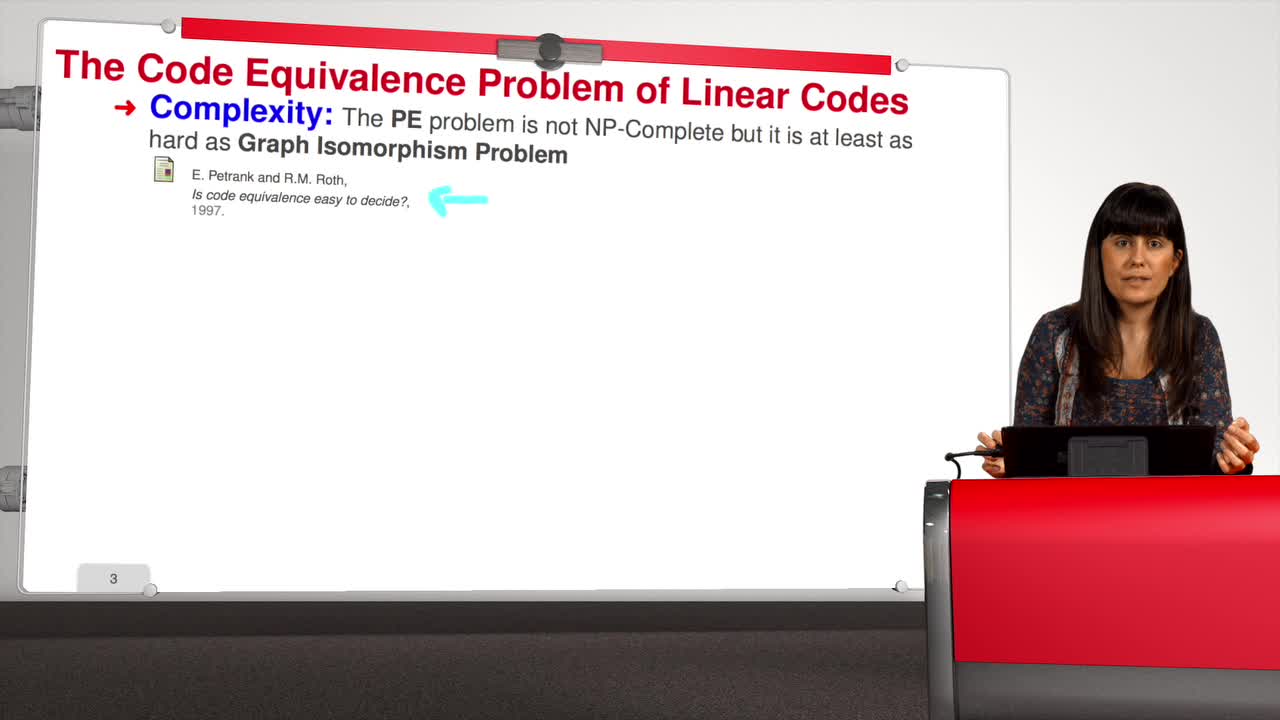
4.2. Support Splitting Algorithm
This session will be about the support splitting algorithm. For the q-ary case, there are three different notions of equivalence. The general one: two codes of length n are semi-linear equivalent

4.3. Distinguisher for GRS codes
In this session we will see that generalized Reed-Solomon codes behave differently than random codes with respect to the star operation. Thus we can define a distinguisher for Generalized Reed
4.4. Attack against subcodes of GRS codes
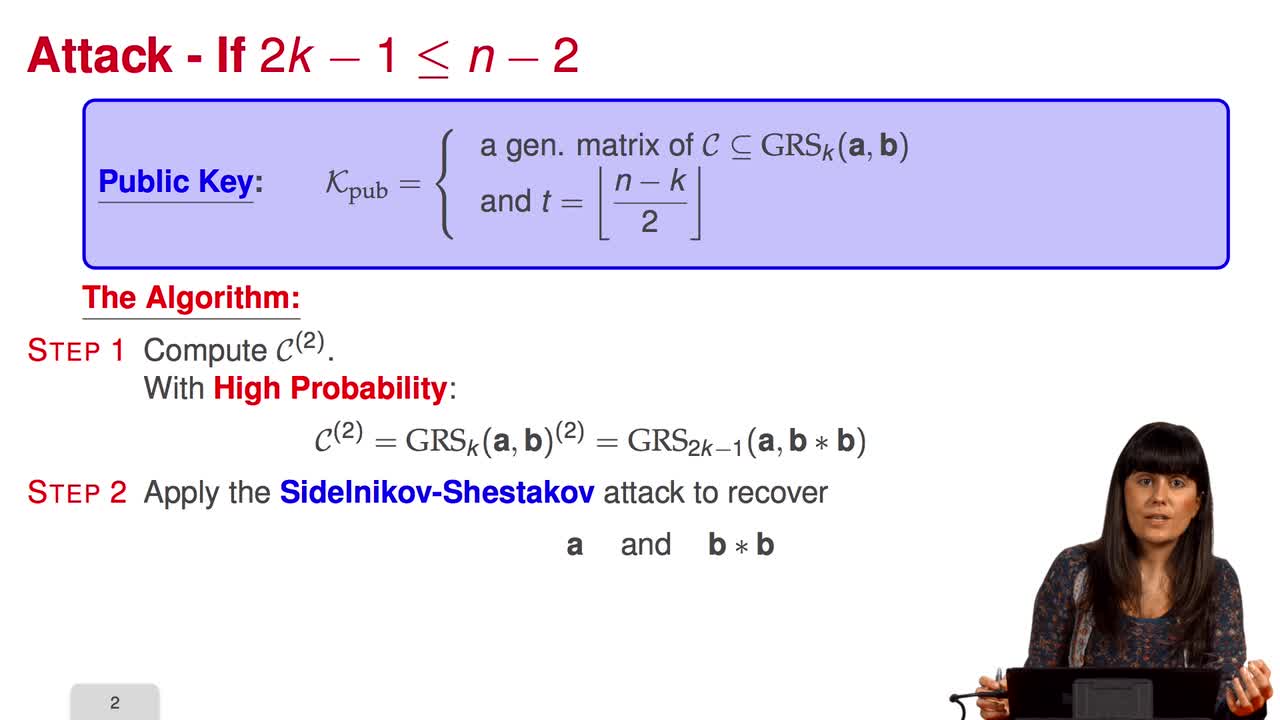
In this session, we will talk about using subcodes of a Generalized Reed–Solomon code for the McEliece Cryptosystem. Recall that to avoid the attack of Sidelnikov and Shestakov, Berger and
4.5. Error-Correcting Pairs
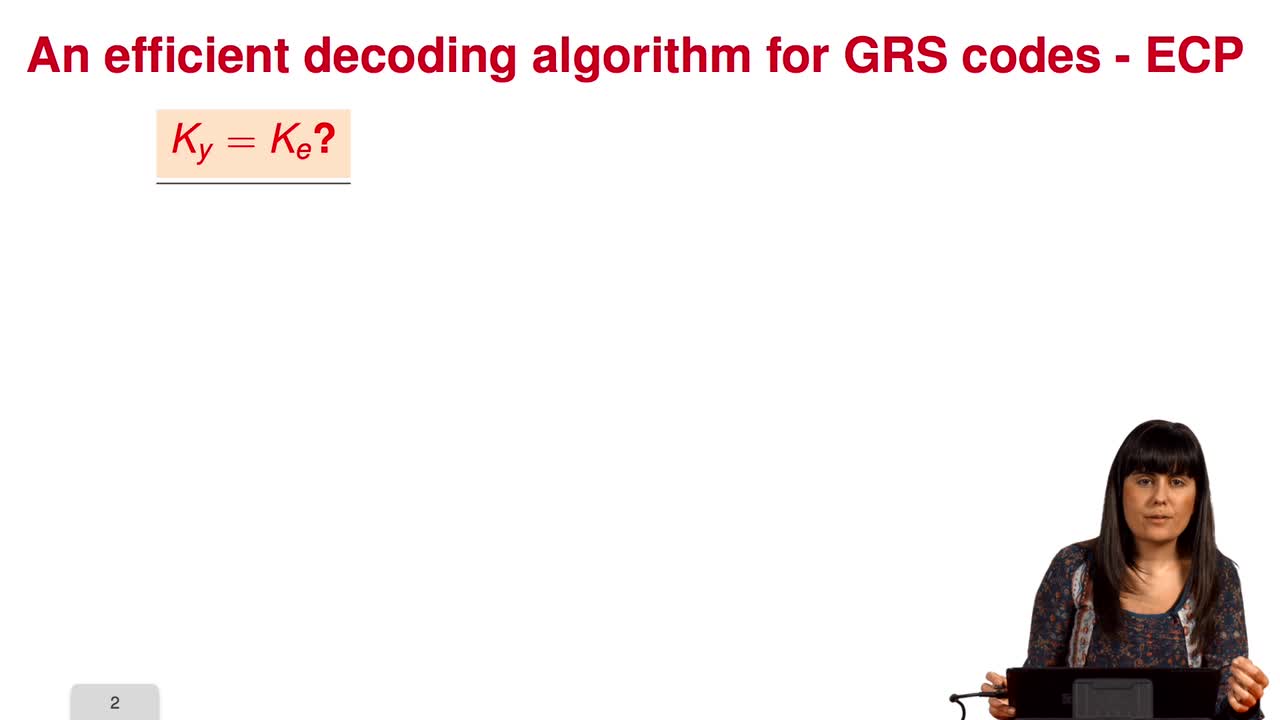
We present in this session a general decoding method for linear codes. And we will see it in an example. Let C be a generalized Reed-Solomon code of dimension k associated to the pair (c, d). Then,
4.6. Attack against GRS codes
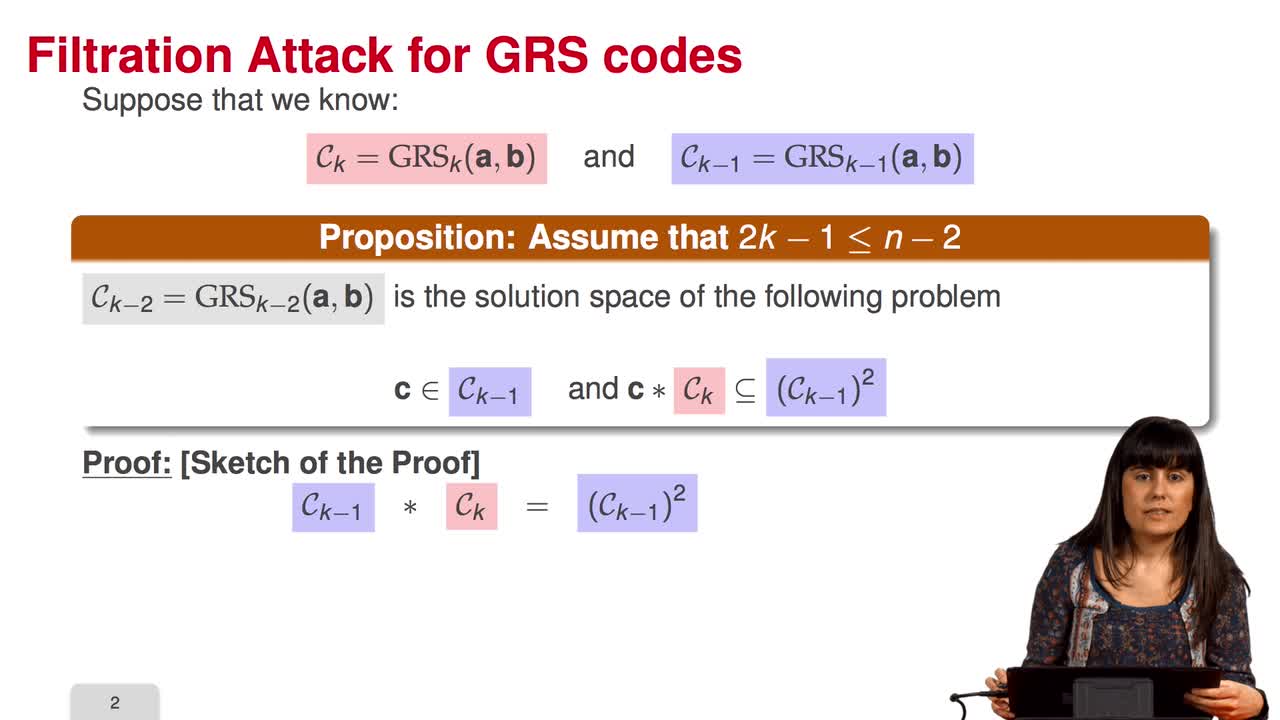
In this session we will discuss the proposal of using generalized Reed-Solomon codes for the McEliece cryptosystem. As we have already said, generalized Reed-Solomon codes were proposed in 1986 by
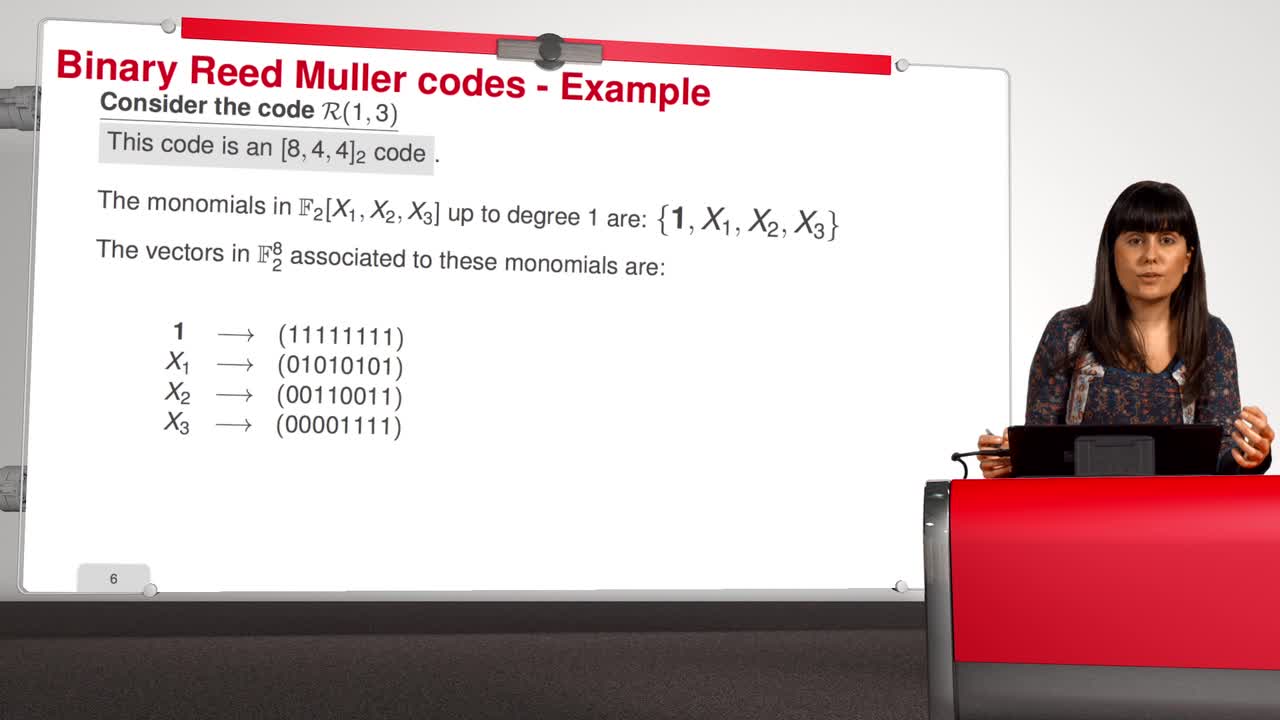
4.7. Attack against Reed-Muller codes
In this session, we will introduce an attack against binary Reed-Muller codes. Reed-Muller codes were introduced by Muller in 1954 and, later, Reed provided the first efficient decoding algorithm
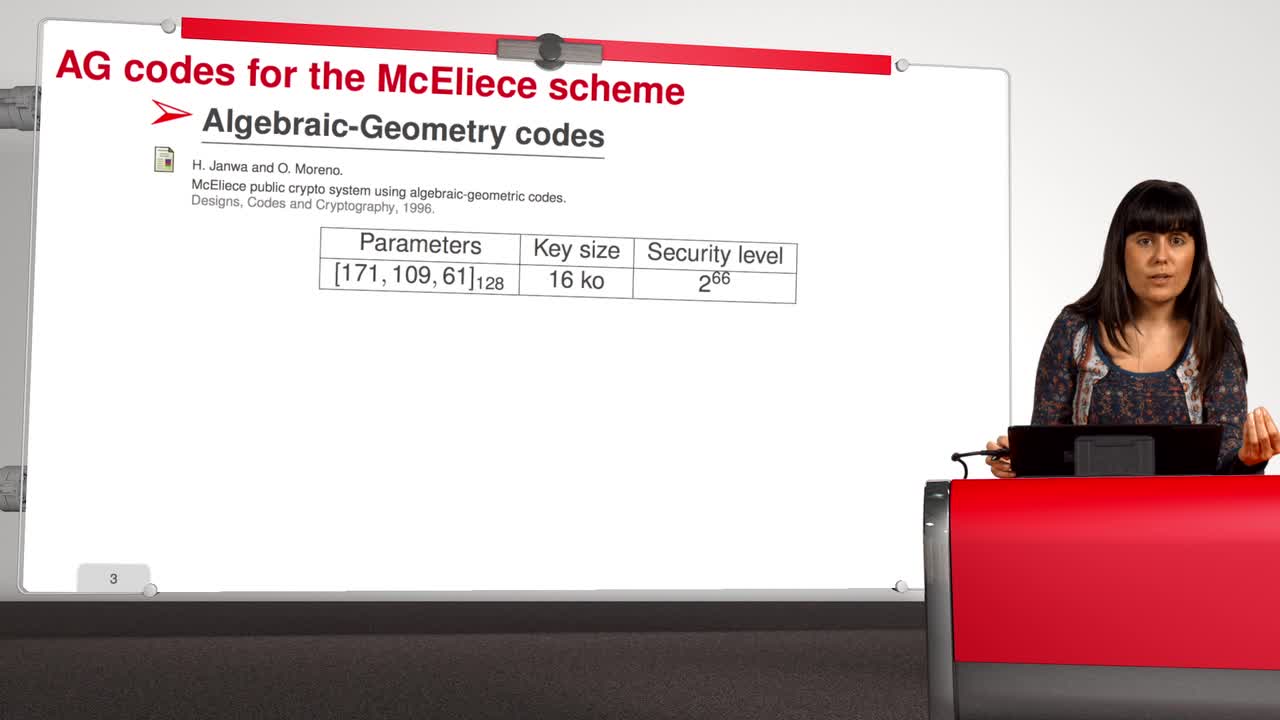
4.8. Attack against Algebraic Geometry codes
In this session, we will present an attack against Algebraic Geometry codes (AG codes). Algebraic Geometry codes is determined by a triple. First of all, an algebraic curve of genus g, then a n
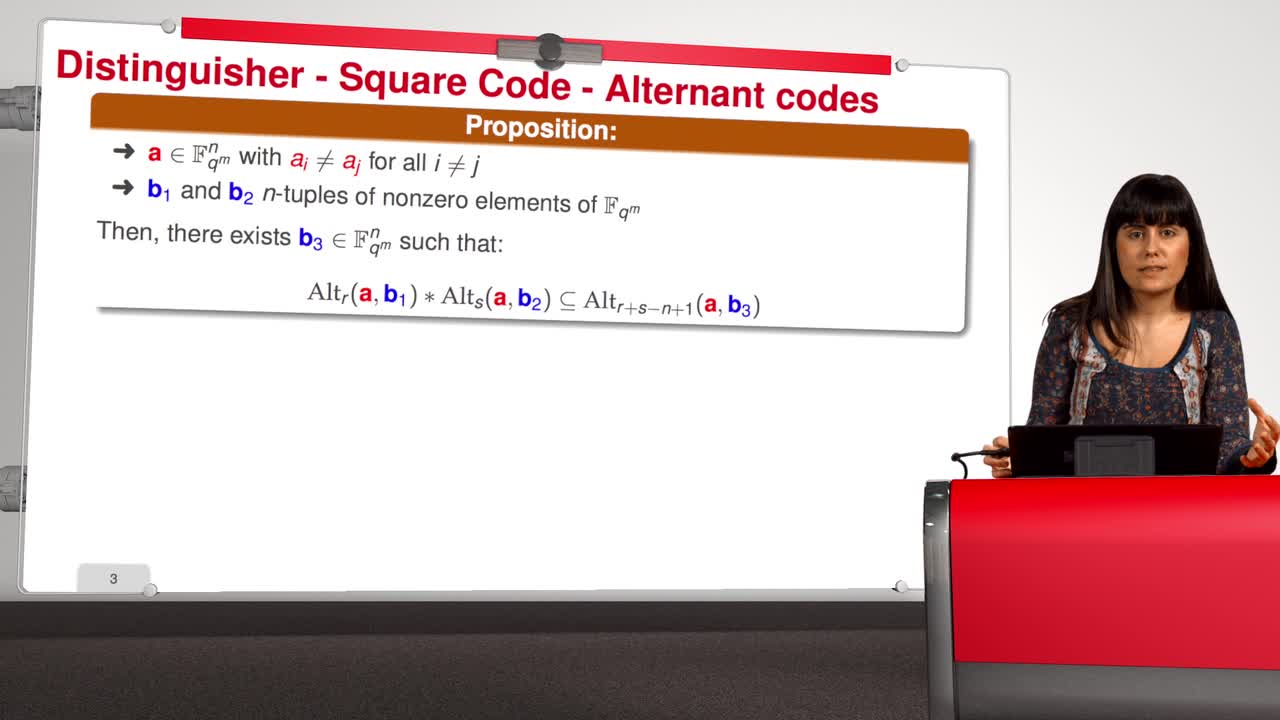
4.9. Goppa codes still resist
All the results that we have seen this week doesn't mean that code based cryptography is broken. So in this session we will see that Goppa code still resists to all these attacks. So recall that
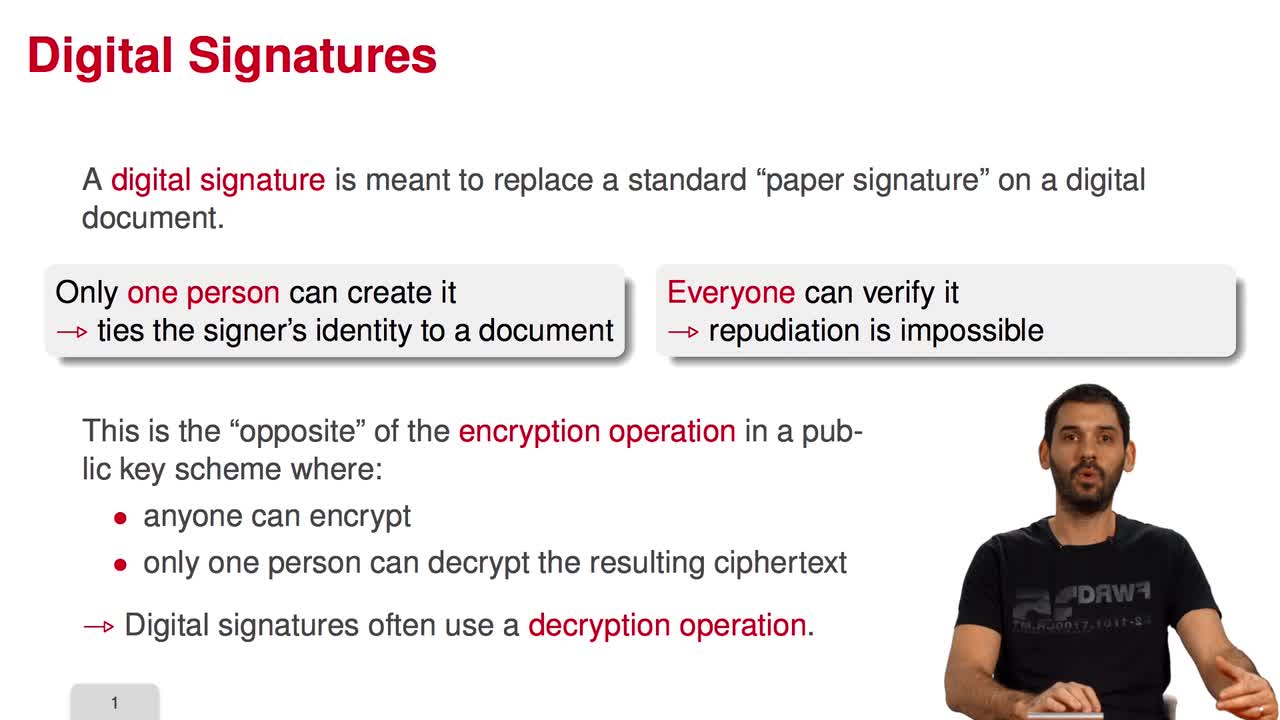
5.1. Code-Based Digital Signatures
Welcome to the last week of this MOOC on code-based cryptography. This week, we will be discussing other cryptographic constructions relying on coding theory. We have seen how to do public key
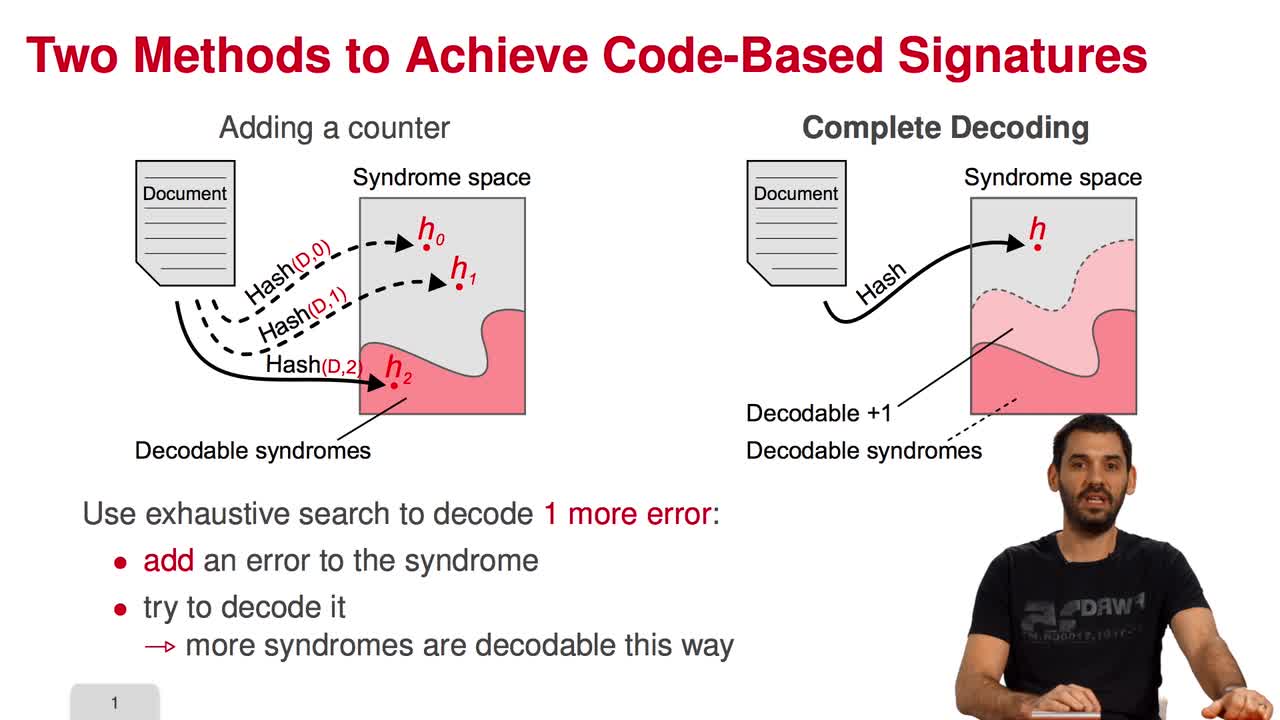
5.2. The Courtois-Finiasz-Sendrier (CFS) Construction
In this session, I am going to present the Courtois-Finiasz-Sendrier Construction of a code-based digital signature. In the previous session, we have seen that it is impossible to hash a document

5.3. Attacks against the CFS Scheme
In this session, we will have a look at the attacks against the CFS signature scheme. As for public-key encryption, there are two kinds of attacks against signature schemes. First kind of attack is
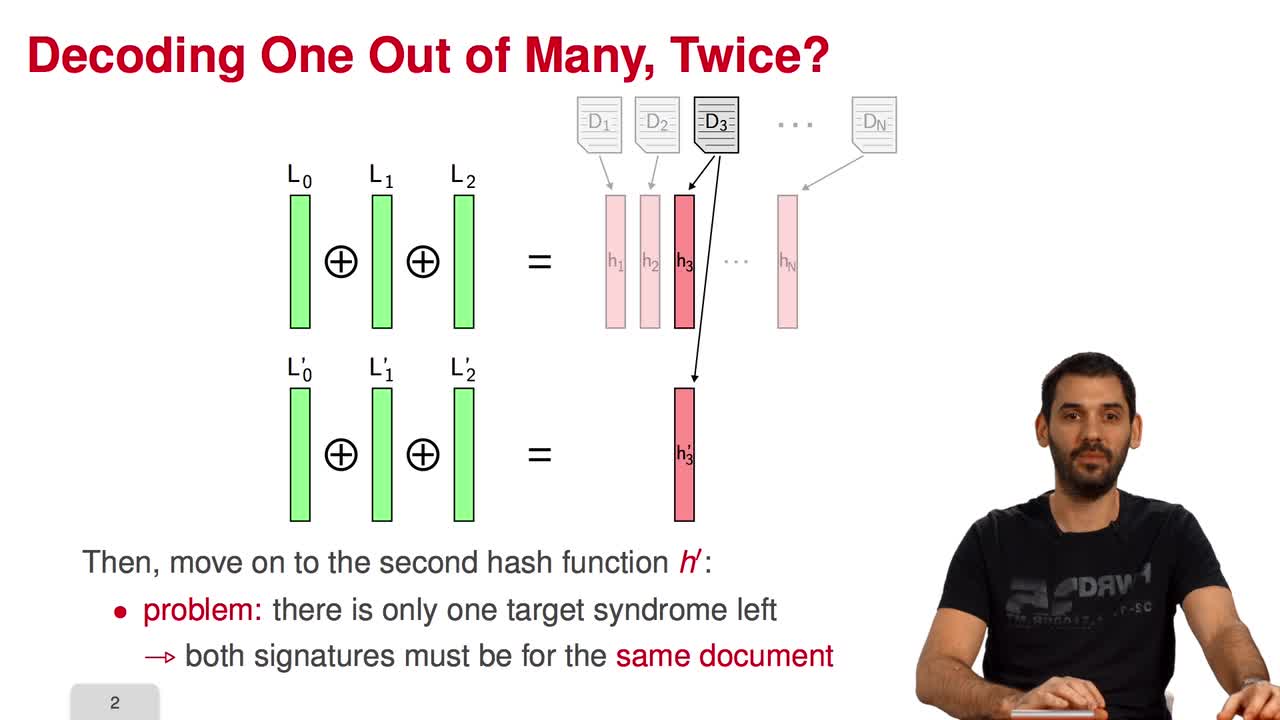
5.4. Parallel-CFS
In this session, I will present a variant of the CFS signature scheme called parallel-CFS. We start from a simple question: what happens if you try to use two different hash functions and compute
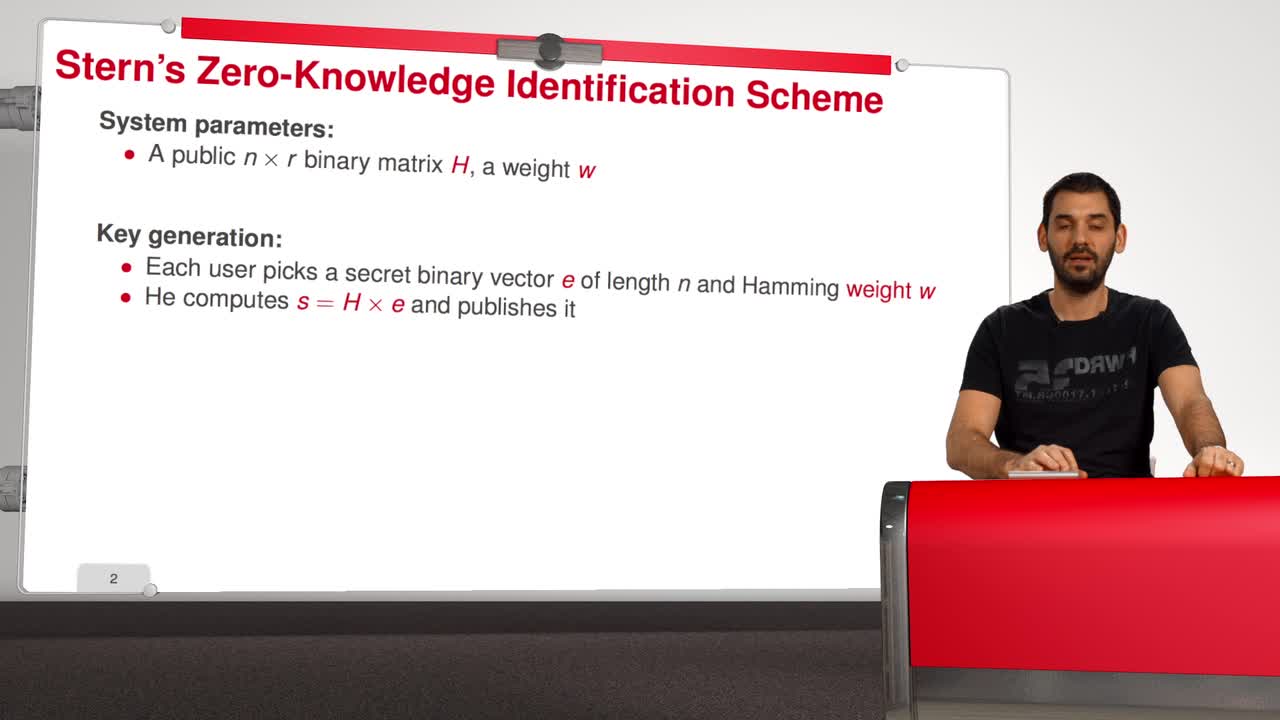
5.5. Stern’s Zero-Knowledge Identification Scheme
In this session, we are going to have a look at Stern’s Zero-Knowledge Identification Scheme. So, what is a Zero-Knowledge Identification Scheme? An identification scheme allows a prover to prove
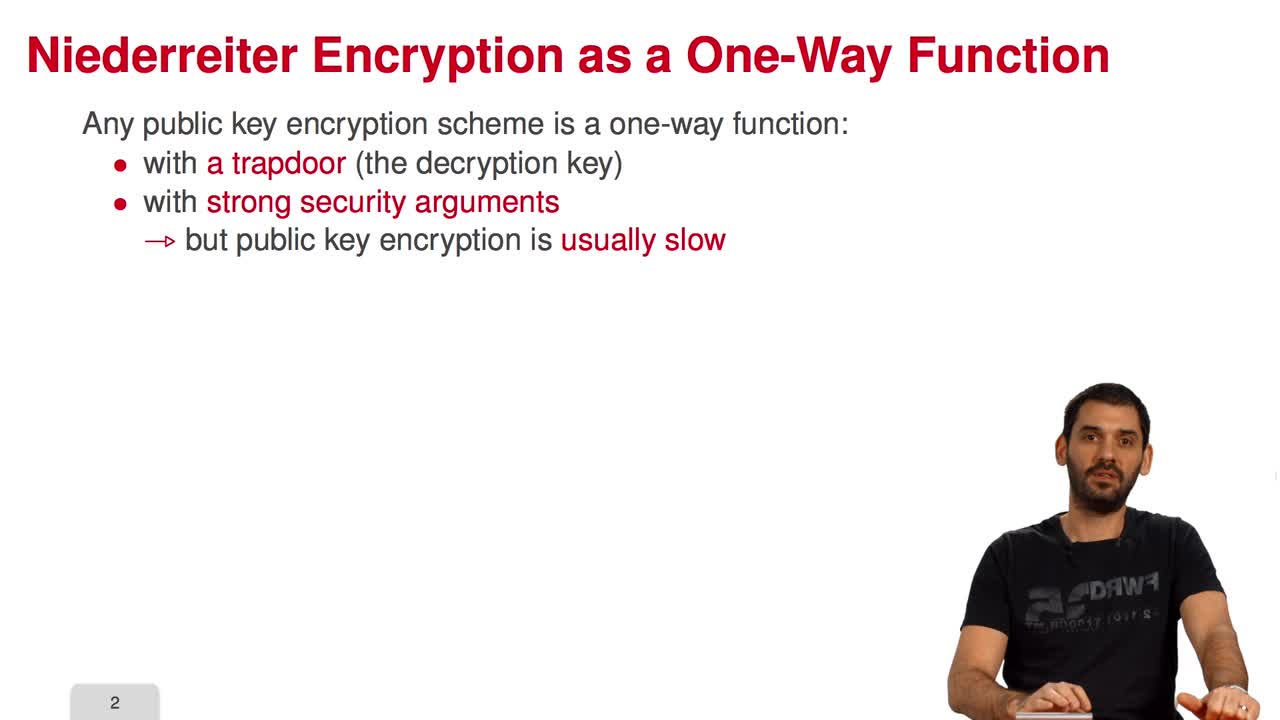
5.6. An Efficient Provably Secure One-Way Function
In this session, we are going to see how to build an efficient provably secure one-way function from coding theory. As you know, a one-way function is a function which is simple to evaluate and
5.7. The Fast Syndrome-Based (FSB) Hash Function
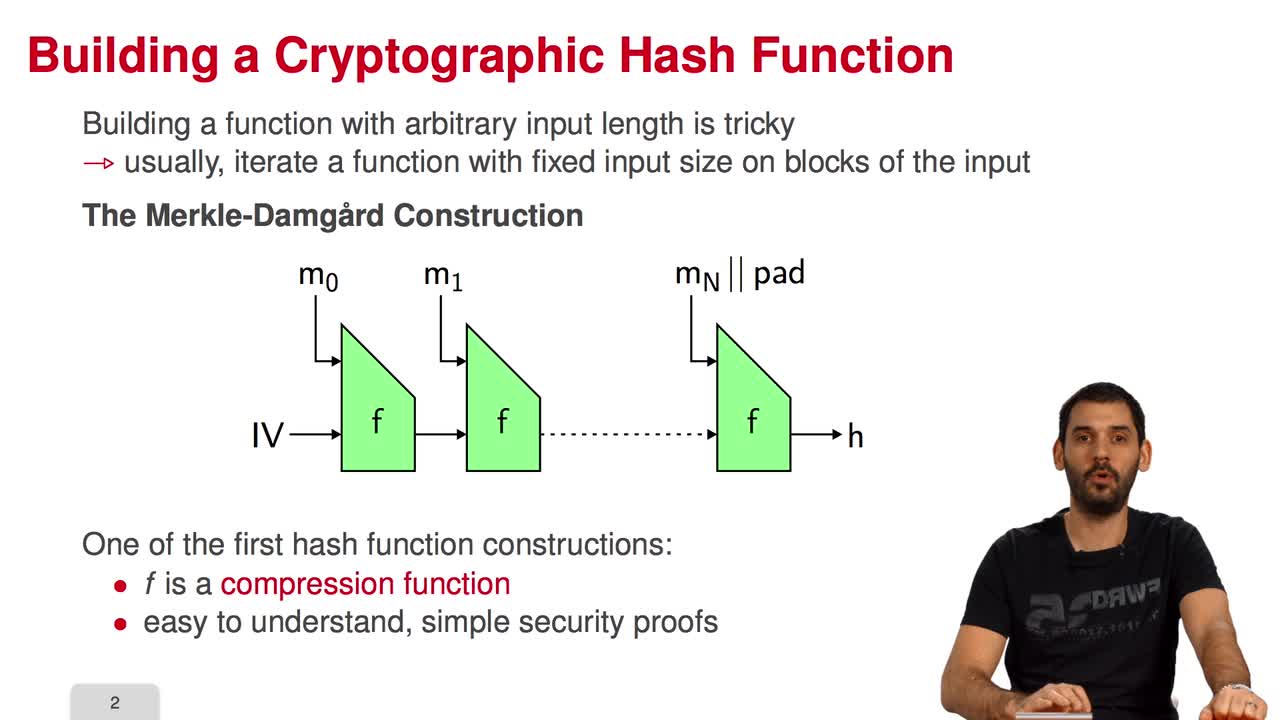
In the last session of this week, we will have a look at the FSB Hash Function which is built using the one-way function we saw in the previous session. What are the requirements for a
Intervenants et intervenantes

Auteur d'une thèse en mathématiques et informatique à l'Ecole polytechnique de Paris

Chercheuse à la faculté des sciences de l'université de La Laguna. Spécialités : code, cryptograhie et algèbre informatique (2015)

Enseignant chercheur en informatique à l'INRIA. Thèmes de recherche : Codes correcteurs d'erreurs et Cryptographie.